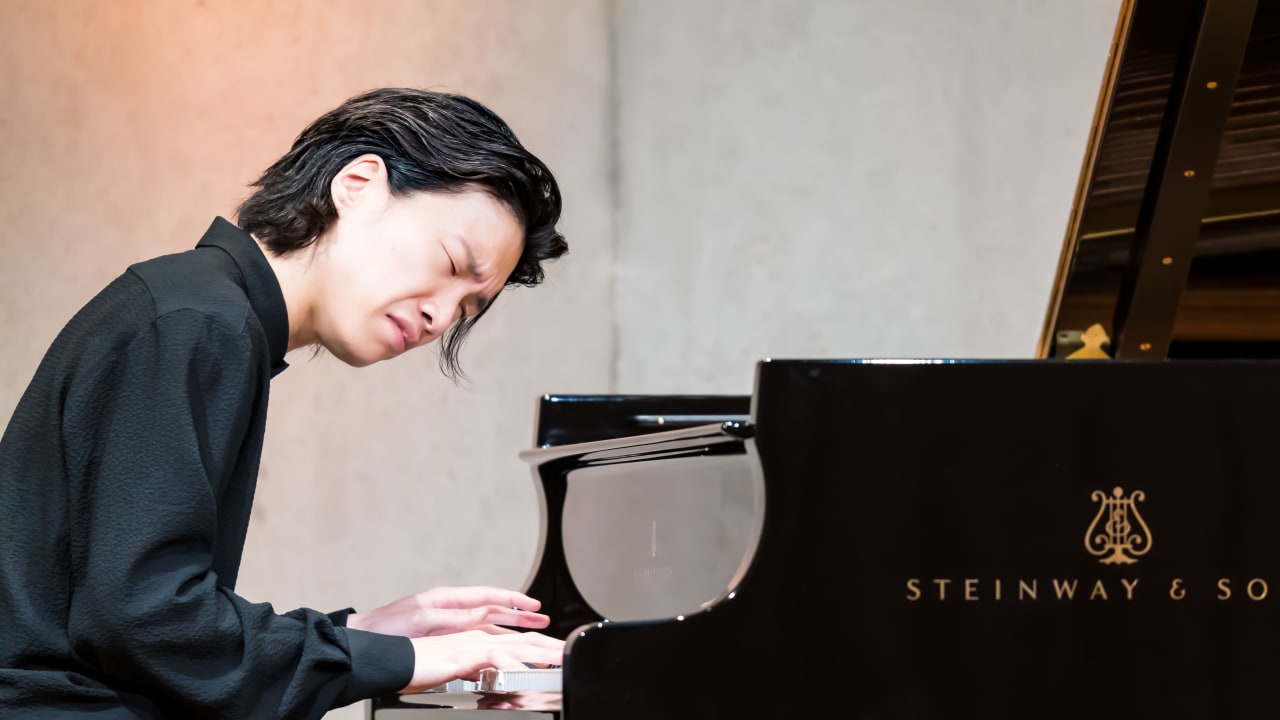
The Arthur Rubinstein International Piano Master Competition, named after the legendary Polish-Jewish pianist and devoted supporter of the State of Israel, is widely recognized as one of the world’s premier musical tournaments.
Since its founding in 1974, it has launched the careers of contemporary luminaries such as Daniil Trifonov and Emanuel Ax.
While the competition is traditionally held every 3 years in Tel Aviv, the 18th edition features a unique bifurcated structure due to ongoing security concerns in Israel.
The opening stages took place between April 28 and May 4 at the Casals Forum of the Kronberg Academy in Germany.
Originally slated for mid-May, the final stages have been postponed to between September 3 and September 9. These concluding rounds are set to take place at the Tel Aviv Museum of Art and the Charles Bronfman Auditorium.

There, all six finalists – Roman Fediurko, Uladzislau Khandohi, Stanislav Korchagin, Philipp Lynov, Jinhyung Park, and Dmitry Yudin – will perform chamber music and classical concertos with the Israel Camerata Jerusalem. They will do so before the final orchestral showdown with the Israel Philharmonic Orchestra.
The jury comprises some of the most decorated pianists of the modern era, including Martha Argerich and Daniel Barenboim. As for the panel’s chairman, Arie Vardi, a recipient of the Israel Prize, will fill the role. According to artistic director Ariel Cohen, the geographic distribution of this year’s competitors remains consistent with previous years. There will be 16 competitors from East Asia, 10 from North and South America, and 13 from Europe, among them five Israelis.
A curated repertoire: Jewish interwar composers
This year’s competition is distinguished by a significant thematic shift: in addition to the staple works of the Western classical repertoire, all competitors were required to perform works by “Jewish interwar composers.”
The term refers to individuals whose careers were either truncated by the Holocaust or profoundly altered by the Second World War.
Consequently, much of this repertoire had historically lacked the performative and scholarly attention it deserved.
To foster intellectual engagement, the competition’s opening stages featured recorded panel discussions broadcast during intermissions.

In a discussion filmed at the Tel Aviv Museum of Art – and in a subsequent interview with The Jerusalem Post – Prof. Michael Wolpe, a renowned composer and authority on Jewish and Israeli music, addressed the “delayed revival” of this repertoire.
While interest began to stir in the late 1970s, Wolpe noted that it was not until the 1990s that a “true flowering” occurred, particularly regarding the composers of Theresienstadt, such as Erwin Schulhoff.
He posited that these composers “slipped through the cracks” of music history, as their work was neither part of the established 19th-century canon nor fully integrated into the postwar avant-garde.
Wolpe said that post-World War II institutions prioritized two ideological extremes. On the one hand, there was a movement of restoration, which allocated massive budgets to preserve “artistic monuments” from Bach to Mahler.
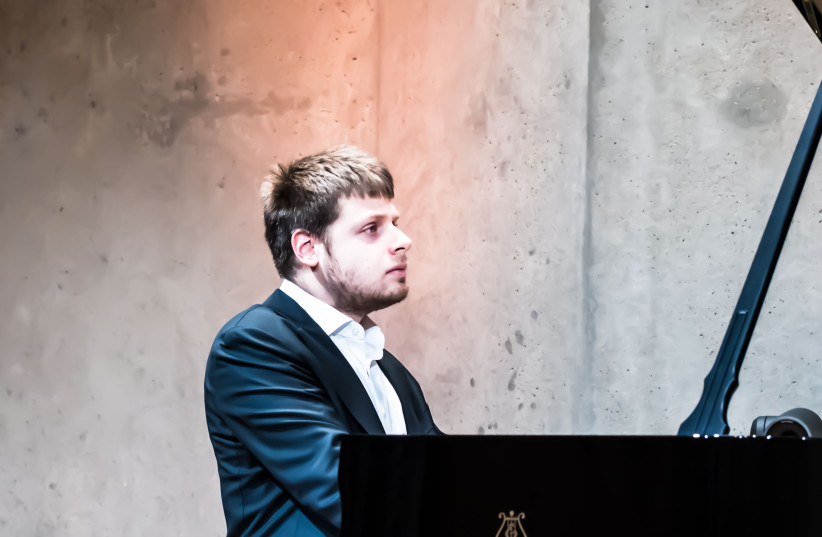
On the other hand was the new avant-garde, which funded noncommunicative modern music that sought to sever ties with the past entirely.
Further, Wolpe noted that even in Germany – frequently characterized as the capital of classical music – the postwar generation was effectively voting with their feet.
By shifting their engagement toward contemporary pop and rock, these younger audiences have been signaling a clear rejection of traditional budgetary priorities that favor established classical institutions.
Identity and aesthetics: A four-tiered typology
The relationship between these composers and their Jewish identity varied significantly, based on their geographic origins and personal experiences.
Wolpe cited Viktor Ullmann as a primary example of “metamorphosis.” This symphonist evolved from an assimilated secularist to a composer who synthesized Czech, Jewish, and German identities, as in his Piano Sonata No. 7.
While Wolpe’s observations provide a historical framework for the delayed revival of these works, the repertoire of this year’s competition suggests a more nuanced internal landscape.
When examining these composers, a distinct four-tiered typology emerges in how they synthesize their Jewish identity and musical aesthetics.

The first group of composers represented an approach of secular assimilation. This category primarily comprised Dutch composers, such as Henriëtte Bosmans, Leo Smit, Mischa Hillesum, and Frans Weisz, all of whom exhibited little to no overt affinity for Jewish liturgical or folk traditions in their music.
For these artists, identity was likely a biographical fact rather than a stylistic influence, reflecting a deeply integrated European existence.
A second group, largely consisting of Czech composers such as Pavel Haas, Schulhoff, and Ullmann in his middle period, displayed a clear tendency toward Moravian folk music and Slavic rhythmic structures.
Here, identity was primarily filtered through the regional and geographic folk traditions of the composers’ immediate surroundings.
The third group comprised composers who worked in two channels, such as Mieczysław Weinberg and Alexandre Tansman.

These artists occasionally produced explicitly Jewish works, such as Weinberg’s Piano Sonata No. 2 or Tansman’s Rapsodie Hébraique, yet in the majority of their output, they diverged from their own heritage in favor of a purely modern Western aesthetic.
The final group diverged from European Jewish traditions, drawing upon Middle Eastern and nascent Zionist elements.
Examples include Ullmann’s Piano Sonata No. 7, which integrated a song by Yehuda Sharett, and Mario Castelnuovo-Tedesco, whose compositional techniques prefigured later Israeli styles, as well as Tansman’s later reflections in “A Visit to Israel.”
All in all, the 18th Arthur Rubinstein International Piano Master Competition has provided a vital platform for the rediscovery of these gifted composers, whose works embody the untold heritage of European Jewry.
By integrating this repertoire into the rigorous demands of an international tournament, the competition has been introducing much-needed performative attention to a musical legacy long sidelined by history.
As the focus shifts to the final stages in Tel Aviv this September, the performances remain available via live stream on the Arthur Rubinstein International Music Society website and YouTube, providing a rare opportunity for global audiences to engage with this historically significant music.