
So far in Operation Roaring Lion, approximately 4,000 Israelis have been evacuated from their homes due to missile or rocket strikes, ending up in hotels.
The National Emergency Management Authority (NEMA) reported that the system is now operating on a faster mechanism for evacuations and assistance to citizens, in parallel with preparations for continued fighting and additional security scenarios.
The head of NEMA, Brig.-Gen. (Res.) Itzik Bar, identified three main gaps in the home front upon taking office: practical implementation of essential services and of strict defense policies due to missile and rocket attacks, support for citizens whose homes were damaged, and national operational continuity and strategic reserves, such as food.
Bar, the former senior official of the National Security Council (NSC), was appointed as head of NEMA four weeks before Operation Roaring Lion.
The NEMA effort is currently reflected in several aspects during the war, including coordination and synchronization efforts for those whose homes were damaged by missiles and rockets, with a focus on the speed of property compensation responses and evacuation to hotels. "Today, the local authorities, in coordination with the Property Tax Authority, evacuate; they don't pay money directly to the hotel, and unlike the past, they don't sign contracts with them, or have a back-and-forth on whether one meal or three meals should be provided to citizens in the hotel," a senior security official said. "The matter is now resolved."
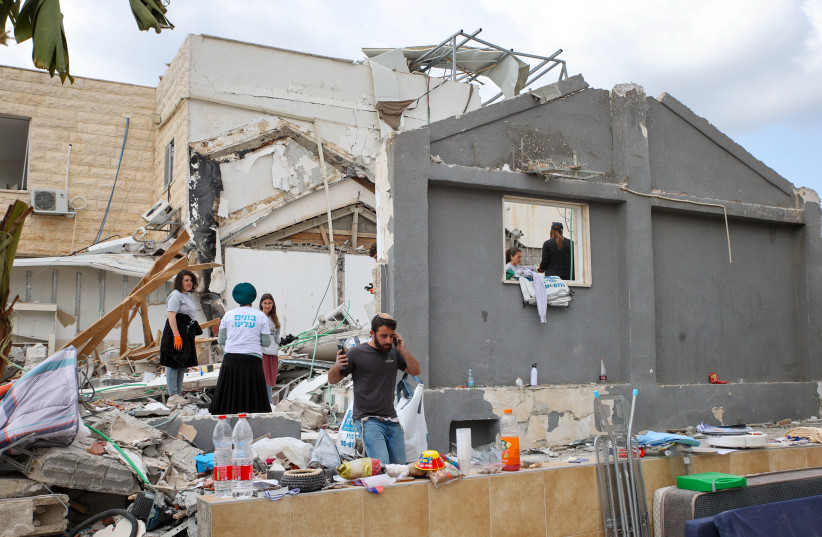
Another issue resolved through NEMA coordination was rapid payments to citizens. "The authority receives 2,000 shekels: 1,500 for the local organization, and 500 is transferred automatically to citizens, either through Bit or food network cards. We already have 25 hotels open, with 26 municipalities involved, and nearly 4,000 citizens evacuated from their homes," said the senior security official.
"A decision was made that NEMA is the national intelligence officer for anything related to national infrastructure and strategic facilities, including alerts for missile launches and preparedness for possible attacks, in collaboration with the relevant chief executives and governmental offices," the official added.
"This includes wide-scale protection efforts and improvements. It includes the Israel Electric Corporation's service to citizens in areas with damaged infrastructure. For example, we reduced response time to two hours for repairs, including teams that are stationed in the field."
Wi-Fi needed in northern shelters for prolonged stays
Another issue involved providing Wi-Fi to all shelters in the north because of prolonged stays in protected areas due to launches from Lebanon and Iran. "This project was halted at the end of 2025, but we are now pushing it forward with full force, including financing," the senior security official said. "We are also focusing on maintaining functional continuity for Tipat Halav clinics in the north, post offices, and a cash withdrawal mechanism (concealed), not necessarily through banks."
In addition, preparations are underway for the scenario where the Houthis will join the battle by launching missiles and UAVs, focusing on the south of the country. Accordingly, professional monitoring is in place for the protection aspects, and responses will be provided as needed, similar to the north.
Currently, Eilat has suffered four impact sites. At this stage, it was decided in coordination between the IDF and NEMA to reinforce Eilat with medical teams due to concerns of mass casualties and strain on local medical infrastructure, including readiness at 27 hospitals nationwide, with ten of the larger ones at a high level of preparedness. The senior security official also stated that NEMA is preparing for at least several more weeks of fighting, if not more, depending on the situation assessment and political leadership decisions.