
This weekend marks 1,000 days since the Hamas-led October 7 massacre in which 1,164 people were killed, and 251 were taken hostage.
There has not yet been a full accounting for the events of that day in a criminal courtroom, but a special law has been enacted, over NIS 1 billion approved, and work has begun at Atarot in northern Jerusalem, where a dedicated military tribunal is slated to be built.
Construction is only one part of a project in which the harder work is this: Prosecuting hundreds of defendants for crimes across dozens of locations.
This will need to be done while using a vast and developing record of evidence, a potentially enormous witness pool, classified materials, security arrangements, and a legal framework with few domestic parallels.
The question is, how can the state put the October 7 perpetrators on trial without overwhelming the courts, abandoning victims and families, or collapsing under the obligations of a criminal proceeding?
The first trials are not expected to open soon. The Jerusalem Post understands that the current working assumption is that they will not begin before 2028.
In other words, the task is to build an entire temporary justice system around a crime that cannot be reduced to a single file, defendant, scene, or legal theory.

A framework – not yet a trial
The Knesset approved the October 7 prosecution law in May, creating a special military court in Jerusalem to hear the cases.
This law covers alleged acts committed between October 7, 2023, and October 10, 2023, as well as offenses allegedly committed against hostages held in Gaza after that period.
It was written to allow prosecution under existing criminal statutes and special offenses – including crimes against the Jewish people, crimes against humanity, war crimes, murder, rape, abduction, and looting.
It also gives the tribunal, in relevant cases, the authority to impose the death penalty under the legal framework available to it.
The court will sit in panels of three judges. At least one judge on each panel must be a president of a military court or a senior district court judge brought into the military framework.
Further, while any first-instance judgment may be appealed, a death sentence would trigger automatic appellate review before a panel headed by a retired Supreme Court justice, even if the defendant does not file an appeal.
The law is designed in such a way that it takes into consideration that these are not ordinary terrorism cases.
Custom-made court
In other words, the court must be secure enough for hundreds of high-risk defendants, large enough for parallel proceedings, equipped for vast digital material, and structured for victims and bereaved families who will have to revisit October 7.
The Post understands that the planned complex in Atarot is meant to include nine courtrooms and be able to support up to 15 judicial panels.
A separate unit is expected to be created within the military court system, with dedicated judicial, prosecutorial, administrative, security, technological, and victim-support functions.
On June 18, Constitution, Law, and Justice Committee chairman Simcha Rothman said bulldozers had begun preparing the Atarot site. The announcement marked the first public sign that the law had crossed into the implementation stage.
Atarot is close to the Kalandiya crossing and the West Bank. Rothman has said the location was selected partly to address defense counsel and prison-transport logistics.
It is the Post’s understanding that the three major tracks now moving in parallel are the physical construction of the complex, the creation of a victim-and-witness system, and the completion and transfer of case files from the State Attorney’s Office to the military prosecution.
From investigation to military prosecution
The State Attorney’s Office said in response to a query that it established a dedicated team as early as October 2023, led by its Southern District prosecution division, and reinforced by prosecutors from other districts.
The team, it said, has been accompanying the investigation into the scenes, suspects, victims, and events, while preparing legal opinions and documents required for future proceedings.
In February, following discussions led by Attorney-General Gali Baharav-Miara with chief prosecutor Amit Aisman and the military advocate-general, it was decided that the military prosecution would handle the cases to completion before the special court.
The Post understands that the full files have not yet been moved to the military prosecution. However, a team dealing with the special tribunal began working already in February, before the final legislation was passed.
It has spent the months since mapping the project’s personnel, infrastructure, procedural, and institutional needs.
The government approved the budgetary framework for the effort in early June, allocating more than NIS 1b. for 2026 through 2029.
These funds are meant to cover not only the court complex, but prosecution offices, an IDF headquarters facility, staffing, secure transportation, communications and broadcasting systems, medical services, and other operational costs.
The hostage issue was a central constraint on the timing of the cases. While Israelis remained held in Gaza, the state held off on indictments amid concern that the suspects could be sought in a future hostage deal.
The State Comptroller’s Office’s June report criticized the fact that no October 7-related trial had begun, while noting that this concern had delayed the process.
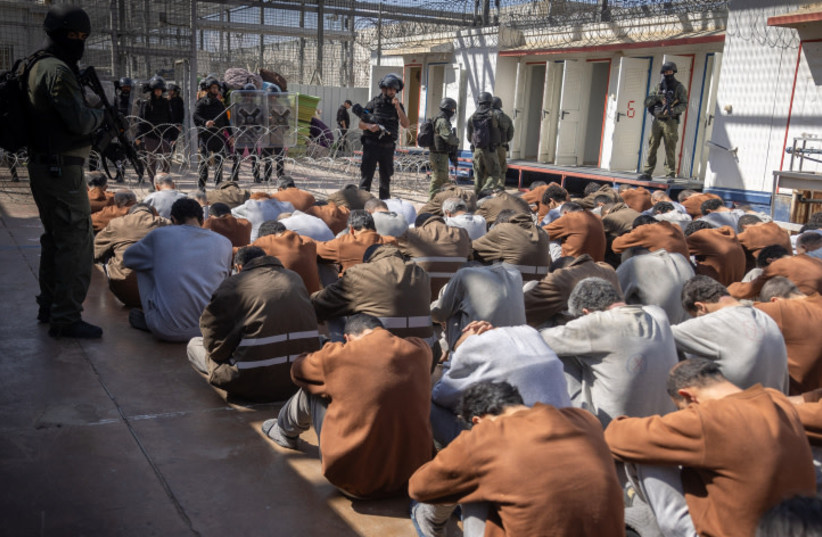
What case is the prosecution actually trying to prove?
The first indictments will matter not only because of who appears in them, but because of the narrative they tell.
Maurice Hirsch, a former military prosecutor in the West Bank, said in an interview with the Post that one of the prosecution’s earliest and most consequential decisions will be which legal doctrine or doctrines it chooses to pursue.
This would frame October 7 not only as a series of discrete crimes at particular locations, but as a coordinated criminal enterprise carried out by people acting together toward a shared criminal purpose.
If, for example, the chosen doctrine is a locality-based one, responsibility could turn principally on what prosecutors prove at a specific kibbutz, road, home, or festival site.
Under the Joint Criminal Enterprise doctrine, however, prosecutors could seek to show that defendants who participated in the broader operation bear responsibility beyond the precise place where they were apprehended or the individual act they personally committed.
Which doctrine, or doctrines, are applied at the outset could set the tone and development of the trial.
Hirsch said the public picture points strongly toward coordination – the scale of the assault, simultaneous border attacks, weapons, maps, preparations, and documents reportedly recovered in Gaza will likely all be factors.
Whether the evidence supports the use of the Joint Criminal Enterprise doctrine to the criminal standard required in court is a different question. The prosecution has not given any indication as to which doctrine direction it is leaning towards.
That choice will shape the number of indictments, the evidence disclosed, the witnesses called, the judges and prosecutors needed, and whether families must relive the same material in several courtrooms.
Locality-based cases may be more manageable, and they can make it easier to connect to particular victims and evidence, Hirsch explained.
Alternatively, he added, they could produce many proceedings, so while a broader case might better convey the attack’s coordination strategy, this would demand proof linking people, planning, and acts across scenes.
The evidence problem
Prosecutors will have to turn an unusually large and varied body of material into evidence that can be tested in court: Physical evidence from the scenes, statements by suspects, survivor and witness testimony, footage recorded by perpetrators, digital records, and material collected during military operations in Gaza.
The challenge will be less the existence of material than the work of organizing it, determining what can be used, disclosing it to defense counsel, and tying it to particular defendants and alleged offenses.
On the flip side, the issue might run in the other direction in this case, as many of the victims were murdered.
The Post understands that the anticipated victim-and-witness apparatus is being planned around some 12,000 potential witnesses.
The military prosecution will need to prepare for its involvement in the proceedings as the indictments and court structure take shape.
Especially stark in this regard is the issue surrounding sexual violence. Many victims were murdered, and some scenes were destroyed or altered in the chaos of the attack.
Meanwhile, surviving witnesses may have seen only part of an incident. They may be asked to testify about events that cannot be reconstructed through a conventional single-victim, single-scene evidentiary model. This, without even exploring the role trauma may play regarding the experiences that can be triggered from such a recall.
In its May report, the Civil Commission on October 7th Crimes by Hamas Against Women and Children argued in favor of a cumulative evidentiary model for sexual and gender-based crimes.
This would pertain to preserved footage, cross-referenced testimony, recurring patterns across sites, forensic material, and other records.
That approach may be relevant to the eventual prosecutions, particularly where victims were murdered, scenes were destroyed, and surviving witnesses can testify only to fragments of what they saw.
Prosecutors will still have to establish the evidence against particular defendants and particular alleged offenses. Nevertheless, the report argued, individual incidents can also be assessed within the wider criminal context of the attack.
The same tension runs through classified material. Hirsch noted that prosecutors may face disputes over evidence that is too sensitive to expose in open court.
That can create litigation within the litigation: Arguments over whether material can be disclosed, summarized, protected, or used at all without damaging an intelligence source or method.
A trial must be built to last
After 1,000 days, the temptation is to measure the project by its visible milestones: A law, a budget, or a building site.
But the real measure will be whether the system can conduct proceedings that are credible and durable.
Hirsch’s blunt warning is that speed will have limits. “If anyone thinks that these trials are going to finish quickly, they’re simply deluding themselves,” he said.
A criminal prosecution of this scale takes time. The defense must receive and examine evidence, preliminary claims must be heard, prosecutors must choose what they can prove, and judges must decide disputed legal and evidentiary questions.
Each defendant is entitled to an individual defense, even when the alleged crimes are among Israel’s most horrific, Hirsch noted.
He said he fears it could take one to two years before any trial reaches the point at which a defendant takes the stand – simply to file indictments, transfer evidence, and complete preliminary stages.
Hirsch also said the Knesset debates over judicial appointments to the tribunal, lasting three, five, or seven years, were not a technicality, as duration may determine whether cases remain coherent from start to finish.
Comparisons to the Eichmann trial, which have cropped up in public debate, are understandable, but they go only so far.
Adolf Eichmann was one defendant, tried in one case. Here, the court is expected to handle hundreds of defendants, different levels of alleged involvement, and crimes spread across numerous sites.
The closest comparisons may be the international tribunals created after Rwanda and the former Yugoslavia, but those were institutions established after the crimes and were externally imposed courts.
Israel is attempting to handle these cases through its own court system, using a mix of existing criminal law and the new October 7 framework.
The death penalty is part of that legal architecture, but it should not eclipse the harder question already in front of the prosecution – how to build charges that are legally sound, individually grounded, and capable of surviving appeal.
There is no indication yet of whether prosecutors will seek capital punishment in any case.
The tribunal’s authority to impose it is also separate from the broader Death Penalty for Terrorists Law championed by National Security Minister Itamar Ben-Gvir, and does not address what the charging policy will be.
For families of those killed, the length and structure of the proceedings will matter directly. The way the cases are divided could determine whether relatives are asked to follow one trial or several, how often they are required to return to court, and how much evidence about the attacks they will have to hear.
The work at Atarot is therefore only one part of what still has to be put in place. The court must be completed, the case material transferred and organized, indictments prepared, personnel recruited, and arrangements made for victims, witnesses, defendants, and defense counsel.
A 1,000 days after October 7, those preparations are underway. Yet, the Post understands that the first trials are not expected to begin before 2028.
Yonah Jeremy Bob and Keshet Neev contributed to this report.