
Israel and Greece formalized one of the largest defense export agreements in Israel’s history on Monday, signing a €3 billion government‑to‑government deal that will see Israel design and deliver a complete, multi‑layered national air defense architecture for the Hellenic Republic’s Achilles Shield project.
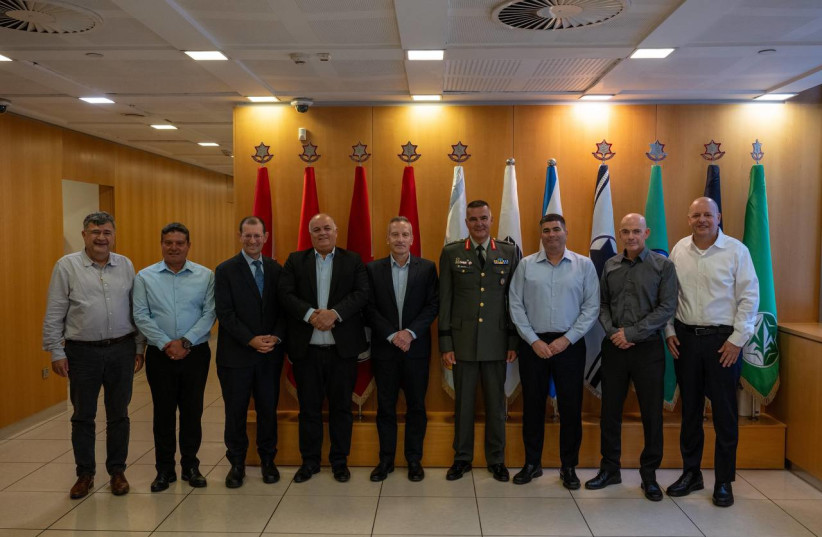
Signed in Tel Aviv by Defense Ministry Director-General Maj.-Gen. (res.) Amir Baram and his Greek counterpart, Maj.-Gen. Ioannis Bouras, the agreement marks a significant expansion of bilateral defense cooperation and places Israeli missile defense systems as the backbone of Greece’s long‑term air defense modernization program.
Senior officials from Israel’s Defense Ministry’s International Defense Cooperation Directorate (SIBAT), the Defense Research and Development Directorate (MAFAT), and the Israeli Missile Defense Organization attended the signing, alongside the CEOs of Rafael and Israel Aerospace Industries (IAI).
MAFAT head Brig.-Gen. (res.) Dr. Daniel Gold called the deal “a badge of honor for Israeli technological power” and said that Jerusalem will continue to develop additional technological breakthroughs to strengthen its standing in the world.
“The ability to field a multi-layered, comprehensive, and modern defense architecture - grounded in proven operational experience and at the forefront of global technology - is what contributed to Greece's choice of Israel as a key strategic partner,” he said.
Deal will include deploying SPYDER batteries to Greek islands
The project will integrate several Israeli‑made systems into a unified national network. At its core are David’s Sling, BARAK MX, and SPYDER missile defense systems developed by the Israeli defense companies and already deployed operationally within Israel’s own air defense array.
The package also includes MMR radars produced by IAI subsidiary ELTA for air surveillance coverage and a new national command‑and‑control system developed by Rafael to integrate all layers into a single operational picture.
Greek companies are expected to receive about €700 million of the deal’s total value as subcontractors for Rafael and IAI.
The agreement represents the first time Israel will supply a complete, end‑to‑end air‑defense array to another country. According to a statement released by the Defense Ministry, the architecture is based entirely on Israeli systems and incorporates operational lessons drawn from Israel’s recent wars wherein these systems played central roles in intercepting thousands of hostile aerial targets, including drones and ballistic missiles launched by Iran, Hezbollah, and the Houthis in Yemen.
In addition to the main package, the two sides concluded a €26 million supplementary deal for Rafael’s Drone Dome counter‑UAV system, intended to protect Greek strategic sites and reinforce existing defenses against unmanned aerial threats.
"The choice of Rafael systems, including David's Sling, SPYDER, and our command-and-control systems, as part of the national infrastructure reflects growing trust in Rafael's air defense capabilities and the unique operational experience accumulated in Israel,” Rafael CEO Yoav Tourgeman said.
The agreement also includes provisions for expanded industrial cooperation. Israel will transfer knowledge and technology to Greek defense industry partners as part of the government‑to‑government framework, deepening a relationship that has grown steadily over the past decade.
For Greece, the Achilles Shield constitutes one of the most ambitious air defense modernization efforts in its history. For Israel, it reflects a broader strategic effort led by Defense Minister Israel Katz and Baram to increase defense exports as a means of strengthening the IDF’s force buildup and expanding Israel’s international defense footprint.
Since the outbreak of war, Israel’s defense industries have been operating under an emergency production framework, supplying both the IDF and partner nations abroad. Despite vocal criticism, Europe has increasingly turned to Israeli air defense technology over the past decade, especially after Russia’s invasion of Ukraine and the growing demand for rapid, combat‑proven systems. Several Israeli systems, including the Iron Dome, David’s Sling, and Spyder, have been selected by European governments.
"The Achilles Shield deal is another milestone in the defense relationship between Israel and Greece. It reflects the deep trust our partners in Greece place in Israeli technology, the defense industry, and the government-to-government cooperation model led by the Defense Ministry through SIBAT. We will continue working to expand strategic cooperation with Greece and with additional countries, while strengthening Israel's defense industry and its standing in the world," SIBAT head Brig.-Gen. (res.) Yair Kulas, said.
Influence of Turkey in pushing Israel, Greece defense industries closer
The wider geopolitical context cannot be ignored. Both Greece and Israel face assertive neighbors and volatile regional dynamics.
IAI CEO Guy Barlev said that the two countries “share common challenges and interests, and cooperation between them is an important pillar in strengthening defense capabilities and safeguarding the security of their citizens.”
Greece’s sweeping military modernization program is unfolding against the backdrop of Turkey’s own ambitious drive to expand and indigenize its defense capabilities, creating a dynamic that could reshape the balance of power in the Eastern Mediterranean.
Turkey has made its defense autonomy a national priority, aiming to meet nearly all of its military needs domestically by 2030.
Turkey has launched the $6.5 billion Steel Dome program, a multi-layered air defense network designed to rival Israel’s Iron Dome or Greece’s Achilles Shield and provide protection against aircraft, drones, and ballistic threats.
Turkey’s President Recep Tayyip Erdogan claimed that the Steel Dome “will instill confidence in friends and fear in enemies.”