
A five-justice High Court of Justice panel on Sunday questioned whether a ballot can remain secret when lawmakers are allowed to document their votes behind a curtain as it heard petitions seeking to invalidate the election of attorney Michael Rabello as state comptroller.
The court pressed lawyers for the Knesset, Likud, and Prime Minister Benjamin Netanyahu on the purpose of the secret ballot after some lawmakers photographed or filmed themselves during the decisive second round of the June 3 election.
No ruling was announced at the hearing. But the questions from all five justices underscored the court’s concern that self-documentation can turn a secret ballot into a mechanism for proving political loyalty.
The hearing followed Knesset Speaker Amir Ohana’s rejection last week of the court’s proposal for a new and undisputed vote. The court then issued a conditional order requiring the Knesset, Likud, and Rabello to explain why the result should not be annulled over the alleged breach of ballot secrecy.
The expanded bench consisted of Supreme Court President Isaac Amit, Deputy President Noam Sohlberg, and Justices Dafna Barak-Erez, Gila Canfy-Steinitz, and Ruth Ronnen.
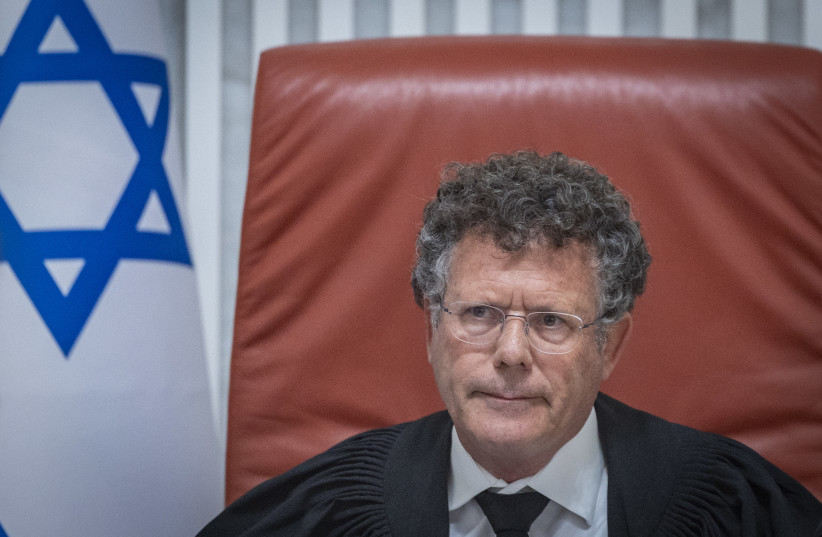
The conditional order concerns only the integrity of the vote, not Rabello’s eligibility in light of his professional ties with Netanyahu, Likud, the Prime Minister’s Office, and government ministers.
Amit noted that secret ballots are reserved for only a limited number of sensitive Knesset appointments and asked the respondents to explain whether a vote could still be called secret if 120 lawmakers, or even a far smaller number, documented how they voted behind the curtain.
Bart: No prohibition on filming voting
Att. Yitzhak Bart, representing the Knesset’s legal adviser, said that no explicit rule prohibited lawmakers from photographing themselves in the voting area. He argued that the petitioners had produced no evidence of a direct instruction compelling MKs to document their ballots.
Ronnen said the issue could not be reduced to whether a formal order had been given. A group atmosphere, she said, could create an expectation that lawmakers record their votes, leaving those who did not do so open to suspicion.
Canfy-Steinitz similarly said that the curtain was the foundation of ballot secrecy. If a lawmaker cast a vote behind it while fully recording himself doing so, she said, the curtain had effectively been moved aside, and the vote had become public.
Barak-Erez challenged Bart’s reliance on the absence of a specific prohibition. Past practice, she said, might not establish the proper norm.
She also rejected the suggestion that a repeat vote would necessarily be the more radical remedy, noting that it was a relatively simple process that could be carried out without added cost.
Sohlberg: Vote secrecy 'common sense'
Sohlberg said that freedom of expression carried little weight during the short period in which a lawmaker stood behind the curtain. MKs were free to say how they voted before and after the election, he said, but “common sense” showed that the vote itself was meant to be secret.
He added that even a few lawmakers publicly revealing their ballots could pressure colleagues to do the same. The court’s role, he suggested, might be to protect the Knesset’s dignity by protecting the purpose of the secret ballot rather than deferring to an understanding reached between coalition and opposition factions.
Bart maintained that invalidating the election would amount to applying a new rule after the fact. Even if the court concluded that self-documentation was forbidden, he said, it should not retroactively cancel Rabello’s election.
Canfy-Steinitz disputed the Knesset’s suggestion that there had been a consensus allowing the practice, saying any prior agreement concerned bringing phones into the voting area, not filming the ballot.
Att. Ilan Bombach, representing Likud and Netanyahu, said there was “not a shred of evidence” that anyone directed lawmakers to document their votes. He argued that the court should not infer coercion from media reports or from the changed result between the first and second rounds.
The hearing was briefly interrupted when Likud MK Tally Gotliv called out to the justices. Amit asked court security to remove her after several interruptions before she left the courtroom.
Rabello was elected in a two-round Knesset vote on June 3. Retired Supreme Court justice Yosef Elron received 60 votes in the first round, compared to Rabello’s 57, leaving both candidates one vote short of the required 61-vote majority.
In the second round, opposition lawmakers alleged that coalition MKs had been asked to photograph or film their ballots behind the curtain. The vote was halted and restarted before Rabello won 61 votes to Elron’s 57.
The petitioners argued that the documentation transformed the secret election into a loyalty test and may have prevented lawmakers from voting freely.
The Knesset, Rabello, the Likud, and Netanyahu deny that an instruction was proven and maintain that the reported conduct did not warrant the exceptional step of voiding the result.