
Israel is set to cut NIS 300 million from the rehabilitation budgets for northern Israel and the Gaza border communities despite previous government assurances, a move criticized by Confrontation Line Forum chairman and Mateh Asher Regional Council head Moshe Davidovich in an interview with 103FM on Tuesday.
"We received advance information from government officials that the Finance Ministry or the government intends to make painful cuts to the budgets of the Tnufa and Tekuma directorates," he said.
"These are the very residents who were and still are the defensive shield of the State of Israel, not to mention that they are still in the midst of a war. This week, two sirens sounded here in the North, one in Shtula and one in the Rosh Hanikra area. We are in the middle of a war, and at the Finance Ministry, it's business as usual."
While acknowledging the need to increase defense spending, Davidovich argued that residents of Israel's border communities were themselves an integral part of the country's security.
"It's fine that there are budget cuts. I'm not complaining about the need to increase defense budgets. But we are, in fact, the country's security. What constitutes the country's security?" he asked.
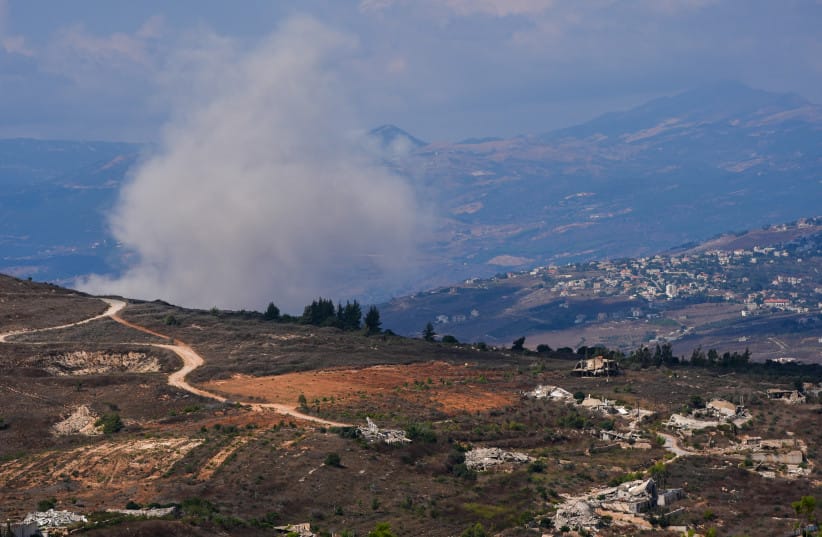
"Isn't it those who live along the fences, along the border, whose children cannot sleep because of the noise of our artillery shells and aircraft bombing Lebanon every day? What is going on here? The prime minister himself explicitly told us that whatever budget cuts were made, the confrontation line would be excluded from the equation. And here we are. Words are one thing, actions are another."
Davidovich described the proposed cuts as "a devastating blow to community resilience, welfare, and education budgets," highlighting the difficulties faced by children displaced from their homes during the war.
"We are more than three years behind central Israel when it comes to children who were uprooted and moved all over the country. Children who stayed in hotels and hostels and were scattered across the country. These are the very children whose budgets are about to be cut. It's unbelievable."
Government gives with one hand, takes away with the other
"These children are heroes," Davidovich stressed. "These families living here along the border are the backbone of the State of Israel's resilience. And these children are looking for just one thing: to return to their normal lives, nothing more. With one hand, the government gives, and with the other, it takes away. This is something we will neither allow nor accept. It is a situation we cannot live with while the guns are still roaring and IDF soldiers are fighting in Lebanon. We cannot live with it, and we cannot accept it."
Davidovich expressed hope that the finance minister would intervene to prevent the cuts.
"I very much hope that the director-general of the Tekuma and Tnufa directorates will receive a message from the finance minister informing him that this budget is sacred and that no one will touch it. I very much hope so, and I say this from the bottom of my heart, not out of frustration or anger. If a government does not know how to look after these brave and heroic residents, it has no right to govern the State of Israel."
Security concerns drive northern families away
The regional council head also addressed the difficult decision made by many families to leave northern Israel permanently, noting that the situation was particularly difficult in the eastern Galilee.
"The problem is more severe in the eastern part, in the Kiryat Shmona area, Metula, and some of the kibbutzim in the Upper Galilee. In the Western Galilee, the picture is more encouraging. Nevertheless, even here in Mateh Asher, in Kibbutz Adamit, Hanita, and Rosh Hanikra, dozens of families have already made the difficult decision not to return to the North. And it is not because they do not love the North or because their home was not their ideal home, but solely out of concern for the well-being of their children."
Concluding the interview, Davidovich appealed directly to decision-makers, urging them to recognize the strategic importance of Israel's border communities.
"If you value life and believe that the State of Israel is a country that needs to strengthen its borders, if you truly believe in Trumpeldor's saying that the line of the plow is the border, and that we maintain the strategic depth of the State of Israel, do not do this."