
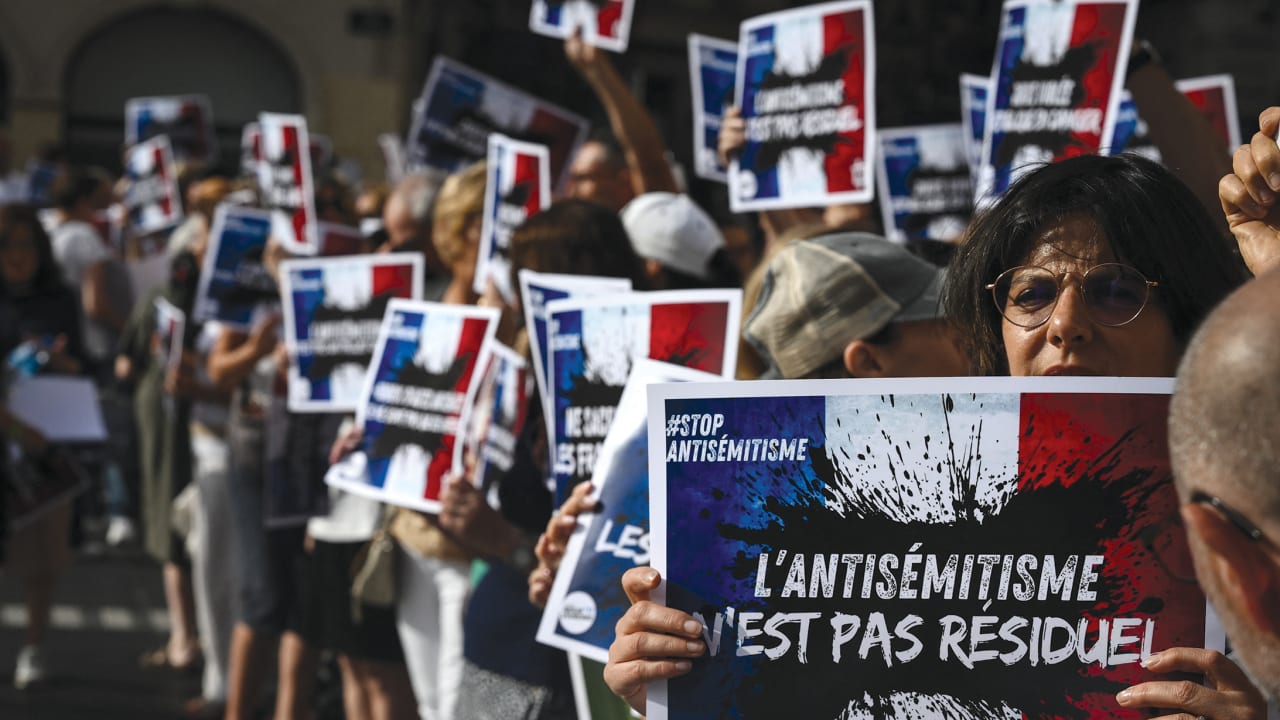
On October 7, 2023, Hamas’s massacre shocked the conscience of the world. The brutality was undeniable; the grief and sympathy were relatively widespread.
Yet, almost immediately, another shock unfolded – a moral inversion in parts of civil society in the West that rationalized, minimized, or even celebrated the destruction, mass bloodshed, rape, and murder.
In the space created by that inversion, the genie of antisemitism burst from its bottle, turning what had long been whispered on the margins of society into something shouted on the streets, projected on public buildings, scrawled across campuses, and echoed in boardrooms, newsrooms, and parliaments.
The world’s oldest hatred, thought by many to be contained by post-World War II norms and a generation’s hard-earned lessons, made a brazen bid for the mainstream.
For years before October 7, antisemitism had been changing costume. Paraded under the banner of “anti-Zionism,” this pernicious hatred cloaked itself in the language of human rights, or hid behind satirical memes and algorithmic virality. This was not harmless, but the social penalty for blatant Jew-hatred, at least in most liberal democracies, remained high.

The veil was the point.
After October 7, the veil dropped.
From context to contortion
Where euphemism once softened intent, plain speech shouted it: “from the river to the sea” became a rallying cry, not for a negotiated peace but for erasure of the indigenous and ancestral national homeland of the Jewish people.
“Context,” as some university presidents testified, became contortion.
Institutions that should have been moral anchors hesitated. Some equivocated while others issued statements that treated the deliberate murder of Jews as just another episode in a symmetrical conflict. That hesitation was read, by extremists and opportunists alike, as permission.
Antisemitism has moved through three concentric circles. On the fringe, we see explicit hatred and violence. In the near-mainstream, we see respectable figures laundering that hatred, framing eliminationist ideas as moral necessity or academic critique. In the mainstream itself, we see normalization euphemisms adopted by the pillars of our esteemed cultural and professional institutions, double standards applied only to Jews, and safety protocols for every community as ours treated as optional or political.
If you want to understand how the fringe influences the center, watch how language travels. Watch how slogans become social signals, and how social signals become policy.
Fighting back
So, what is to be done?
First, clarity. We must restore a shared vocabulary that recognizes antisemitism wherever it appears – far Right, far Left, radical Islamist, or opportunistic. The International Holocaust Remembrance Alliance (IHRA) working definition of antisemitism, used by hundreds of governments, regions, and civil society organizations across the world, remains the most practical tool for this task. Institutions that refuse to adopt and apply it are not neutral, they are siding with the enemies of our community.
Second, accountability. Social media platforms cannot continue to profit from engagement while pretending to be neutral utilities. The same content moderation urgency that has rightfully been applied to other forms of hate must be applied to Jew-hatred. Repeat-offender accounts, algorithmic amplification of slurs, and monetization of dehumanizing content are design choices, not inevitabilities. Legislators should insist on transparency and consequences.
Third, safety. Synagogues, schools, and other Jewish sites need resources proportionate to the threat. That is not special pleading, it is the basic obligation of the state to protect citizens. Governments must ensure that law enforcement officers are trained to recognize antisemitic crimes and that prosecutors treat them with the seriousness they deserve.
Fourth, leadership. National leaders, mayors, decision-makers, opinion-shapers, university presidents, union heads, editors, and corporate CEOs set the tone. They must speak out unequivocally about antisemitism, with zero whataboutery. When they waffle, the arsonists of civic trust feel emboldened. Leadership is not about perfect statements; it is about moral courage and consistent follow-through.
Fifth, solidarity. The Jewish community does not ask for special treatment. We ask for equal treatment, and we show up for others who face hate. Coalitions that include Christian, Muslim, Hindu, Sikh, and other minority communities are not window dressing, they are democracy’s living immune system. When we defend each other’s safety and dignity, we deny bigots the isolation they seek to impose on all of us.
Sixth, education. We must rebuild literacy about antisemitism in schools and universities, and pair it with rigorous education about media literacy, conspiracy theories, and the responsibilities that come with speech. Young people should learn about the Holocaust, yes, but also about the long history of antisemitism that preceded it and the mutations that followed. They should learn why singling out the world’s only Jewish state for standards applied to no other nation is not activism but bias and hate. Education is not a quick fix, but it is the only durable one.
Holistic approach
At Combat Antisemitism Movement, we are working on every one of these fronts.
We convene mayors and local leaders to translate concern into policy. We equip campuses and communities with practical tools to document and respond to incidents. We build coalitions across faiths and ideologies.
If history teaches us something else, the genie can be forced back into its bottle. Not by censorship or fear, but by the steady reassertion of civic boundaries, clear definitions, enforced laws, courageous leadership, and a culture that refuses to equate hatred with virtue.
As we commemorate not just the massacre of October 7 but the explosion of hate which erupted on October 8, join us in ensuring that the fight back against antisemitism, especially in the mainstream, is robust, holistic, and successful.■
Sacha Roytman Dratwa is CEO of the Combat Antisemitism Movement (CAM).