

“Israeli journalists are too preoccupied with internal affairs and not enough with external affairs.”
That’s according to Gil Haskel, Israel’s chief of state protocol, who believes that external affairs should receive more media exposure because important developments in Israel’s foreign relations occur daily but often remain under the radar due to minimal media coverage.
And he should know, after spending 33 years in a variety of diplomatic roles in Israel’s Foreign Affairs Ministry.
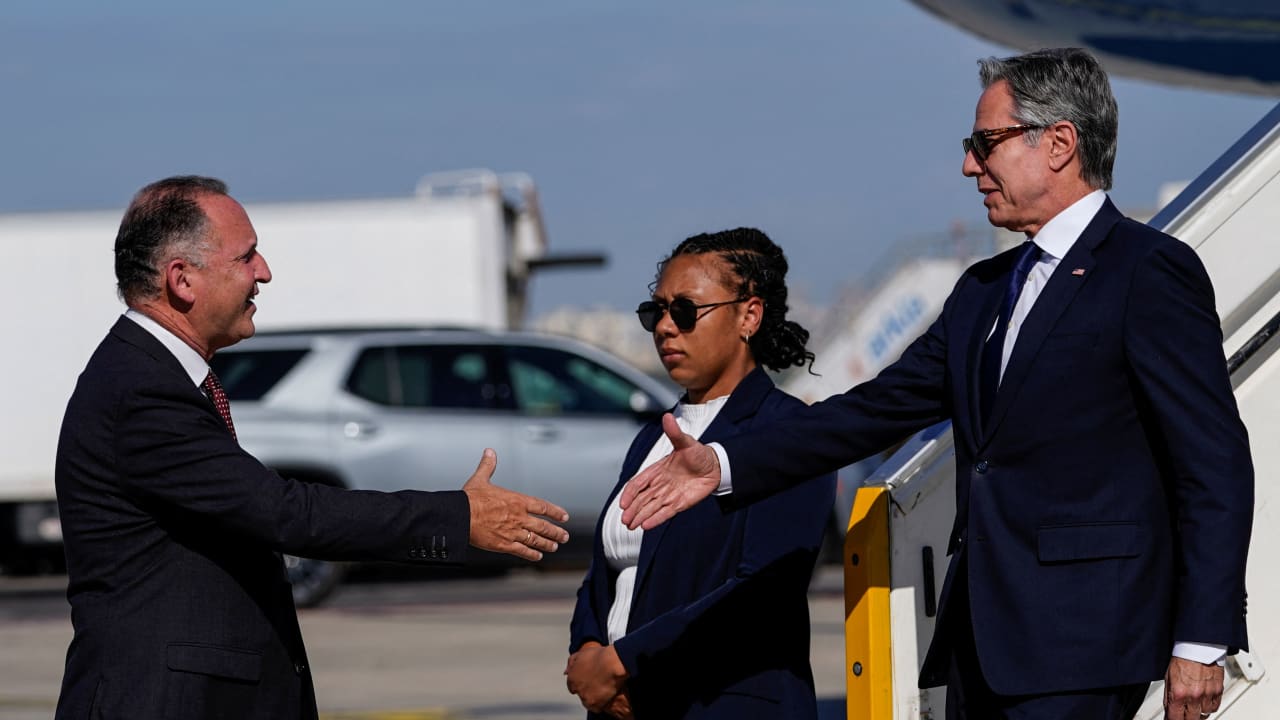
As chief of state protocol, Haskel is even more focused on the diplomatic world, meeting with new ambassadors when they arrive in Israel, introducing foreign dignitaries to Israel’s top leaders, being present at state dinners and bi-national and multinational conferences, and dealing with various problems of individual members of the diplomatic community.
He has held a number of diplomatic positions in mostly Asian and African countries, as well as within the ministry itself. Haskel, 60, is a married father of four and a major in the IDF reserves
Diplomat by default
As a boy, Haskel, who was born in Jerusalem, didn’t give much thought to diplomacy. He initially wanted to be a dentist, and afterwards, perhaps a journalist. He eventually settled on studying psychology and political science at the Hebrew University of Jerusalem.

After graduation, he concluded that career-wise, he wanted to engage in the psychological analysis of heads of state; he mistakenly presumed that a unit specializing in this kind of study existed in the Foreign Affairs Ministry.
“I was greatly disappointed when I learned that no such unit existed in Israel, nor at any other Foreign Affairs Ministry in the world,” he told The Jerusalem Report in a recent interview, adding that he “wanted to enter the Foreign [Affairs] Ministry as a cadet and establish such a department.”
That ambition was never realized, “but I enjoyed every minute of my time with the ministry.”
Memorable experiences
Over the years, Haskel has worked with 15 foreign ministers, and he declines to say who was his favorite.
However, he is happy to talk about his most memorable experiences. For example in 1993, as a very young diplomat, he was part of the delegation that accompanied then-foreign minister Shimon Peres to Thailand, India, and China. It was during that trip that Peres opened the Israeli Embassy in Delhi, and a year later, in 1994, Haskel was appointed as second secretary and deputy chief of the Israeli Mission in India.
He also fondly recalls the period immediately before that, leading up to the Oslo Accords. Haskel was deputy spokesman for the ministry at the time and was extremely busy because “Peres played a crucial role in promoting Oslo to the international media.”
Numerous delegations came to interview Peres, deputy foreign minister Yossi Beilin, and Uri Savir, who was Israel’s chief negotiator in the Oslo Accords discussions.
Haskel was also interviewed on camera, explaining to foreign journalists what Israel was experiencing in terms of excitement and optimism, while Peres spoke of the new Middle East.
“The atmosphere was that animosity is over. We felt as if we were all creating a new era,” Haskel said.
Firsthand witness
Another exciting period during the first half of the 1990s was the establishment of economic working platforms with Russia and the former satellites of the Soviet Union, which gained independence and were eager for economic opportunities. Diplomatic relations with Israel were quickly established, and Israel was glad to guide them.
“We did not have good relations with the USSR, and suddenly we were giving all these countries help with water, agriculture, aviation, and more,” Haskel said.
At that time, Haskel was heading the economic division of the Foreign Ministry. The excitement was palpable, he said. With hindsight, Haskel compared it to the feeling experienced when Israel completed the Arrow agreement with Germany. There is an irony in that the nation that tried to eliminate the Jewish people from the face of the Earth is now receiving defense weapons from the Jewish state. Considering that such a large percentage of Israel’s population includes Holocaust survivors and their offspring, “this was the real victory over the perpetrators.”

Of all the many and varied positions that Haskel has held, there are two from which he has derived the greatest satisfaction. The first was as head of Mashav, Israel’s Agency for International Development Cooperation. The second is his current role as chief of protocol, to which he was appointed immediately after Mashav.
During his six-year stint with Mashav, he traveled to numerous developing countries to see the results of what students from those countries had learned in Israel in spheres such as health, food security, agriculture, education, and community development.
In addition, he met with Mashav experts who were in those countries to assist with various projects. Many of the students become unofficial ambassadors for Israel when they return to their home countries.
“Mashav was an incredible job,” Haskel said. “It enabled me to witness firsthand what Israel has done for so many countries.”
Changing diplomacy
In the five years he has served as chief of state protocol, Haskel said he has met with more than 100 world leaders – monarchs, presidents, prime ministers, and foreign ministers from most of the 166 countries with which Israel has diplomatic relations.
Prominently displayed in his office are photographs of his meetings with former US president Joe Biden and with former German chancellor Angela Merkel.
From a professional standpoint, diplomacy has changed considerably since Haskel first became a diplomat. French used to be the language of diplomacy. While many diplomats speak French, the main language used today is English.
Whereas diplomatic reports used to be sent from abroad via diplomatic pouch, today foreign ministers and section directors are in close contact with each other via cellphone, Zoom, or other platforms. It’s a lot faster; but according to Haskel, “nothing is as effective as live face-to-face contacts.”
Such encounters enable personal exchanges that can be beneficial to both sides.
This is especially pertinent when antisemitism and anti-Zionism are so rampant. In his interactions with foreign dignitaries, Haskel has concluded that Israel has more friends than is generally realized.
“In informal small talk, the vast majority of world leaders are very supportive about Israel,” he said, noting that this comes across in intimate conversations and small talk when he escorts them during their visits to Israel or when he meets them abroad.
And Haskel makes no secret of how much he loves his current role – despite having to be available 24/7.
What will he do when he eventually retires?
Haskel is an amateur sculptor, so he will have more time to devote to his passion. Like several others before him, he will probably write a book, which, all things considered, should make for an interesting read at some point in the future.■