
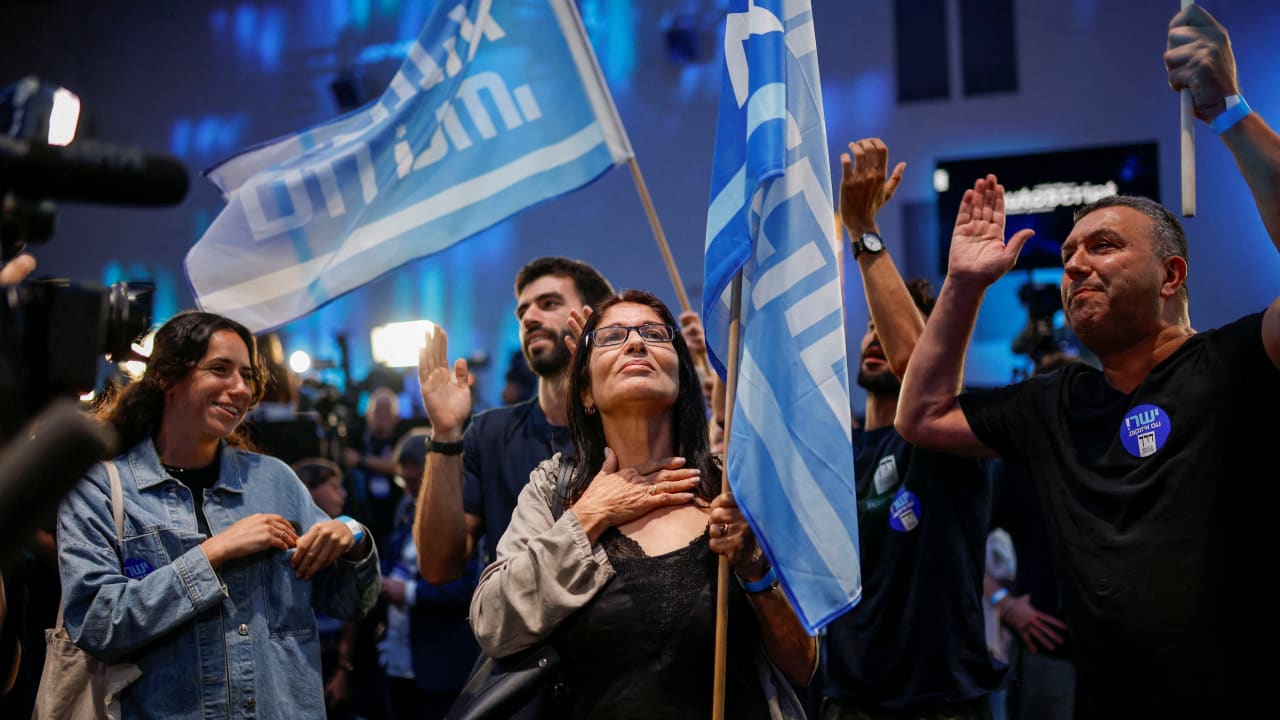

Israel voted on October 27 as it had not in more than a quarter of a century. Turnout reached 77.7%, the highest since 1999, and thousands of Israelis living abroad flew home just to cast their ballots. It changed almost nothing. Before the election, the great fear was a deadlock that would send the country back to the ballot box, as happened five times between 2019 and 2022. That fear is still with us.
On the morning after, the question on my mind was not who won, but who lost. The answer, I am afraid, is the people of Israel, who came out of it still in limbo: divided and without a government.
The pollsters lost too, and that is where this issue begins. Our cover story comes from The Jerusalem Post Editor-in-Chief Zvika Klein, who sat with Netanyahu at Likud’s campaign headquarters after 2 a.m., heard him call the race “an even tie,” and thought he was living in a fantasy world. Netanyahu was right. The final surveys of Channels 12 and 13 and Kan missed Likud by six to eight seats, and an 11-seat gap between two broadcasters’ estimates went largely unexamined. Klein does not spare the pollsters, or his own newsroom. He asks what editors owe readers abroad who depend on them to explain a country they do not live in, and promises a review of the Post’s own polling arrangements.
What comes next is the subject of the pages that follow. Yaakov Katz warns that Israel cannot afford another election, and Shir Perets calls on its leaders to set ego aside and make the compromises any government will require. Gil Troy finds a nation of contradictions: three years after October 7, Israelis remain deeply divided, yet their resilience endures. Eden Barzoabi examines the Arab vote, which has turned the Arab parties into potential kingmakers, and Eric Mandel looks beyond Israel’s borders, arguing that the next prime minister, whoever it is, must win America again.
An election asks who will govern. It also asks, quietly, what the country is for. That is why the second part of this issue turns to Zionism. Neville Teller reviews Casey Babb’s new book, The Moral Case for Zionism. Batsheva Neuer, a historian of Jewish political identity, traces how a movement born to liberate the Jewish people has come to mean very different things to Jews around the world. Chani Kaplan asks young Israelis what comes next. And Adam Scott Bellos argues that “never again” must be lived, not just repeated.
Across the border, the war takes a different toll. Dana Ben-Shimon reports on child marriage in Gaza, where war and displacement are pushing families to marry off young daughters.
We close in Jerusalem, with two stories about the city and how it inspires artists and curators. At the Tower of David Jerusalem Museum, curator Marie Shek has brought together 16 Israeli artists who work with gold for what is her 50th exhibition, and the one she says closes a circle. And Dvora Fishman profiles Barbara Hines, an American painter who learned as an adult that her parents had hidden their Jewish roots, and who now mixes soil from her Jerusalem garden into her paint.
Who we are is not decided at the ballot box alone. It is argued, written, painted, and lived, and this issue is part of that argument.
Thank you for reading.
– Neria Barr