When you approach Shakespeare, you understand by the play’s title whether it is a comedy or a tragedy. If it’s a comedy, you know that despite the scrapes and missteps the leading characters endure, the play will have a happy ending, with everyone gathered at a wedding. If it’s a tragedy, you accept that the main characters will end up dead.
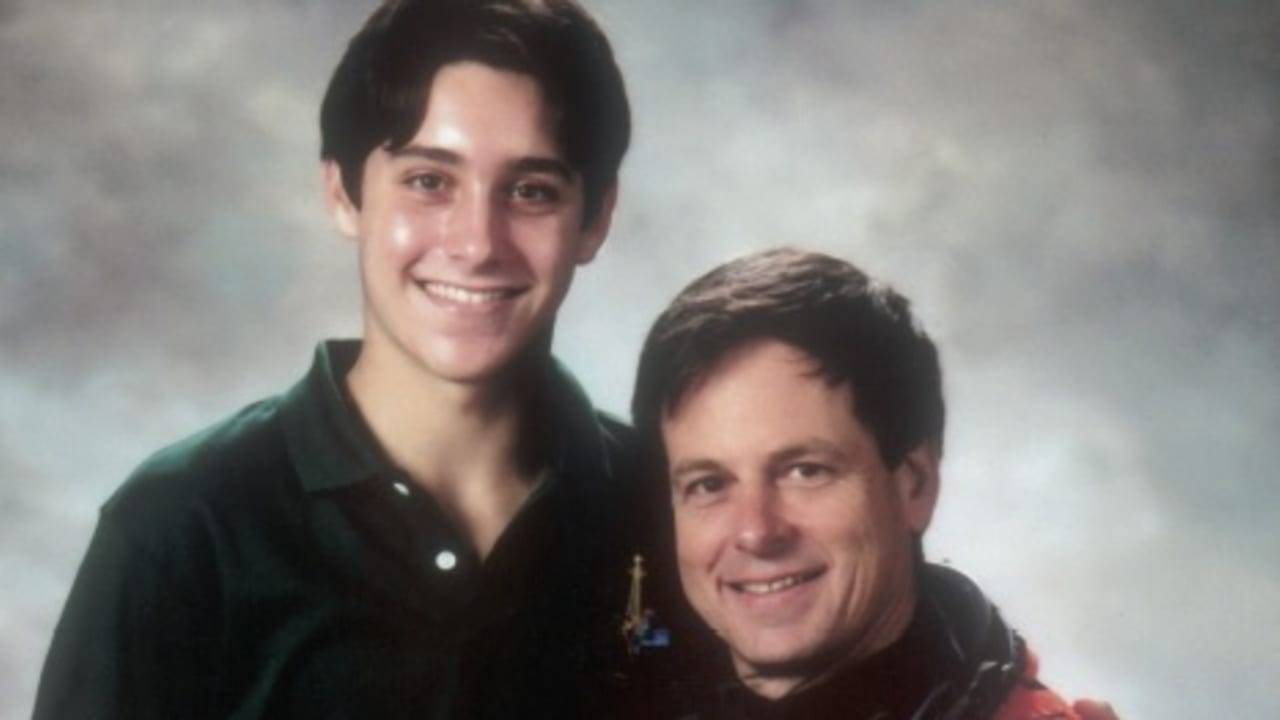
We enter any conversation, documentary, or book about this family knowing how it will end – with three too many deaths. They are not so far away from us that we can view the tragedy with emotional distance. In fact, knowing how the “story” ends gives each encounter with it an additional emotional punch.
Halperin’s preface, photo captions, and sidebar comments provide context for the times and events of the diary entries. They are helpful for those who don’t know the story’s outline and will offer insight to non-Israeli readers less familiar with the details.
But do not read this book for its literary merit. The diary entries rarely sparkle. Ramon’s technical and official notes offer nuggets of information that will be of interest to military buffs and historians. It is of deeper value where Ramon recorded his feelings, philosophical musings, and personal reactions to events whose public outline is known.
This is how we can see with the omniscient view of hindsight the tragedies about to unfold over the course of the largely chronological narrative. It even divides itself into a five-act drama consistent with the Shakespearean dimensions of the Ramon family’s calamities.
For those who believe in randomness, this foreshadowing may be an artificial overlay aiming to bring coherence to unrelated incidents. For this reviewer, knowing that Ilan, Rona, their parents, and their children did not know what would happen in future years added to the mounting sadness that I felt as I read the book. As tragedy piled upon tragedy, I both like a rubbernecker at a horrific traffic accident and a helpless bystander wishing I could reach out and tell the story’s characters – in this case real people – what was going to happen.
The first “act” opens when Ilan, who was raised as a secular Israeli Jew, was 23 and a recently graduated combat pilot in the Air Force, wrote in 1977 to Prof. Yeshayahu Leibowitz. He wrote Leibowitz was a man “whose opinion is important to me,” and asked:
What is the purpose of man in this world in which we live… And what is the way that a man can achieve this purpose?
Leibowitz’s answer posed more questions than answers, but cited Pirkei Avot:
“Man, who exists without having decided himself to be created, to be born, or to live has no choice but to make a subjective decision about his goal and purpose in life – and there are endless possible choices.”
Leibowitz went on to list the directions a person could take, which included pursuing pleasure, acquiring knowledge, doing good deeds for others, serving God and helping their people and country. He closed by saying that none of the directions a person could take could be explained by objective reasoning and that everyone must decide for themselves.
“Act two” opens in 1981 and comprises a lengthy retelling of the steps taken to plan and execute the Air Force’s dramatic Operation Opera – the bombing and destruction of Iraq’s Osirak nuclear reactor. Along with tidbits of interest to military enthusiasts sprinkled throughout the account, on May 7, one month before the attack, Ramon wrote:
“The trip home [to visit his parents] is the first chance I’ve had to think, and I begin to feel tense and anxious. Probably because of the past few days’ workload and the sense of responsibility I’ve been feeling… and obviously because of the weight of the mission and the danger involved.
“The thoughts that go through my mind are strange: Is this the last time I’ll be traveling this road to Tel Aviv?? No, that’s too dramatic!”
As well as mentioning the black humor which fuels the bravura of the macho alpha males that comprise the combat pilot fraternity, Ramon confided private fears and confusion to his diary:
“It’s a strange feeling that, on the one hand, everything could happen smoothly, or, on the other hand, maybe not, and then it’s maybe a feeling of finality, that this is the end. A little fatalistic.”
The next day, he wrote of how the mission coincided with his life’s purpose of service to nation:
“The chief of staff [Raful Eitan]…emphasizes the importance of the mission to the people of Israel and instills in us the feeling that this is a really important assignment… I’m ready for the worst (though deep in your heart you never think it will happen to you), and I’ll be surprised if anything good happens.
“… I think we were half crazy. Fighting like maniacs over places on the planes. Fighting for a chance to die.”
“A person who lives without a specific goal that he decides to achieve, or, more correctly, without deciding what life is about, what he demands and wants from life, what he wants to achieve... is wasting his life.
“… There are wonderful and beautiful things in the world, and I want to see and understand as much as possible. Why should I lose all that ‘for the sake of others?’
“…At the same time, you can’t forget where we live and what we are living for, and you have to invest yourself for the future.”
He wrote of his brief flirtation with electoral politics. He became disillusioned after meeting with Labor Party bigwigs and didn’t bother to press for a meeting with Shimon Peres.
“They’re a closed bunch that takes care of its own. They are pretty conservative and standoffish and kill off any attempt by anyone to come in from the outside.
“… In any event, it was an eye-opener. To sum it up in one word: ‘dirty.’”
Turned off by politics, Ramon dove into relationships with his family, as well as his work. His romantic and passionate relationship with his Rona and devotion to his children run throughout the book, especially in the last two “acts.”
Ramon’s final act on the national and international stages came when he was named Israel’s first astronaut and spent four years of intense, gratifying, and grueling training, along with frustration over numerous delays. The international attention on the flight, and Ramon’s conscious efforts to represent both Israel and Judaism to a global audience was laudable, but it wasn’t only for public consumption. The book contains an anecdote about Ramon not seeming to enjoy the traditional preflight barbecue. “The food’s not kosher,” he told a NASA official.
Once Ramon was in space, the impending disaster added pathos to the diary entries and emails, many of which expressed Ramon’s desire for his wife and his devoted and thoughtful fatherhood. He received moving notes from his children and father, and passionate emails from Rona. Ramon was aware of his place in history as an Israeli and a Jew, as the son of a Holocaust survivor, and the need for Israel as a haven for Jews.
He also rhapsodized about life in space in his most lyrical writing.
“… the night, the stars, the universe – you feel like you are a part of it, floating upward together with the stars… the universe appears deep and infinite.”
As we know what is coming, one of his final emails strikes both romantic and eerie tones that foreshadow the disaster:
Ramon’s last email, which of course he didn’t think would be final words to Rona, is heartbreaking:
The diary entries by Asaf, who was determined, if not haunted, to follow in his father’s footsteps don’t open a sequel so much as they add additional bitter moments. Asaf’s entries, including his bar mitzvah speech and a school paper, are teen-aged in sophistication but express his drive and hopes.
The book’s final words belong to Rona, which once again drives home its emotional impact:
“At the end of this book, I am left without words, with only a feeling of love and great privilege, a feeling that I was blessed and given the right to live alongside Ilan, to be his helpmate and to bring into the world four creations of love – Asaf, Tal, Yiftach, and Noa.”
Rona Ramon wrote that coda for the original Hebrew edition, which came out in 2013. She died of cancer five years later.