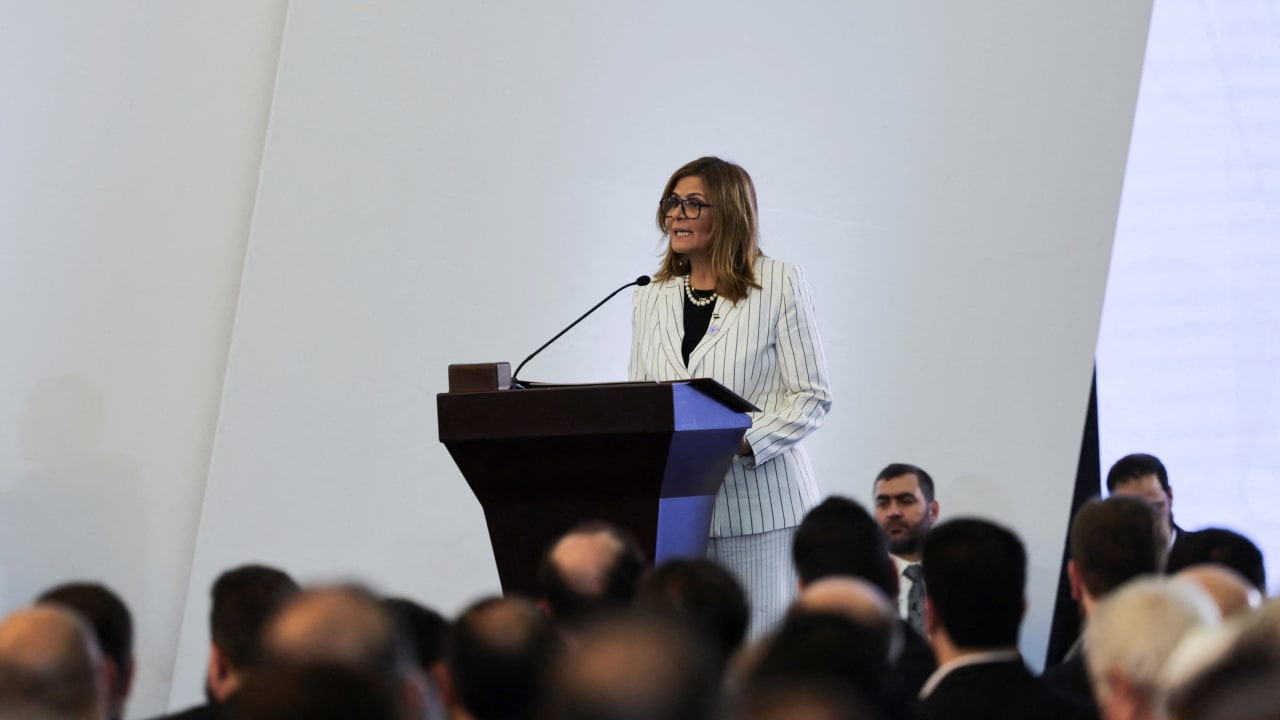
Hind Kabawat, Syria’s only female minister, used her first day in office to call for greater female representation in government, she told the BBC in an interview published last week.
“On the first day I asked, ‘Why aren’t there more women?’” the Syrian social affairs and labor minister told the BBC. According to her, President Ahmed al-Sharaa replied, “It’s coming, we are in transition.”
Kabawat, a former exiled opposition figure brought back after the collapse of the Assad regime, acknowledged that the transitional government had made mistakes since rebel forces ended the Assad family’s decades-long rule. Still, she noted that “mistakes happen in transition.”
Although the president has assured her that more women will be appointed, his cabinet remains dominated by longtime allies and former fighters, presenting Kabawat with a difficult path forward.
The president "cannot rely on one side", she told the BBC. "If he's not going to be inclusive and bring many people together in the government… we can't survive."
Still, she rejected any suggestion that she is a token appointment. “I am not here for a facade,” she told the BBC. "I don't feel that I am a Christian or a woman when I do my job. I feel like I am a citizen of Syria. The minute I start feeling like I'm a minority or I'm a woman, I will lose my legitimacy."

"I won't be here the minute I see that I can't appoint my own deputy and don't have the freedom to make my own strategy," she said. "Nobody controls me."
Syria's only female minister discusses country after Assad's fall
Since the fall of the regime in December, Syria has entered a fragile post-conflict period, marked by a series of structural changes. Kabawat and other new ministers have been working to guide the country from war to peace.
For Kabawat, dialogue is the key. “It’s taking time for people to say ‘we trust you’ after 50 years of dictatorship,” she said, stressing that trust must be established both “people to people” and between the government and the public.
Despite her position, the pace of change remains slow. In the most recent elections for the transitional People’s Assembly, only 4% of seats went to female candidates.
Speaking in the provincial capital of Idlib, Kabawat directly urged a crowd of women to run for office.
“You should have been united and thought in a politically intelligent way to ensure we got one or two women elected,” she told them.
One attendee later told the BBC that local women were “implementing the mission she taught us, and we are trying to acquire more expertise so we are ready.”
Some critics have accused Kabawat of not doing enough to bridge Syria’s communal divides. She acknowledged that mistakes had been made in the government’s response to sectarian violence.
“Mistakes happen in transition, in the post-conflict period; nobody is happy about that, including the president,” she said.
She added that an investigation into the incidents, such as the massacre of Syrian Druze in Sweida, had been opened and alleged that many perpetrators were already in prison.