
Asharq Al-Awsat, UK, June 6
For more stories from The Media Line go to themedialine.org
Iran’s missile and drone attack on Bahrain and Kuwait crossed a dangerous legal and moral threshold. Whatever explanations Tehran offers, the reality remains that neither country was a belligerent party to the conflict, yet a civilian airport in Kuwait was struck, and innocent civilians paid the price.
Attempts to justify the attack by pointing to the presence of foreign military facilities fundamentally misunderstand the principles of sovereignty that govern international relations. Every independent state has the right to enter into defense partnerships and host foreign forces if it believes doing so serves its security interests.
Turkey, Germany, Japan, South Korea, Britain, Italy, and Spain all host foreign military installations, yet no one argues that this grants other countries the right to attack their territory. International law is clear: sovereign nations decide their own security arrangements.
What is far more troubling is the effort to shift responsibility from the aggressor to the victim, transforming a discussion about missile attacks on sovereign territory into a debate about the choices of the country that was attacked. Such reasoning opens the door to international chaos and undermines the foundations of the modern state system.
Kuwait has categorically rejected Iranian claims that its territory or airspace was used for hostile actions, stripping away the political rationale behind the strike.
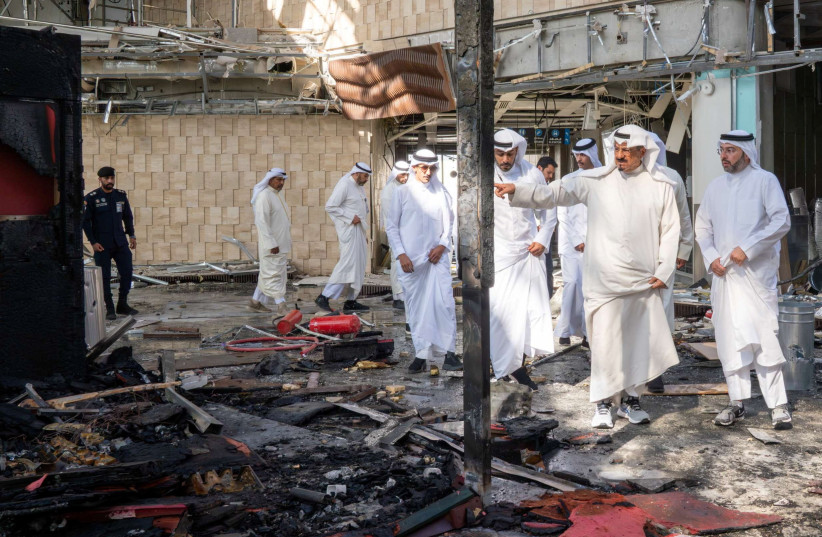
Moreover, civilian airports are not military targets; they are essential public infrastructure serving travelers, commerce, and ordinary citizens. When they come under attack, civilians become casualties of conflicts in which they have no part.
The issue, therefore, is not foreign bases but respect for sovereignty itself. A state cannot claim to respect sovereign rights while simultaneously launching missiles at other countries because it disapproves of their sovereign decisions. When sovereignty is violated in this way, silence becomes a form of complicity.
– Mohammed al-Rumaihi
Lebanon’s talent for wasting crises
Nida Al Watan, Lebanon, June 7
Nothing is more dangerous than wasting opportunities except wasting crises, and Lebanon has mastered both. For decades, the country has allowed political, financial, and militia interests to squander moments that might have produced real change.
Today, the latest opportunity for national recovery remains exposed to attack from every direction. The central obstacle remains Hezbollah’s weapons. Although the government eventually declared the group’s military activities outside the law and endorsed the principle of state control over arms, implementation has been delayed, diluted, and transformed into an open-ended process.
Yet Hezbollah and Iran have never concealed their intention to preserve those weapons indefinitely, presenting them not as a temporary reality but as a permanent feature of Lebanon’s political landscape. The result has been the transformation of Lebanon from a traditional buffer state into a forward operating arena for Iran’s regional confrontation with Israel and, more recently, with the US.
This shift has brought destruction, displacement, and renewed occupation in the south, and the erosion of the state’s authority over decisions of war and peace. The same inability to confront reality has defined Lebanon’s economic collapse.
The ruling class squandered a historic opportunity to use the financial crisis as a catalyst for reform, failed to distribute losses fairly, and blocked even modest efforts to restore stolen savings to ordinary citizens.
Lebanon has endured civil wars, foreign occupations, Syrian domination, Iranian influence, constitutional breakdowns, and repeated political crises, yet each lesson has been discarded rather than absorbed. The tragedy is not merely external interference but an internal system unwilling to break with the past and remarkably skilled at sabotaging the future.
Fear of a bad outcome has repeatedly led Lebanon toward an even worse one and, unless that pattern changes, the country risks wasting yet another crisis without producing a solution.
– Rafiq Khoury
Planning as a culture, not a document
Al Riyadh, Saudi Arabia, June 7
War, despite all its destruction, has revived an essential question: Is planning simply a government exercise, or should it become a societal culture? There is a profound difference between states producing strategic plans and societies cultivating a planning mindset rooted in foresight and anticipation.
Official strategies may provide direction, but communities thrive only when individuals and institutions develop the habit of looking ahead, recognizing emerging risks, and preparing for change before it arrives. A society that loses its capacity to anticipate events becomes reactive, constantly surprised by developments it should have seen coming.
The current regional turmoil has highlighted the limits of viewing planning as a government responsibility alone. Most people naturally plan for careers, finances, and family life, yet genuine foresight requires something deeper: the ability to understand how present decisions shape future realities.
Such thinking cannot be created solely through formal education. It emerges from a broader culture that values critical thinking, responsibility, and an awareness of how social, economic, and political developments interact. The challenges facing the region should prompt a reassessment of development priorities, educational systems, and national strategies.
More importantly, they should strengthen two complementary forms of awareness: individual responsibility and collective responsibility. The first reminds citizens of their role within society; the second reinforces the importance of social stability, security, and economic resilience. Together they form the foundation of any successful long-term project.
Strategic thinking is not always loud or dramatic. Sometimes it reveals itself through restraint, patience, and a willingness to prioritize long-term outcomes over immediate reactions. Planning is not merely a document stored in government offices. It is a mindset, a culture, and a way of understanding the future.
Societies that embrace it will be better equipped to navigate uncertainty, withstand crises, and shape their own destiny rather than simply react to events imposed upon them.
– Mashary al-Naim
The real debate over government subsidies
Al-Masry Al-Youm, Egypt, June 7
Ever since the emergence of the state as the institution responsible for managing society’s affairs, governments have wrestled with the question of how to support citizens who cannot meet their basic needs. The answer has usually taken the form of subsidies, whether through direct assistance or subsidized goods and services.
Yet behind this seemingly simple solution lies a complex intersection of economics, politics, and social justice. Subsidies have existed in one form or another since ancient Rome distributed grain to maintain social stability. They evolved into modern welfare systems during the 20th century, particularly after the Great Depression, when state intervention became a central feature of economic policy.
In newly independent countries, subsidies often served not only as tools of redistribution but also as instruments of political legitimacy. Around the world, governments have experimented with countless models, from India’s vast food distribution programs and Brazil’s conditional cash transfers to fuel and energy subsidies across the Middle East and the comprehensive welfare systems of Northern Europe.
The results have been mixed. Poorly designed subsidies frequently distort markets, weaken incentives, burden public finances, and deliver substantial benefits to those who need them least. Studies have repeatedly shown that wealthy households often capture a disproportionate share of fuel subsidies simply because they consume more.
Other programs have suffered from corruption, inefficiency, and massive administrative waste.
Yet the answer is not to abandon support altogether. Evidence from countries such as Brazil, Mexico, and Kenya demonstrates that carefully targeted assistance can improve education, health outcomes, and living standards while reducing poverty.
The real choice is not between subsidies and no subsidies, but between effective support and wasteful support. In societies marked by inequality and economic vulnerability, governments cannot simply walk away from their social obligations.
What is required is a transition from subsidizing products to supporting people, from universal distribution to precise targeting, and from broad entitlements to programs linked to measurable developmental goals. Modern technology and sophisticated data systems make this transformation increasingly possible.
The social contract still requires governments to protect vulnerable citizens, but that protection must evolve if it is to remain both effective and sustainable.
– Yasser Abdel Aziz
Translated by Asaf Zilberfarb. All assertions, opinions, facts, and information presented in these articles are the sole responsibility of their respective authors and are not necessarily those of The Media Line, which assumes no responsibility for their content.