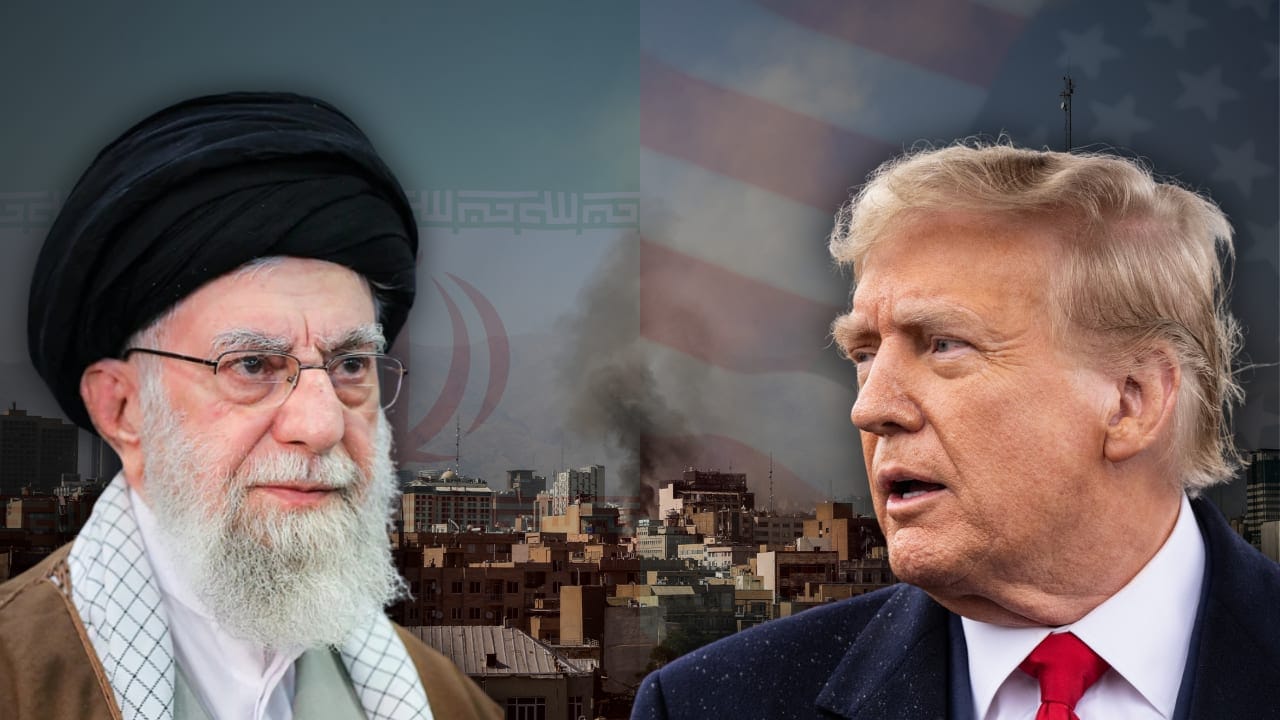
US President Donald Trump said on Friday that his Director of National Intelligence, Tulsi Gabbard, was wrong in suggesting there is no evidence Iran is building a nuclear weapon.
Trump contested intelligence assessments relayed earlier this year by his spy chief that Tehran was not working on a nuclear weapon when he spoke with reporters at an airport in Morristown, New Jersey.
"She's wrong," Trump said.
Gabbard testified to Congress in March that the US intelligence community continued to judge that Tehran was not working on a nuclear warhead.
Trump's comments came as the president has said he would weigh involvement in the Iran-Israel conflict over the next two weeks.

Prime Minister Benjamin Netanyahu has justified a week of airstrikes on Iranian nuclear and military targets by saying Tehran was on the verge of having a warhead.
Disputes in the US over Iran's development on nuclear weapons
Gabbard's office has previously pointed to quotes from the spy chief saying that she and Trump were "on the same page" regarding the status of Iran's nuclear program.
Iran denies developing nuclear weapons, saying its uranium enrichment program was only for peaceful purposes.
A source with access to US intelligence reports told Reuters that the assessment presented by Gabbard had not changed.
They said US spy services also judged that it would take up to three years for Iran to build a warhead with which it could hit a target of its choice.
Some experts, however, believe it could take Iran a much shorter time to build and deliver an untested crude nuclear device, although there would be no guarantee it would work.
Trump has frequently disavowed the findings of US intelligence agencies, which he and his supporters have charged - without providing proof - are part of a "deep state" cabal of US officials opposed to his presidency.
The Republican president repeatedly clashed with US spy agencies during his first term, including over an assessment that Moscow worked to sway the 2016 presidential vote in his favor and his acceptance of Russian President Vladimir Putin's denials.
Gabbard, a fierce Trump loyalist, has been among the president's backers who have aired such allegations.
Trump says he may support Israel-Iran ceasefire 'depending on circumstances'
Trump said on Friday he might support a ceasefire in the week-old aerial conflict between US ally Israel and its regional rival Iran "depending on the circumstances."
Asked by reporters if he would support a ceasefire while negotiations are ongoing, Trump said: "I might, depending on the circumstances."
Europe would not be able to help much in the war between Iran and Israel, Trump added.
"Iran doesn't want to speak to Europe. They want to speak to us. Europe is not going to be able to help in this one," Trump said.
Iran's foreign minister met with European counterparts in Geneva on Friday for talks aimed at establishing a path back to diplomacy over Iran's nuclear program.
European foreign ministers urged Iran to engage with Washington over its nuclear program, but the talks ended with few signs of progress.
"Well, I'm not going to talk about ground forces, because the last thing you want to do is ground forces," Trump said, when asked if ground forces would be needed to defeat Iran.
The air war began on June 13 when Israel attacked Iran and has raised alarms in a region that has been on edge since the start of Israel's war in Gaza in October 2023.
Trump and the White House say he will decide in the next two weeks whether the US will get involved in the Israel-Iran war. Trump has kept the world guessing on his plans, veering from proposing a swift diplomatic solution to suggesting Washington might join the fighting on Israel's side.
Israel is the only country in the Middle East widely believed to have nuclear weapons, and said it struck Iran to prevent Tehran from developing its own nuclear weapons.
Iran, which says its nuclear program is peaceful, has retaliated with its own strikes on Israel. Iran is a party to the Nuclear Non-Proliferation Treaty, while Israel is not.
Israel's strikes have killed 639 people in Iran, according to the Human Rights Activists News Agency. Israel says Iranian attacks have killed 24 civilians in Israel.