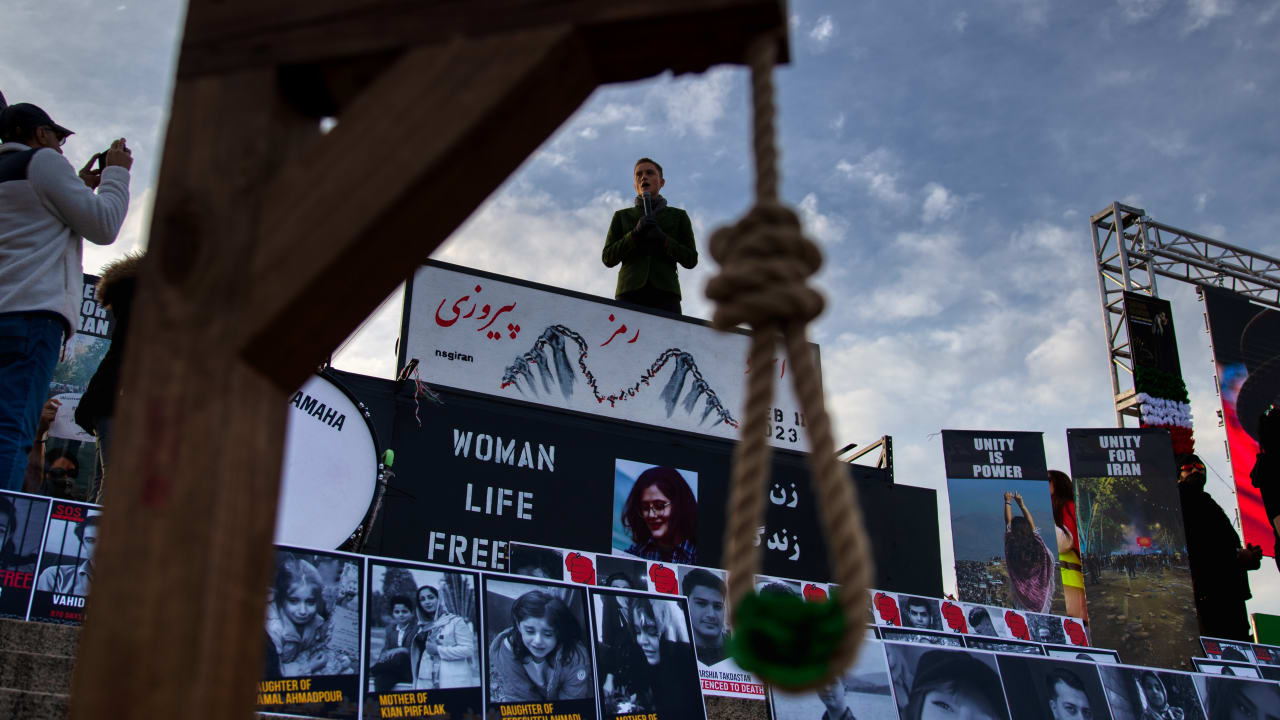
At least 13 prisoners were executed in various prisons across Iran on Saturday morning after having been convicted by the regime’s courts of drug- and murder-related charges, US-based human rights group Human Rights Activists News Agency reported the same day.
According to the group, the executions took place in the prisons of Khorramabad, Sanandaj, Dezful, Aligudarz, Kermanshah, Yasuj, Nahavand, Zahedan, Hamedan, and Karaj Central Penitentiary.
HRANA confirmed the identities of 10 of the executed individuals, naming them as Ali Faza Khoshneshin, Farshad Sheikhi, Avin Sorkhi, Jafar Faryadi, Ali Sarlakabad, Sosha Moradi, Behzad Mashayekhi, Mohammad Ali Saeedloo, Morad Goli, and Abolfazl Naqvi.
The HRANA report comes as the Islamic Republic has been carrying out an increasing number of executions. According to the rights group, Iran executed 2,063 people between January 1, 2025, and January 1, 2026, an increase of 119% since 2024.

Executions in Iran hit 10-year high
In December of last year, the organization reported that Iran had conducted its highest number of executions in over a decade.
Last month, the office of the United Nations High Commissioner for Human Rights stated that the Iranian regime used killings "as a tool of state intimidation” that had a “disproportionate impact on ethnic minorities and migrants.”