If Israel had not spent more than a year battling against Hezbollah in Lebanon, weathering international criticism, the terror group would now have had the capacity to launch an invasion, Lt.-Col. (Res.) Sarit Zehavi, the founder and president of the Alma Research and Education Center, told The Jerusalem Post on Monday.
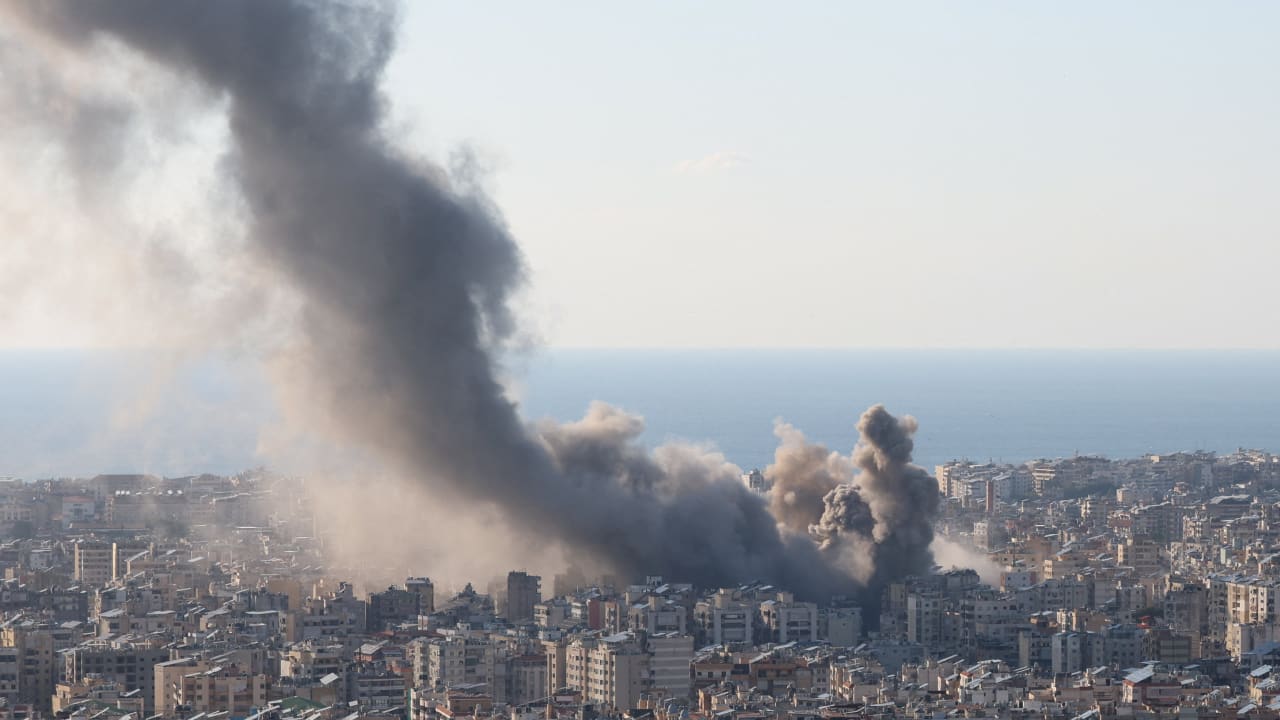
Zehavi spoke with the Post after Hezbollah launched several projectiles toward Israel, triggering an IDF response in southern Lebanon and Beirut, formally announcing the terror group’s participation in the war.
“We were not surprised; this was the working assumption that it would join the campaign,” she shared. “After all, it’s the leading Iranian proxy in the region, including, after all, the damages that it suffered in the previous war.”

Hezbollah began attacking Israel on October 8, 2023, a day after its Gaza-based ally Hamas launched a devastating invasion in southern Israel.
Through joining the war, Zehavi explained that it created the necessary conditions for Israel to finally begin targeting the hordes of precision-guided missiles, weapons facilities, and personnel that had been allowed to build up for decades.
The IDF’s success in Lebanon has meant that Hezbollah no longer has the power to launch thousands of precision-guided missiles at Israel every day, Zehavi explained.
However, she cautioned that the terror group still has the capacity to carry out some significant attacks.
Hezbollah's attempts to rebuild its capabilities
Hezbollah has spent the last year trying to rebuild in a “game of cat and mouse” with Israel, she said. As highlighted by the attacks last night, Zehavi said that the group had invested heavily in rebuilding its drone arsenal.
The main difference in Hezbollah’s capabilities is that it no longer has masses of battalions or brigades on the border as it used to, she continued.
Still, she cautioned, “We cannot overrule an option of trying to infiltrate into the communities next to the border, but it’s not a capability of carrying out an invasion as they planned two and a half years ago.”
“Even though [Hezbollah] may lose its main sponsor and boss [Tehran], 25,000 rockets in the hands of a terrorist group just on the other side of the border cannot be good news, even with all the weakness and with everything that we have done against it, and that’s why we want to see a situation where the Israeli attacks will be against the very existence of Hezbollah,” she explained.
“For Israelis, we want it to be an existential battle against Hezbollah. We want this time for our army to finish the job. This is what we are hoping for,” she continued, but maintained that even without Iran, a weakened version of Hezbollah could very much still survive.
Speaking of the failures that allowed Hezbollah to secure as strong an arsenal as it had, Zehavi claimed that UNIFIL “enabled Hezbollah to become the monster that it was until October of 2023” and that the UN force failed to shoot down Hezbollah drones or properly take any action against its buildup.
Zehavi remarked on Israel’s own failures in preventing Hezbollah from becoming a goliath in Lebanon, noting that Jerusalem succumbed to international pressure and its own desire to never strike first.
“We were waiting for Hezbollah to initiate an action… But this was a mistake, and we learned the lesson in the hardest way with what happened to our brothers and sisters in the south [on October 7, 2023], and with the fact that our communities were evacuated for a year and a half, and the damages are huge,” she said.
Former deputy national security adviser in Israel, now an adjunct professor at Tel Aviv University and Columbia University, Prof. Chuck Freilich, told the Post he hypothesized that Hezbollah would take a more reserved role so long as neither side escalates against one another.
“Hezbollah so far seems to have done the least it could, almost going through the motions, because it has to show support for Iran,” he explained, mirroring earlier comments he made to the Post last week.
“The organization was first established by Iran in 1982 precisely for this type of scenario, where the regime in Iran might be an existential danger, under a threat by Israel and/or the US to its existence, and Hezbollah was designed to provide a massive capability right on Israel’s border. So far, Israel’s response appears to be limited.”
While right now Israel and Hezbollah have both withheld, Freilich said, “This is a unique opportunity to hit Hezbollah when it is most vulnerable, because of the severe damage it incurred during the war in the fall of 2024.”
With the Islamic regime under attack, Freilich suggested, “This may be an opportunity to deal it a death blow,” and claimed Hezbollah may have “played right into Israel’s hands” by creating a legitimate opportunity to end the regime.
Though he acknowledged that the air force is currently preoccupied with the campaign against Iran and may not want to divide its resources for another front.
Hezbollah’s ability to launch multiple attacks from southern Lebanon is also a key lesson for Israel, he advised, as it shows the limitations of air campaigns when it comes to terror organizations embedded too deeply in their host countries.