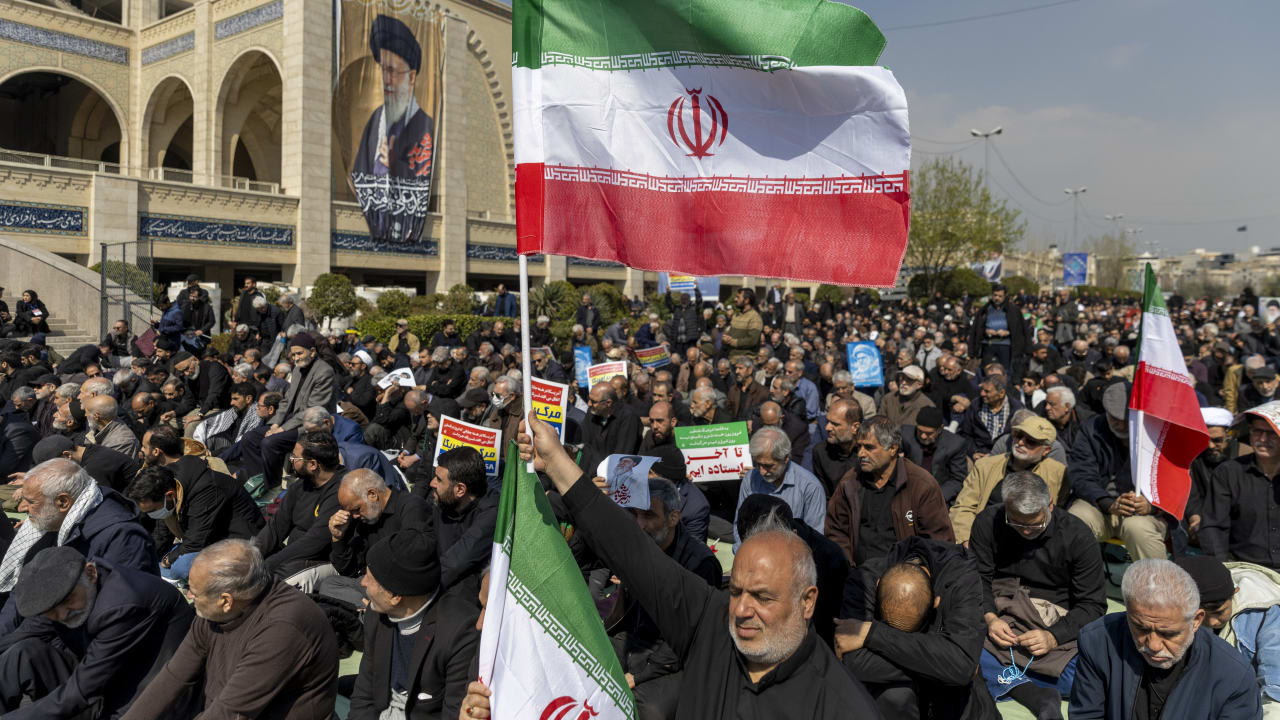
With reports of hardliners upset over Iranian President Masoud Pezeshkian’s Saturday statement apologizing for attacks on neighboring countries that fall outside the regime’s policy, analysts who spoke with The Jerusalem Post on Sunday were divided on whether there were truly fractures in Tehran.
“It is necessary to apologize to the neighboring countries that were attacked, on behalf of Iran, on my own behalf, because in the process that happened, our leader, commanders, and loved ones lost their lives due to the brutal aggression of the enemies, and our brave armed forces, when the commanders were not there, took all necessary measures and defended our land with dignity,” Pezeshkian said, according to the IRGC-affiliated Tasnim news site.
“We do not intend to invade neighboring countries. As I have said many times, they are our brothers. We should join hands with these dear people in this region and establish peace and tranquility. In a decision we made yesterday in the Interim Leadership Council, and this decision was reported to the armed forces, they should not attack neighboring countries or fire missiles unless they want to attack us from that country. We should solve this through diplomacy, not by fighting with neighboring countries.”
A later statement released by Pezeshkian’s office repeated these sentiments but notably left out the apology issued by the president.
“Hardliners’ criticism of Pezeshkian’s statements reflects long-standing divisions between hardliners and more moderate figures in the regime,” Annika Ganzeveld, the Middle East Portfolio Manager for the Critical Threats Project at the American Enterprise Institute, told the Post.

“Pezeshkian likely seeks to de-escalate regional tensions while hardline figures in the regime oppose any efforts to limit Iran’s retaliatory attacks. The ‘hardliner close to Khamenei’s office’ who told Reuters that Pezeshkian’s statements had angered many senior IRGC commanders may have sought to signal to the United States, Israel, and their partners that the Iranian armed forces oppose the Leadership Council’s call for restraint and will likely continue to conduct retaliatory attacks against regional countries.”
Despite a claim made by the president suggesting that Iran’s military has only targeted US facilities, not the host countries, the Islamic regime has struck numerous sites unconnected to the US military, including a drone strike on the Hayat Palace Hotel in Bahrain.
The Islamic regime has frequently threatened – or taken – military action against neighboring states as a way to pressure the Gulf to sever ties with the US, the Institute for the Study of War (ISW) noted.
Lawmaker Hamid Rasai wrote on social media, addressed to Pezeshkian, “Your stance was unprofessional, weak, and unacceptable.” Anonymous officials close to Iran’s leadership also told Reuters that there were strains in Tehran starting to show among leading figures.
Iranian negotiation tactics
Iran’s leadership has sometimes played up differences between hardliners and moderates as a tactic in negotiations with the West, but the dispute over Pezeshkian’s statement on Saturday revealed genuine divisions, two senior sources told Reuters.
While the ISW assessed that these fractures “highlight the extent of divisions within Iran’s leadership,” experts who spoke with the Post on Sunday firmly disagreed.
Dr. Menahem Merhavi, a fellow at the Harry S. Truman Institute for the Advancement of Peace at the Hebrew University of Jerusalem, told the Post that the disagreement was not a sign of fracture within the regime but “yet another example of the irrelevance of the president to decision-making in Iran.”
“He can voice a softer tone but has no real place around the table regarding war strategy or even tactics,” Merhavi explained.
Former British Army intelligence officer Dr. Lynette Nusbacher, one of the architects behind two of the UK’s National Security Strategies as part of the UK’s National Security Secretariat, commented, “We are making too much soup out of one chicken.”
“We are, through the fog of war, interpreting small fractures as deep cleavages,” she explained, adding that the regime has been planning for a war like this since the revolution. “They’re not indestructible, but they’re very resilient.”
A “resilient” regime like Tehran cannot be convinced by airstrikes alone, she warned.
Like Merhavi, Nusbacher claimed Pezeshkian’s influence is incredibly weak, and the latest disagreement is just an extension of that. “For decades, the Iranians have used ‘moderate’ presidents as stalking horses to enable Westerners to imagine that hard-line clerics are not in firm control of Iran,” she explained.
Nusbacher pointed to how Tehran truly handled dissent with the case of former Iranian president Mahmoud Ahmadinejad. While reports on Ahmadinejad’s well-being are mixed following the US and Israeli strikes, Maariv reported that Ahmadinejad was under house arrest during the attacks last week. He was reportedly arrested in 2018 for sowing unrest in the regime during anti-government protests.
While the West may eagerly await signs of dissent, Nusbacher cautioned that such a conclusion could only be drawn “when an Iranian Army General takes his corps or division to the local Revolutionary Guards barracks and shoots them. [Then] we will be seeing emerging planes of cleavage.”