Wars are easiest to prolong when their opening act goes well.
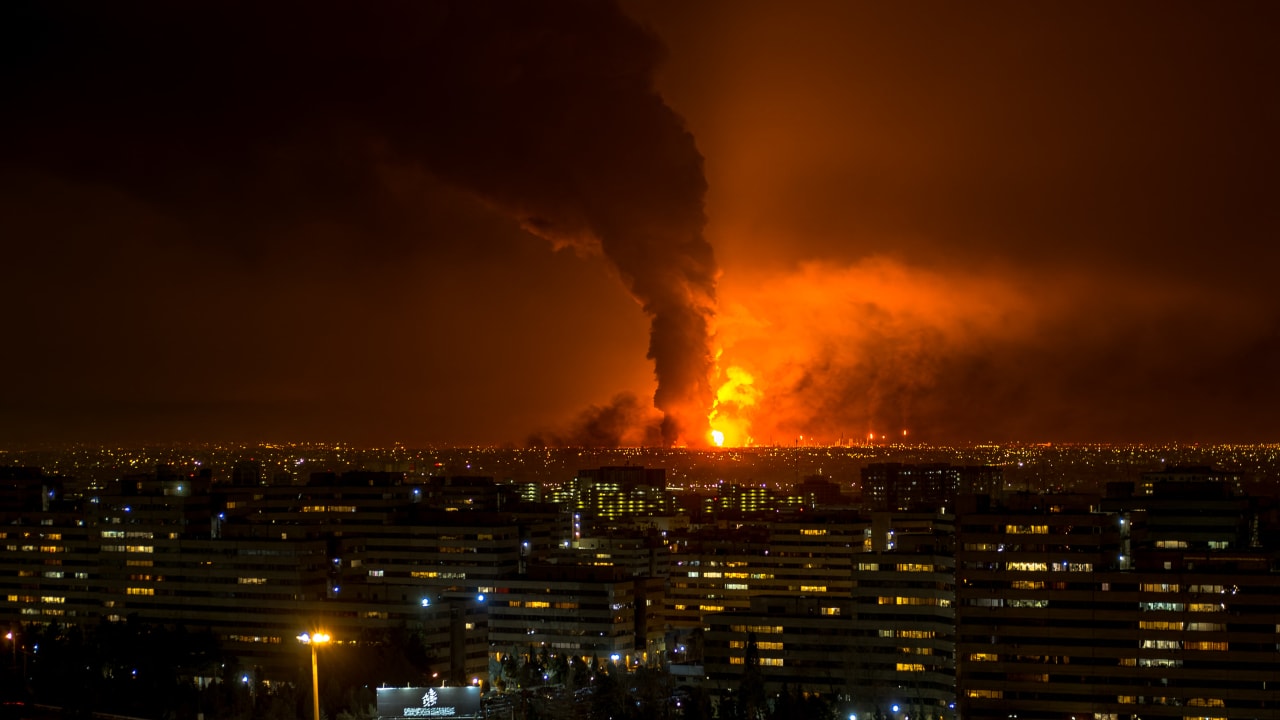
You can feel that temptation in Israel right now – in the half-finished sandwiches people leave on their way to a safe room, in the WhatsApp groups trading missile maps and flight-tracker screenshots at midnight, in the quiet swagger that follows a successful first punch. Iran took a heavy blow. Senior commanders were killed. Missile infrastructure was hit. Command centers were damaged. The regime was shaken.
That is all true. It is also where the harder conversation begins – beyond the large, albeit understandable, Israeli ego.
Badly hurt and finally beaten are two different things.
At this point, Israel and the US need to resist two comforting illusions. One says that the war is basically over. The other says one more week of bombing will produce the magical moment that everyone is waiting for. Neither is a strategy.

'Diminishing returns'
The Jerusalem Post's military correspondent, Yonah Jeremy Bob, hit the nail on the head when he wrote about “diminishing returns.” In the early days of a campaign, each strike accomplishes several things at once: It kills a commander, disrupts logistics, and shakes confidence. Later, the targets get thinner, and the gains become narrower. Bob’s warning was sharper still. Decisions about extending a war, he argued, should rest on “hard-nosed data and analysis,” not “speculation and hope.”
That line should be printed and taped to walls in military bases and government offices on both sides of the Atlantic.
The conservative instinct on Iran has often been correct. The Islamic Republic’s brutal regime funds terror, crushes dissent, and has spent decades building the architecture to threaten Israel’s existence. The case for hitting it hard was serious. The damage inflicted is real.
But a serious strategy requires more than satisfaction at having drawn blood. Air power can buy time, degrade capacity, and restore deterrence. However, it cannot manufacture a clean ending simply because the opening phase went well.
So, the question now is, what does each additional day of war still buy?
This is where the public conversation loses its footing. Some people treat any talk of restraint as weakness. Others treat continued strikes as recklessness. Neither camp is especially useful.
The real questions are more specific and harder. Are further strikes likely to push back Iran’s missile threat in a measurable way? Are there still targets whose destruction would materially change the strategic map? Or has the curve already started bending downward?
Israelis understand this at a frequency most foreign observers don’t reach. Here, wars proceed as follows: the sirens at 2 a.m., the mad dash to the safe room, the children pretending not to be scared, and schools stumbling through another week of disrupted schedules. Israel is a country of resilience, but it is accruing steady exhaustion.
The compounding costs
These costs compound quietly. A war with clear, achievable goals can be sustained and explained. A war whose logic has drifted into hope becomes very hard to defend to the person standing in their safe room at midnight, wanting it to end.
Jerusalem’s battles don’t happen in a vacuum. Every added day raises pressure on Jewish communities abroad and hands more ammunition to the anti-Israel circus that performs on campuses, on social media, and in Western spaces that have long confused moral vanity with wisdom. A war with a defined purpose can be defended. A war whose goals drift become a gift to its critics.
That is why talks of regime change deserve particular care. Many people want the regime gone. Fair enough. But wanting something and planning for it are entirely different things. Dictatorships do not disappear because commentators keep predicting that they will. Iran has seen predictions of its imminent collapse for 46 years and remains standing.
Israeli and US leadership need discipline now. If there are still targets whose destruction would push Tehran back by years rather than days, make that case clearly and publicly. If the remaining logic of the campaign rests mostly upon pressure and hope, then the burden of proof has already shifted, and the people making decisions should say so.
The first phase of this war required audacity. Jerusalem and Washington showed that they had it.
The next phase requires something less cinematic and considerably harder: the clarity to separate what has been achieved from what is still possible, and the discipline to pursue the second without pretending it is the same as the first.
Iran has been hurt badly. That is a real achievement.
A decisive victory is another matter. The leaders who understand the difference are the ones who will make the correct decision.