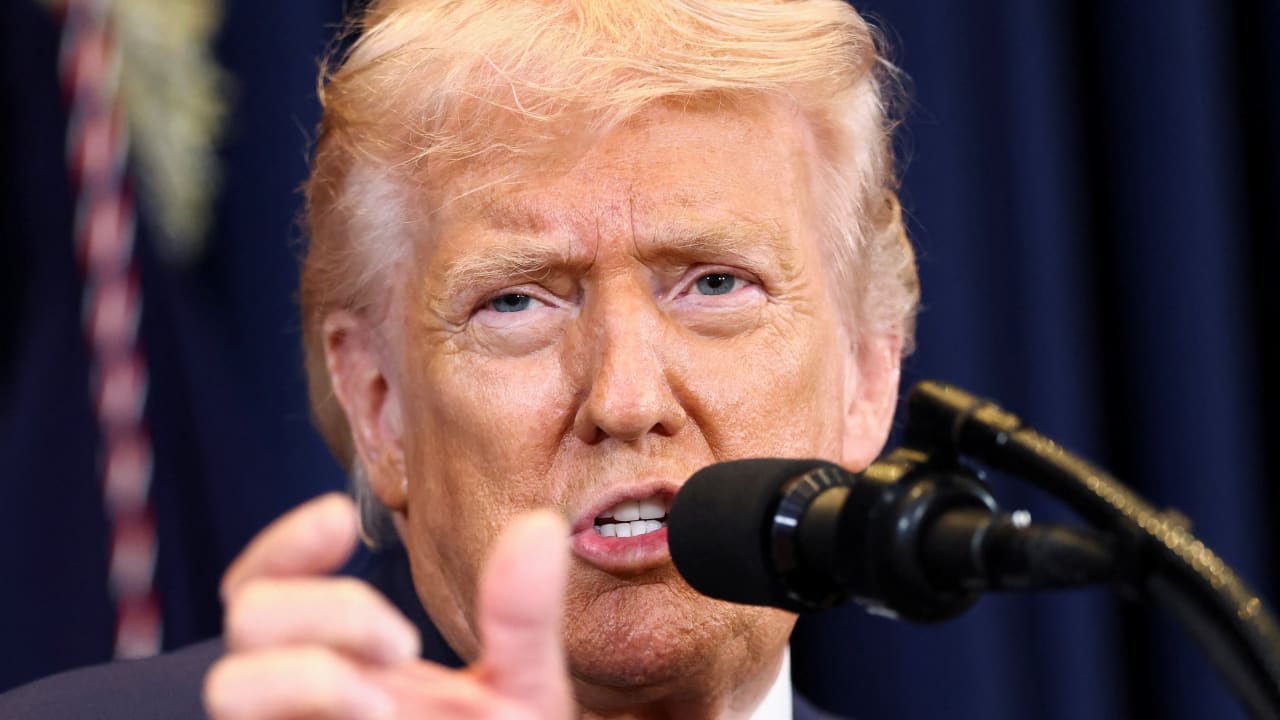
In a CBS interview on Monday, US President Donald Trump said the war is “very complete, pretty much.”
The words had an immediate calming effect on markets. Oil prices, which had been hovering just above $100 a barrel amid fears of a prolonged conflict with Iran, dropped soon afterward. Stock markets around the world also rebounded.
Some analysts speculated that Trump’s remarks suggesting the war in Iran was nearing completion or, as he said later in the day, would end “very soon,” though not this week, were aimed primarily at steadying markets.
But in Jerusalem, where many officials believe the war should continue until Iran’s ballistic missile and nuclear capabilities are even more severely degraded, and until Hezbollah’s military infrastructure is dismantled, the comments likely caused some unease. The concern is that Trump’s words were not merely rhetorical reassurance for investors but a signal of his strategic thinking.
Specifically, the fear is that the US president, wary of the economic costs of a prolonged conflict, might seek to halt the campaign before Israel believes the job is done.

That possibility would echo what happened during the 12-day war with Iran last June, when the US joined Israel in striking Iranian nuclear facilities. After several days of attacks, Trump agreed to a ceasefire and pressed Israel to scale back a planned retaliatory strike after Iran violated it. Israel ultimately limited its response to destroying a single radar installation near Tehran.
Yet an even clearer precedent may lie in Trump’s campaign against the Houthis in Yemen last year.
In mid-March 2025, the US launched a major air and naval operation aimed at forcing the Houthis to stop attacks on international shipping. That campaign began with heady rhetoric and promises to restore deterrence in the Red Sea.
After roughly seven weeks of strikes costing about $1 billion, involving lost drones and at least two jets that fell from aircraft carriers, US officials concluded the campaign was not producing decisive results. The Houthis had moved assets underground and continued firing at US vessels and at Israel.
On May 6, 2025, two days after a Houthi ballistic missile struck near Ben-Gurion Airport, Trump abruptly announced that US strikes were “over, effective immediately.” The announcement followed an Oman-brokered arrangement under which the Houthis halted attacks on US ships but continued targeting Israel and other Red Sea shipping.
Publicly, Trump framed the outcome as a success. The Houthis, he said, had “surrendered” and now “just want peace.” The reality proved different: their broader military capabilities remained intact, and their campaign against Israel continued.
The episode raised an uncomfortable question at the time for Israel: whether a pattern was emerging in Trump’s use of military force.
Trump's war strategy: Quick entrance, quick exit
The pattern, critics argue, is one of rapid escalation followed by an equally rapid declaration of success once limited gains can be claimed. Massive force is applied early, expectations are set high, and then, if the campaign proves costly or inconclusive, the objective is quietly redefined, and victory declared.

The Houthis episode illustrated this dynamic. Trump appeared to impose what amounted to roughly a 30-day expectation for results. When the campaign did not quickly produce decisive outcomes, skepticism about the costs and risks grew. The administration then pivoted to a ceasefire and a victory narrative rather than acknowledging a stalemate.
The question now is whether the same dynamic could unfold with Iran.
Trump’s recent language suggests a shift from escalation toward exit. By describing the war as essentially “complete,” he is beginning to frame the conflict as one in which the key objectives have already been achieved.
In a press conference on Monday, he said it is possible to call the operation “a tremendous success right now,” but added that “we are going to go further.” Already in the first three days, he said, “we wiped out a big navy, a very powerful navy.”
He said that in addition to having no navy, Iran is now also without airports, anti-aircraft equipment, radar, telecommunications, or leadership. “It’s all gone,” he said in terms that he could very well use to call it a victory and end the campaign whenever he wants.
The Houthis precedent suggests he may be willing to halt operations when the economic or political costs of continuing begin to rise. At that point, the moment can be retroactively defined as victory.
Some analysts have speculated that domestic political considerations, particularly the midterm elections in November, may influence such calculations. That explanation, however, may be overstated. November is still months away, and economic shocks today, such as a spike in gasoline prices, will not necessarily determine voting patterns many months later, especially since prices would likely drop once the war ends.
The more immediate factor may be Trump’s longstanding preference for quick, decisive campaigns that avoid prolonged military entanglements.
Yet Iran presents a far more complex challenge than the Houthis.
Against the Houthis, Trump could end a relatively contained campaign and accept a narrow ceasefire. With Iran, however, he has attached far more ambitious goals to the conflict, speaking at times about “unconditional surrender,” regime collapse, and even being the one to approve of Iran’s future leadership.
Such rhetoric raises the political stakes. Declaring victory prematurely would be far more controversial.
But it would not be unprecedented. Trump has already laid the rhetorical groundwork, portraying the destruction of Iran’s navy and air force as defining achievements, milestones that could easily be presented as proof that the campaign has accomplished its mission.
Can Israel continue war against Iran without US cooperation?
If that moment arrives, Israel could face a difficult strategic dilemma.
Does it halt its own operations in tandem with Washington, even if it believes the threat has not been sufficiently reduced? Or does it continue the fight without US participation, and potentially without US political cover?
The events of June offered a preview. When Trump decided to halt the earlier round of strikes, he made clear that Israel was expected to follow suit.
Should history repeat itself, Israel may once again find that the real ceiling on this war is set not by the risks posed by Iran’s remaining capabilities, but by Washington’s endurance.