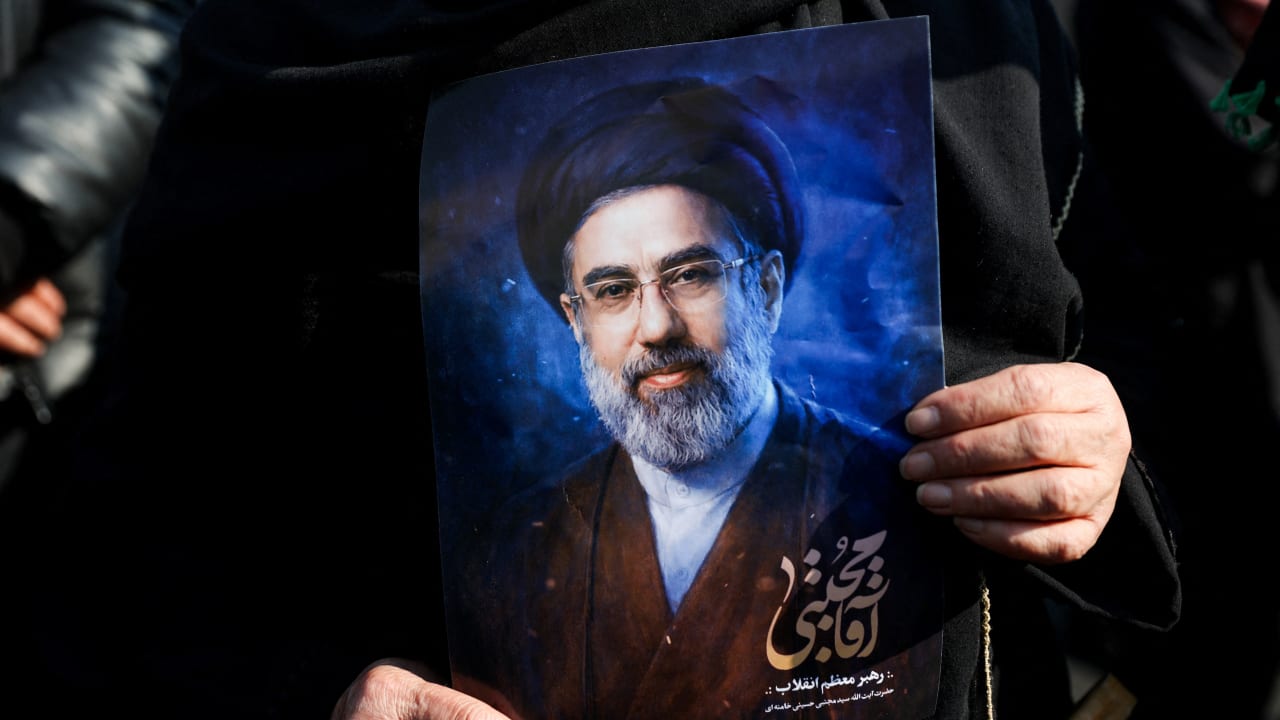
Could the appointment of Mojtaba Khamenei as Iran's Supreme Leader, following his father's death, reignite protests in the country? Danny Citrinowicz, a researcher at the Iran program at the Institute for National Security Studies (INSS), addressed this in an interview on Tuesday and estimated that, despite being a controversial and extreme figure, no widespread revolt is expected in the immediate term.
According to Citrinowicz, the appointment is primarily intended to project stability and continuity in the regime. "The main goal with Mojtaba's appointment was to convey continuity," he said. "Under normal circumstances, and especially if Ayatollah Khamenei Sr. had passed away from natural causes, we would not have seen Mojtaba appointed."
Regarding the new Supreme Leader, Citrinowicz said that he is an ideological and even more extreme figure than his predecessor. "He is, to a large extent, an upgraded version of his father – younger, 56 years old, an ideologue and conservative, with very deep ties to the Revolutionary Guards. During his leadership, we are likely to see an even greater influence of the security establishment on Iran's policies."
He explained that the appointment does not bode well for the Iranian people. "There is no doubt that his appointment does not promise much to the Iranian citizen. He was involved in suppressing protests in 2009, and therefore, even if the war ends soon, Iran will not return to square one – its major problems are still ahead."
However, the possibility of renewed protests still exists. "It’s possible that Mojtaba’s appointment will stir protests again, but we must consider the deep loyalty of the Revolutionary Guards to him. We might see an even more authoritarian regime trying to prevent protests in advance," he predicted. "It is likely that we will see deeper repression to prevent internal threats to the regime."

According to Citrinowicz, Mojtaba Khamenei's appointment was welcomed by extremist factions within the security establishment. "From the start, they wanted to appoint him, even though he did not hold an official position. He served alongside the commanders of the Revolutionary Guards during the Iran-Iraq War, and they used him as a channel of influence over his father. His appointment greatly satisfies the hardliners in the regime."
Voices within Iranian elite objected to Mojtaba's appointment
However, within the Iranian elite, there were also voices opposed to the move. "For example, Ali Larijani hoped his brother would be appointed, but the conditions that ultimately emerged did not allow for another candidate," he said.
He added that, even if the appointment raises hopes among opposition figures, no immediate protests are expected. "Some hope that the appointment of such an extreme figure will spark protests, but during wartime, people do not take to the streets," he said.
However, he predicts that, in the longer term, the regime may again face public pressure. "After the war, Iranian society will return to the same point – with an economic crisis, infrastructure problems, and deep frustration. So it is certainly possible that we will see protests break out again. The question is how widespread they will be."