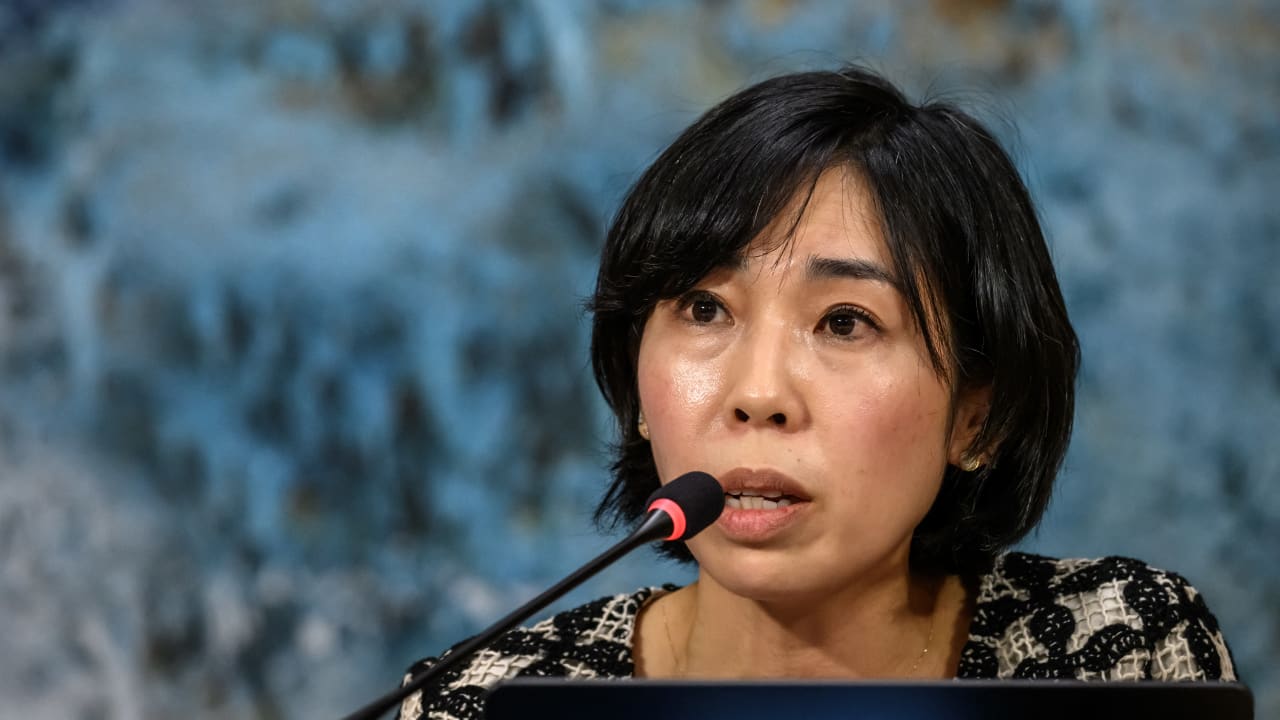
The Islamic Republic regime committed human rights violations during its crackdown on the January protests, killing thousands and abusing medical facilities in its efforts to suppress public expression, UN Special Rapporteur on human rights in Iran, Mai Sato, published in a report last week.
Sato noted that while drafting the report, she found many Iranian families were reluctant to consent to her sharing their testimonies, evidencing fear of regime reprisals at even greater levels than before this year’s nationwide protests.
Noting that the Human Rights Council Resolution 40/20 ostensibly protects public protests from fear reprisal, intimidation, harassment, or assault, Sato published that the regime’s laws and practices relating to demonstrations “fall short of the standards required.”
Iran’s Constitution qualifies the right to organize unarmed gatherings by requiring that they not contravene the “foundations of Islam,” she noted.
The Law on the Activities of Political Parties and Groups (Art. 26, added in 1981) also means that organizations are required to have permission prior to undertaking demonstrations, and only officially licensed groups can seek such authorizations.

The Islamic Penal Code also criminalizes the establishment of, or membership in, any group of more than two persons deemed by the regime to be aiming to disrupt national security, an aim broadly interpreted by Tehran.
UN report: Iran used lethal force, targeted medical staff
The 2025 Espionage Law also criminalizes individuals for holding, or participating in, unauthorized marches and gatherings during wartime, punishable by five to 10 years’ imprisonment, the report noted.
“The domestic legal framework renders almost all forms of unsanctioned collective action unlawful,” Sato noted, adding that the current framework operating in Iran facilitates state force rather than constrains it.
The Law on the Use of Weapons by Armed Forces Officers in Necessary Cases permits the regime’s security forces to use force to disperse “illegal demonstrations” when other means have been used to no effect.
Sato insisted that this policy does not limit the use of lethal force to situations only involving an imminent threat to life or of serious injury, and does not require that authorities restrict themselves to only proportional force.
She also noticed that the regime’s suppressive attempts didn’t conclude with the protests.
Broadcast confessions, the harassment and imprisonment of lawyers defending protesters, and the punishment of journalists who are seen as supporting protesters all threaten free expression in Iran.
The report noted that artists, writers, and journalists in particular face criminal punishments ranging from execution to mandatory attendance of “behavioral management classes.”
Individuals who are seen as having expressed sentiments against the regime may also be banned from studying, dismissed from their jobs, denied business permits, and subjected to ongoing surveillance and open-ended judicial proceedings “designed to maintain a continued state of intimidation,” the report continued.
The suppression of free expression has also translated into digital spaces, as numerous international platforms have been blocked and filtered, and “user protection” and “cyberspace regulatory” legislative frameworks have allowed the regime’s security services to govern over online activities.
These frameworks have led to an increase in filtering, surveillance, and control mechanisms in the communication infrastructure, the report detailed, raising concerns for freedom of expression, access to information, and the possibility of independent journalism.
The regime has also frequently employed Internet shutdowns during times of unrest, including during the January protests and now in the current conflict with the US and Israel.
Sato wrote that she had witnessed a “structural shift from episodic shutdowns toward a system of managed and conditional connectivity, in which access to the global Internet is treated not as a general public service but as a controlled and revocable privilege.”
Beyond stifling communication, access to information, and independent journalism, Sato noted that the Internet shutdown was devastating small and medium enterprises, which are reliant on online platforms. Some companies reported revenue losses of up to 90% during the shutdown, and millions of workers were directly or indirectly affected by the disruptions.
Iran’s dire economic crisis, which is what led to protests initially breaking out at the end of December, was already an issue of concern, but the Internet blackouts are understood to have harmed companies already strained by inflation.
The regime intensified its use of lethal force “significantly” from January 8, 2026, the report noted, adding that this coincided with the shutdown of telecommunications.
Sato received submissions with visual material and witness accounts testifying that the regime’s security forces began using machine guns mounted on vehicles, rifles fired from elevated positions, shotguns, handguns, pellet-firing weapons, bladed weapons, and batons, as well as tear gas and lasers. Shots were fired at unarmed crowds from rooftops in what amounts to “compelling evidence” that the regime used “excessive lethal force” against those demonstrating.
While the regime has blamed much of the property destruction witnessed across Iran on “terrorists,” testimonies from Rasht hold security forces responsible for much of the damage. Witnesses said that on the night of January 8, a large crowd was moving peacefully toward the city center when security forces began shooting at protesters.
To escape the gunshots, many sought shelter inside the Rasht Bazaar, which then caught fire. The crowds fled from the flames only to be shot by uniformed motorcycle security officers armed with shotguns, and Basij in plain clothes and wearing face masks, the witnesses recounted. “These circumstances suggest that the state’s narrative is partial and underscore the need for further independent investigation,” Sato noted.
Further refuting the regime’s narratives on the violence is the inconsistency in the casualty figures reported.
Iran’s National Security Council reported on January 22 that 2,427 “innocent civilians and defenders of public order and security were killed by “terrorists” and 690 of these “terrorists” were killed. However, figures submitted to the rapporteur from non-state sources, including reports from health professionals and information from families who visited overwhelmed morgues, suggest tens of thousands were murdered.
A conservative estimate from 15 February records 7,015 confirmed deaths (at least 6,508 protesters, including 226 minors, and 214 security force members and others), with a further 11,744 deaths under review, the report noted.
In addition, sources testified to Sato that families had been made to pay between $5,000 and $7,000 to retrieve their loved ones’ bodies, and some had been forced to sign documents identifying their family members as members of the Basij paramilitary, a narrative that matched earlier reports to The Jerusalem Post.
Families have also been left in the dark about their loved ones’ fates, unsure if they are among the unknown detained or in the overwhelmed morgues, the report noted. Some have received notice of a family member’s death without any prior acknowledgement that the individual was even in custody.
The report warned that, in the absence of transparency, unverified reports of secret burials, deaths in custody, and secret executions were emerging.
Spaces protected under international law, such as hospitals and medical facilities, were abused by the regime and turned into instruments of repression, surveillance, and control, the report noted. Sources submitted documentation of attacks on hospitals between January 4 and January 14 in the provinces of Alborz, Ardabil, East Azerbaijan, West Azerbaijan, Fars, Golestan, Ilam, Isfahan, Kerman, Kermanshah, Khorasan, Lorestan, Qazvin, and Tehran.
The reported incidents saw members of the security forces enter wards, assault medical professionals, and arrest wounded protesters as they sought treatment. The sources said that the regime officials carried out room-by-room searches, in some cases extending into operating theaters, and seized patient admission lists.
One submission detailed in the report described Islamic Revolutionary Guard Corps (IRGC) agents beating up physicians in front of patients and nurses before detaining them; another described medical professionals beaten for refusing to cooperate with the arrest of patients, and security forces firing tear gas inside hospital facilities.
Nurses were also reportedly instructed to remove ventilators from injured patients at one hospital while medical professionals were forced to withhold treatment from protesters at another.