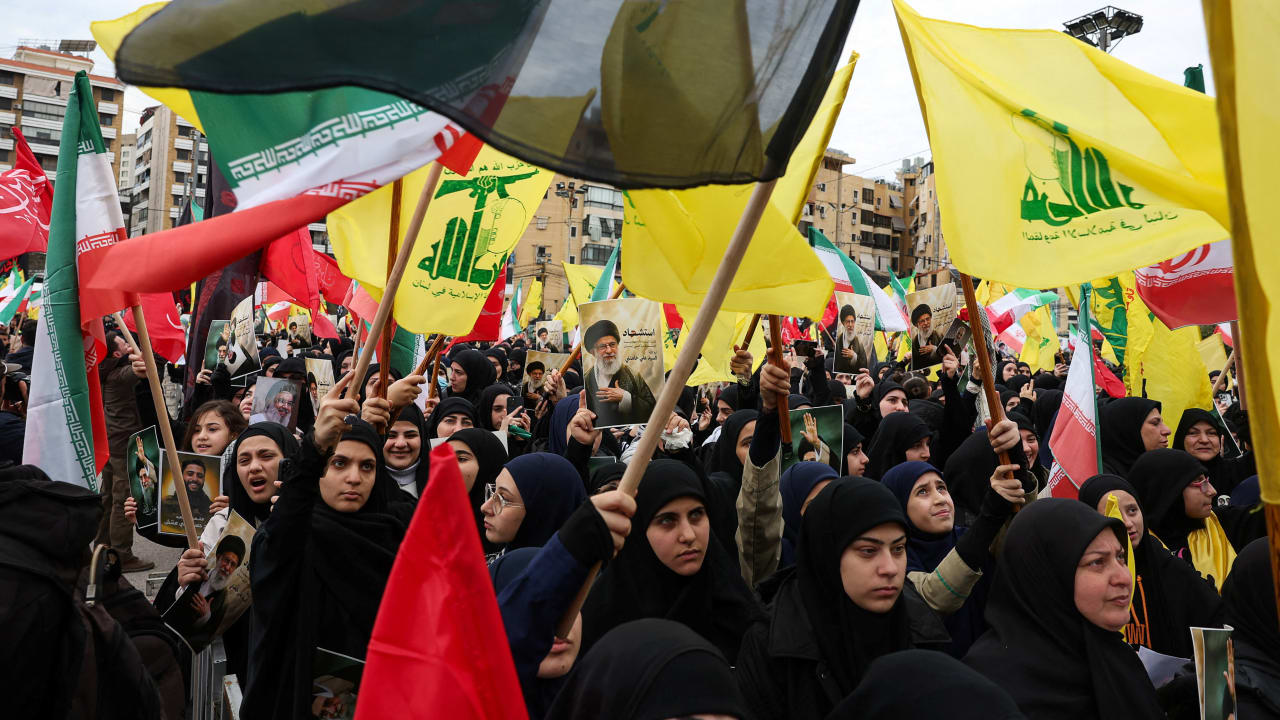
US intelligence officials believe that the ongoing war against Iran is unlikely to lead to a lasting change of the regime, The Washington Post reported on Monday.
Two anonymous sources told the Post that current US intelligence assessments predict that the regime will remain intact following Operation Epic Fury, and may even become emboldened after, in the IRGC's eyes, successfully standing up to the United States and to Israel.
Briefings presented to US President Donald Trump were "sobering," one of the sources said, adding that the information was available to Trump prior to starting the war with Iran.
“It wasn’t just predictable,” they said. “It was predicted. He was told in advance.”
Trump had also been informed in advance that Iran may seek to close the Strait of Hormuz, the Post reported.

Trump dragged by allies for starting Iran war
A senior Arab figure from the Gulf denounced Trump for seemingly dragging allies into a drawn-out war, stating that the Trump administration had claimed the conflict would be over quickly.
“They started this war for Israel and then left us to face the attacks by ourselves,” he said. "We don’t have a plan for a long war. We need to finish it as soon as possible."
Richard Nephew, a Columbia University scholar who was previously senior adviser on Iran in the Biden and Obama administrations, said that the IRGC still has economic and political power over Iran. "They’ve got the domestic repression apparatus. They are essentially now the centerpiece of the power system inside the country.’’
One European official reported that, far from weakening, the Iranian regime has used the opportunity to expand its power, become more radicalized and hardened than it had previously been.
“The region is in flames, and the regime is still standing,” he said.
Aliasghar Shafieian, an advisor to the Iranian President, seemed to agree with the European official in an interview with the Post, saying that regime supporters have grown more hard-line over the course of the war.
Shafieian described a military funeral he'd attended, in which he had seen crowds "chanting no compromise, no surrender, they want to fight to the end."
"They may not be all of the people in Iran," he added, "But they are part of society.”
Best case scenario for Iran 'meaningful competition for power'
Jonathan Panikoff, former deputy US national intelligence officer for the Near East, described the best-case scenario for a post-war Iran being one in which "there is meaningful competition for power," though he added that he was skeptical such an outcome would arise.
“Somebody with guns fundamentally has to switch sides or stand aside,” he said.
Another European official said that the most likely outcome was for the IRGC to retain power, including some nuclear and missile capability, but that it would be “degraded enough that we’re in a better place than we were.”
An anonymous security source also said that Iran's current leadership is confused, paranoid, and having communication difficulties.
A human rights activist in Tehran told the Post that she and her fellow activists were still encouraged by Israeli strikes, “because far more military personnel and regime leaders have been killed in this war than ordinary people.’’
“We can't imagine life with this regime after the war - how dreadful that could be,” she said.