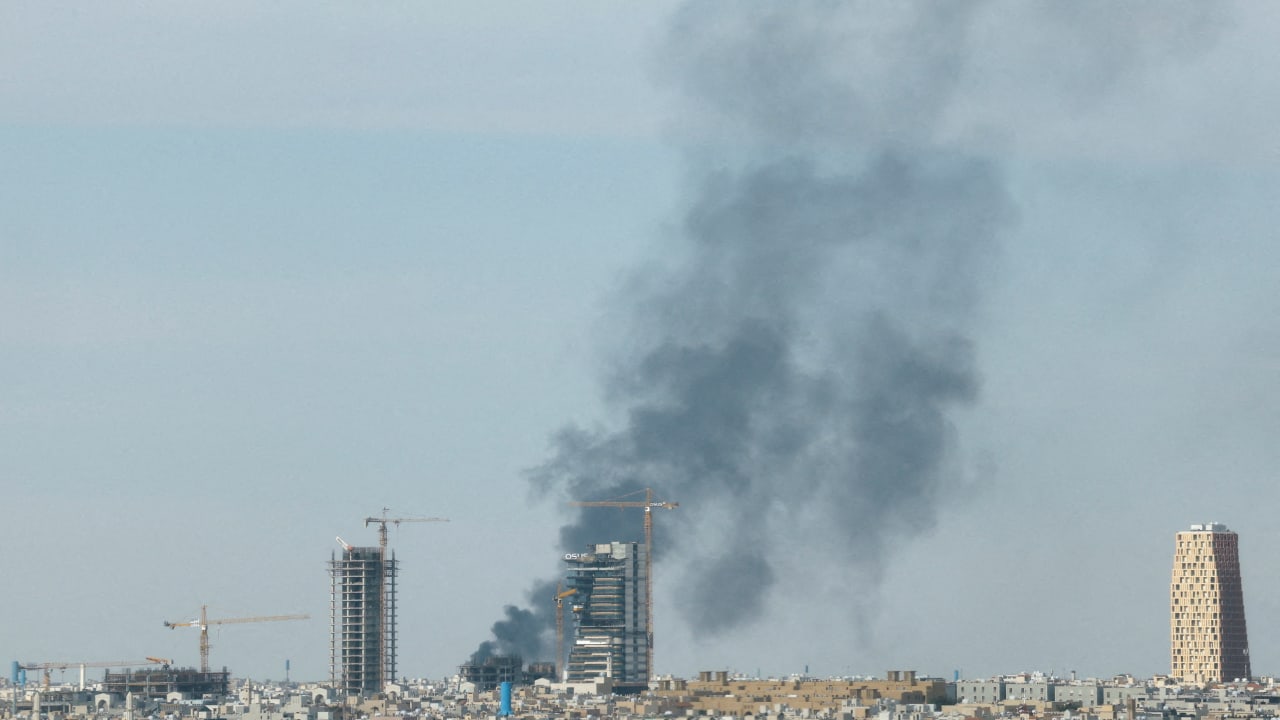
Iran has decided to limit its attacks on Saudi Arabia out of concern that continued strikes could trigger a direct Saudi military response, two sources told The Jerusalem Post.
Since the start of the war, Iran has launched more than 430 missiles and drones toward Saudi Arabia. Most of the drones have targeted the Eastern Province, where many of the kingdom’s oil refineries are located, as well as Shaybah, a major oil field in the Empty Quarter. Most of the missiles have been aimed at Al-Kharj, about 80 km southeast of Riyadh, home to Prince Sultan Air Base.
According to the sources, Iranian officials believe that “the Saudis are on edge,” and assess that continued large-scale attacks could push Saudi Arabia to take a step it has so far avoided, directly striking Iran. Saudi officials have previously made clear, including in discussions with Iran, that their red line is any attack on electricity generation and water desalination facilities.
“If you target civilian infrastructure, we will be forced to strike you,” Saudi officials warned in recent weeks.
Saudi Arabia has also recently shifted its policy, allowing the US military to use bases in the country for operations against Iran.

Iran reportedly decides to avoid targeting Qatar
In addition to scaling back attacks on Saudi Arabia, Iran has decided to avoid targeting Qatar. However, strikes against Kuwait, Bahrain, and the United Arab Emirates will “continue as usual,” according to the sources.
Gulf states are closely and anxiously monitoring developments following US President Donald Trump’s threat to target power stations in Iran if the Strait of Hormuz is not reopened. Iran has already warned that it would retaliate by attacking energy facilities in Gulf countries if the US president carries out the threat.
As a result, several Gulf states have appealed to the US president not to strike Iran’s power plants, fearing such a move would put their own energy and desalination infrastructure at risk.