
In 1979, a peace agreement was signed between Israel and Egypt. When negotiations began following Egyptian president Anwar Sadat’s visit to Israel, then-prime minister Menachem Begin was confident that Israel would come out on top.
He did not anticipate that the agreement would lead to Israel’s complete withdrawal from the Sinai Peninsula, including its oil fields, as well as the evacuation of the Yamit settlements (the area along the coast between Gaza and El Arish).
The final wording of the agreement was not determined by the balance of power between Israel and Egypt, but rather by another factor: US President Jimmy Carter. Carter, whose presidency had been largely unsuccessful, saw an opportunity to improve his standing through a peace deal between Israel and an Arab country.
The main factors influencing the negotiations were clear. Sadat refused to compromise on Israel’s full withdrawal from Sinai, insisting on a retreat “down to the last grain of sand” as a precondition for peace.
Carter was determined to secure an agreement at any cost. Ultimately, the firm positions taken by Sadat and Carter placed Begin in a disadvantaged position. Reluctantly, he agreed to sign the accord.
The Oslo Accords and Rabin’s miscalculation
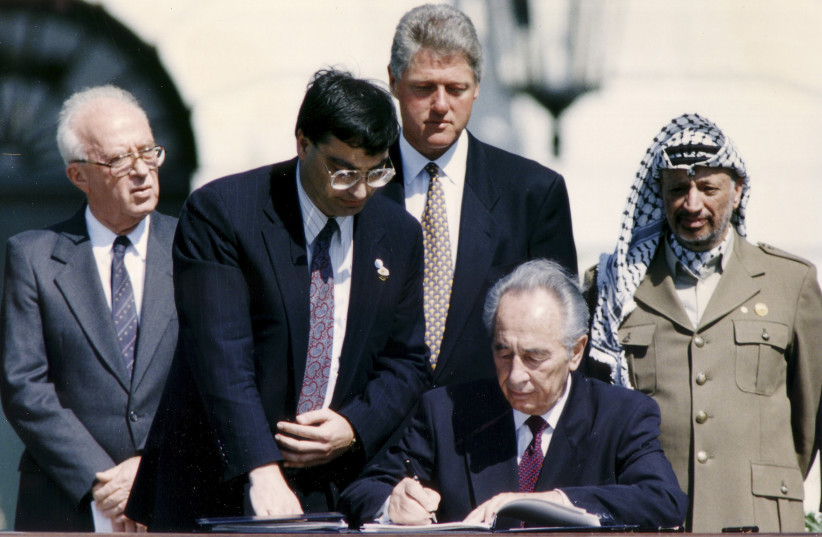
In 1993, a similar scenario unfolded. Then–prime minister Yitzhak Rabin allowed Shimon Peres and Yossi Beilin to conduct talks in Oslo with the Palestinian Authority. He believed he could stop the process if it produced an unfavorable outcome. What Rabin failed to anticipate was the decisive involvement of then-US President Bill Clinton.
Clinton recognized a rare opportunity to become the first US president to help end the century-long conflict between Jews and Palestinians. Through diplomatic effort and strategic pressure, he pushed the negotiations forward.
Once the opportunity to withdraw from the deal had passed, Rabin stood on the White House lawn in September 1993 and shook hands with Yasser Arafat. His body language made clear how uncomfortable he was at that moment.
Netanyahu’s setback after Trump’s declaration
This recurring pattern of Israeli leaders yielding to American presidents appears to have continued with Prime Minister Benjamin Netanyahu. A week after what appeared to be a successful joint press conference with Donald Trump, Netanyahu was compelled to accept a Friday-night declaration from Trump that contradicted statements he had made just days earlier.
The declaration diverged from Netanyahu’s earlier remarks in two major ways:
A. Duration of fighting: Trump stated that Israel must immediately halt its military operations in Gaza, a move that significantly reduced pressure on Hamas.
B. Acceptance of Hamas’s response: Trump’s position allowed Hamas’s response to be accepted, despite the fact that it fell short of meeting the full terms outlined in the proposed framework.
The shift in tone resembled a reversal in the board game “Snakes and Ladders.” After what seemed like a political climb the previous week, Israel appeared to have slipped backwards. Although Hamas announced its willingness to implement the first stage of the plan - the release of hostages in exchange for some 2,000 prisoners - a new reality had taken shape. Trump’s declaration effectively separated the first stage from the later stages, which include the disarmament of Hamas. This has given the group new room to stall, even in releasing hostages.
Five ways Hamas could exploit the deal
1. Reduced military pressure: Hostage negotiations would no longer occur under fire. Hamas would no longer face the intense pressure it encountered in Gaza City.
2. Delaying tactics: The ceasefire allows Hamas to prolong the hostage-release process. With the US agreeing to hold further talks in Cairo, the group now has an excuse for continued delay.
3. Controlling prisoner selection: Trump’s proposal states that Israel will release 250 prisoners serving life sentences. However, it does not specify that Israel would determine which prisoners are freed. Hamas will likely pressure Israel to release high-profile prisoners, including Marwan Barghouti.
4. Linking release to IDF withdrawal: Hamas may argue that the IDF must first leave areas where hostages, either alive or deceased, are believed to be held.
5. Delaying the return of bodies: Hamas could delay the return of 28 bodies, claiming logistical difficulties and that such a process would naturally take weeks.
What Trump’s plan means for him and for Israel
It remains uncertain whether Hamas will derail the negotiations. Trump seeks a concrete achievement, specifically the release of hostages within a week. The Nobel Peace Prize committee is expected to convene shortly, and Hamas understands that failure to cooperate may provoke a strong reaction from the US. Other mediating countries are also expected to apply pressure on Hamas to comply, although that alone does not ensure results.
If a full hostage deal is reached in the coming days, it would be seen as a major diplomatic achievement for both Trump and Israel. Even if hostilities resume afterward, Israel may benefit from greater operational freedom.
A more difficult question is whether Hamas will agree to the entire framework, including disarmament and transferring control of Gaza to an inter-Arab force. It is also unclear whether wealthy Arab nations will be willing to invest billions in rebuilding the territory.
While the US appears committed to seeing the full framework implemented, it remains unclear whether this outcome would genuinely serve Israel’s long-term interests.
Gaza was already rebuilt and relatively prosperous before the attacks of October 7. Those events did not result from despair, but from the belief among Gazans that Israel could be brought to collapse. Even if Trump’s plan is implemented in full, it is unlikely to change Gaza’s ideology or Hamas’s long-term objective of achieving what it calls the “right of return.” The education system in Gaza will likely remain unchanged, and incitement in mosques is expected to continue. The aspiration to repeat the October 7 attacks will not disappear. The more wealth Gaza accumulates, the more resources it may have to pursue that goal.