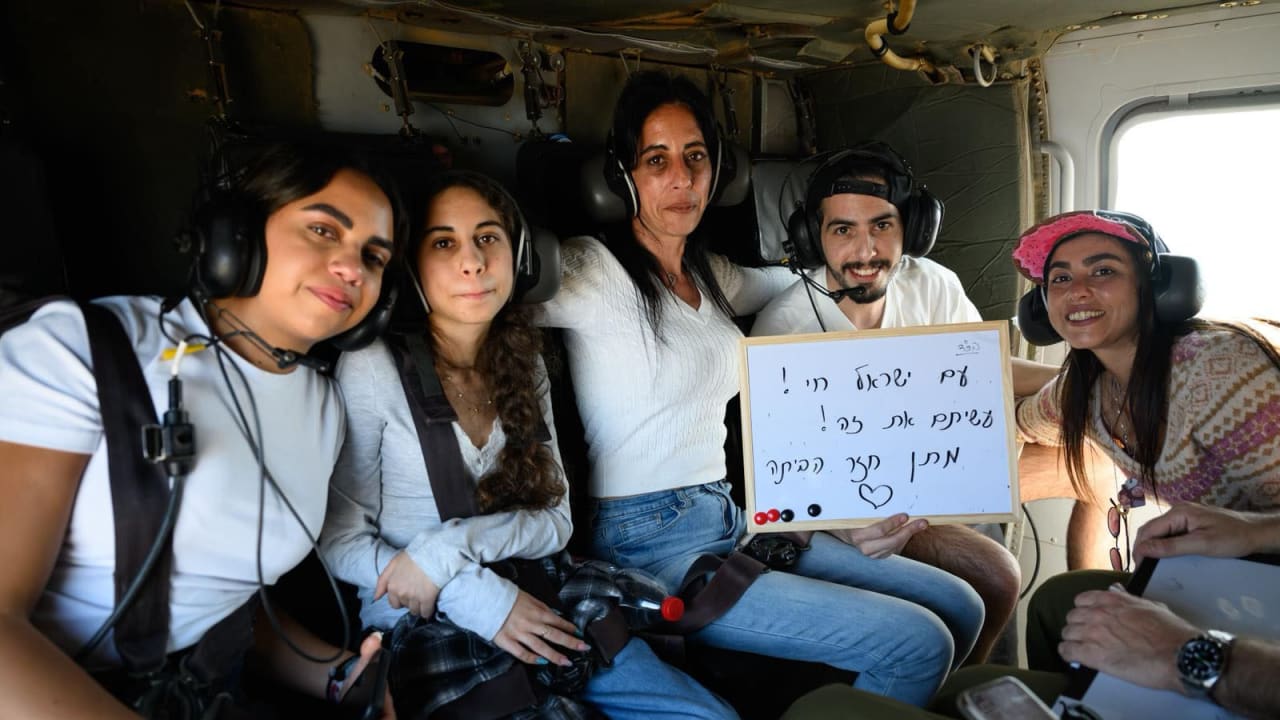
Ziv and Gali Berman, Maxim Herkin, Segev Kalfon, Yosef-Chaim Ohana, Matan Zangauker, Elkana Bohbot, Evyatar David, Rom Braslavski, Guy Gilboa Dalal, Nimrod Cohen, Matan Angrest, Eitan Mor, Bar Abraham Kupershtein, Omri Miran, Alon Ohel, Eitan Horn, David Cunio, Ariel Cunio, and Avinatan Or – welcome home!
Two years ago, the festival of Simchat Torah, a day meant for dancing, celebration, and rejoicing, became synonymous with horror. The massacre that unfolded that morning shattered lives, families, and the very essence of joy that this holiday is meant to represent.
Many in Israel and worldwide believed that Simchat Torah would never feel the same again. Perhaps it won’t; maybe the scars run too deep. But on Monday morning, after over 700 agonizing days, a measure of joy has returned to the world.
As news broke on Monday that 20 Israeli hostages were finally coming home, something remarkable happened. People nationwide burst into tears of joy. Newscasters found themselves reciting the shehecheyanu prayer on air, thanking God, “Who has kept us alive, sustained us, and brought us to this moment.”
Others quoted the Book of Yirmeyahu: “And the children shall return to their own border.” These weren’t scripted moments. Nor were they for the cameras. They were spontaneous instances of joy and relief.

The names and faces we had memorized from two years of posters, vigils, and endless media coverage suddenly transformed from symbols of absence into flesh-and-blood people returning to their families – 20 individuals who can now begin the long, difficult process of rebuilding their lives.
One moment captured the day’s emotional weight perfectly. It was encapsulated in Matan Zangauker speaking by phone to his mother, Einav, who told him simply, “There is no more war. You are coming home.”
In those few words lay something Zangauker may have only dreamed he would hear again while surviving in the depths of Hamas’s underground world of tunnels in Gaza – the promise of safety, normalcy, and love. The 20 heroes must be given time and space to rebuild all that is precious to them.
US President Donald Trump, who arrived in the country early on Monday, coinciding with the release, told the Knesset, “The hostages are back! It feels so good to say it.” He reminded the assembly: “Never forget and never again,” receiving a standing ovation. “The cruelty of October 7 struck the heart of humanity,” Trump affirmed. “The US mourned alongside Israel.”
Mourning those lost
Even in joy, however, there were moments that reminded us of the reality of what we have been through. The sight of balaclava-clad Hamas terrorists standing beside the hostages as they called their families shows that this war is not quite over.
Only four of the remaining bodies of murdered hostages held in Gaza were returned to Israel on Monday, a crushing blow to families still waiting for closure, prompting outrage from the Hostages and Missing Families Forum. And there were others, like Yarden Bibas, who sprang to mind on Monday – what must he have felt while witnessing such scenes, when his own family was torn from his future?
As The Jerusalem Post’s Anna Ahronheim noted, “Hamas is more than the ruling power of the Gaza Strip. It is an ideology that is ingrained in a segment of the population. Like wars against al-Qaeda, the Islamic State, and other terrorist groups, one cannot destroy an ideology. One can harm perpetrators and degrade their military capabilities, but an ideology will always find a way to grow.”
“The war in Gaza will not end with Trump’s plan. Like many other wars, it will likely lead to generations of radicalized youth,” she said.
This is the multilayered country we inhabit. A country where joy and grief, relief and anxiety, celebration and vigilance must coexist. The challenges ahead in ensuring peace remain formidable, even as world leaders gather in Egypt to sort out Gaza’s future.
But Monday was not a day for dwelling on what remains to be fixed. It was a day to warmly embrace what had been restored. After two years of prayers, protests, and an unwavering determination that at times brought the country to a standstill, 20 families were made whole again. After two years of Simchat Torah being a day of mourning rather than a day of rejoicing, we reclaimed a piece of the joy that was stolen from us.
On this Simchat Torah, the simha returned to where it belonged.