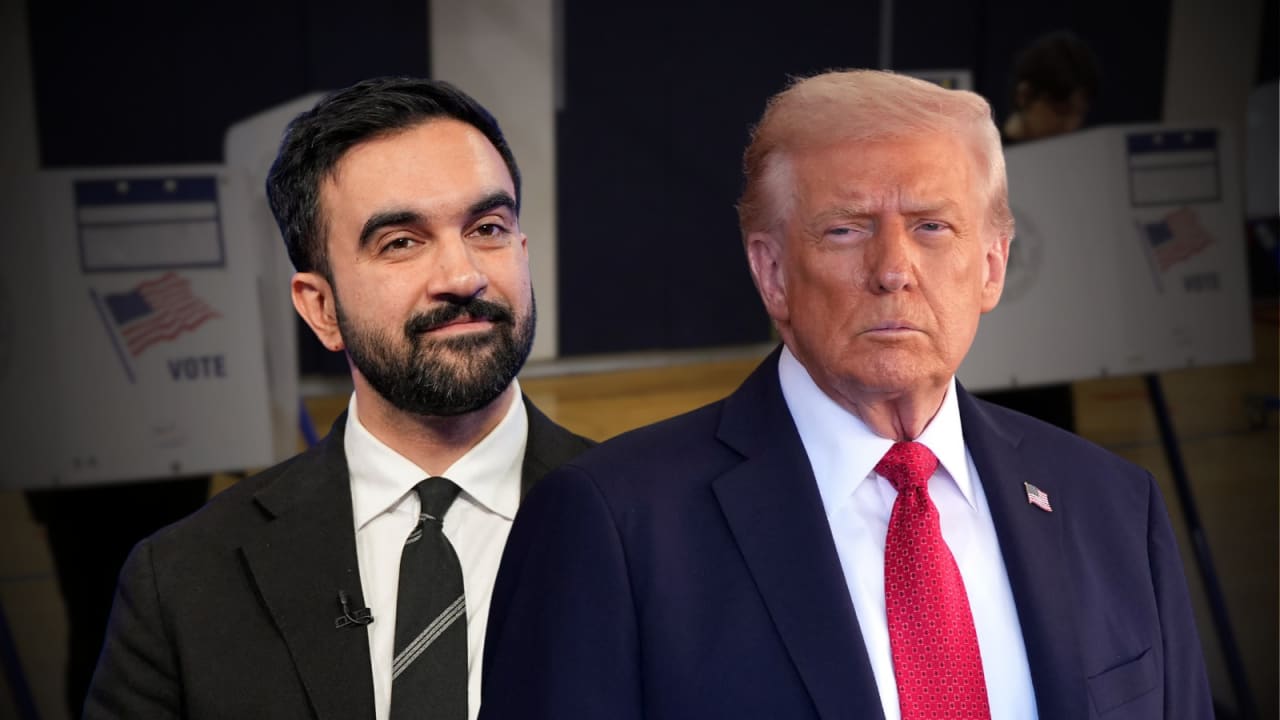
With the rumored meeting of US President Donald Trump with New York City Mayor-elect Zohran Mamdani set for Friday, many factors, from personal to symbolic, may be raised. However, amid the anticipated surge of emotions, safeguarding New York residents, particularly its 960,000-strong Jewish community, must take precedence.
According to exit-poll data, Mamdani received 33% of the Jewish vote in the election earlier this month. This indicates that the Jewish perspective on Mamdani is not uniform, particularly considering the hopes, expectations, and past experiences of New York’s Jews over the last two years.
Park Avenue Rabbi Elliot Cosgrove told The Jerusalem Post’s Diaspora correspondent Michael Starr, “I believe Mamdani poses a danger to the security of the New York Jewish community... a danger to the Jewish body politic of New York City.”
This danger, he explained, came in the form of radical rhetoric that had ultimately fostered antisemitic violence, which unfortunately does not distinguish between anti-Zionism and antisemitism.
“Anti-Zionist rhetoric has become a prompt for attacks on Jews, from online to graffiti on synagogues to physical violence,” he said.

This reality is uncertain, unsafe, and undeserving of tax-paying citizens. “Mamdani’s distinction between accepting Jews and denying a Jewish state is not merely a rhetorical sleight of hand or political naïveté – though it is, to be clear, both of those – he is doing so to traffic in the most dangerous of tropes: an anti-Zionist rhetoric,” Cosgrove said.
The Park Avenue rabbi represents a major faction of the Jewish community, but a full one-third of the vote went to Mamdani; these voices cannot be discounted.
Several progressive rabbis and community and social organizations had expressed their support.
Recent months have shown how quickly words translate into threats on the ground. In Brooklyn, a Neo-Nazi cult leader pleaded guilty to plotting to poison Jewish schoolchildren, part of a wider campaign of online incitement aimed at New York’s Jews.
On Manhattan’s Upper East Side and in Crown Heights, anti-Israel rallies outside synagogues and Chabad institutions have featured chants of “Death to IDF” and “Intifada revolution,” with counter-protests by local residents and security volunteers.
Laboratories for normalized hostility to Zionism
New Yorkers have also watched campuses like Columbia and NYU become laboratories for normalized hostility to Zionism, where calls for “resistance” blur into open justification for violence.
These stories, reported regularly in the Post by our Diaspora affairs team, are not abstractions for the city’s Jews. They are the lived backdrop against which Mamdani’s rhetoric, and the meeting at the White House, will be judged.
In a joint statement, a coalition of major Jewish organizations welcomed the results and called on Mamdani to govern with respect for the diverse views of New Yorkers. “We will continue to confront, without hesitation, the alarming rise in antisemitism and hate crimes, and loudly call out any rhetoric or actions that delegitimize Israel or excuse antisemitism,” they said.
Rabbi Amiel Hirsch, president of the New York Board of Rabbis and Stephen Wise Free Synagogue senior rabbi, congratulated Mamdani, urging him to be “a uniter and a peacemaker by rejecting those who seek to divide us and to continue seeking an understanding of how the vast majority of New York Jews – like Jews throughout the United States – are deeply attached to Israel and why they see the Jewish state as an essential element of their Jewish identity.”
New York, obviously, is not just any city. It hosts some of the richest and powerful figures in the US, and carries weight – both financial and symbolic – that has ripple effects across the nation and the world.
At the end of the day, what concerns New Yorkers the most – and has for years – are the issues of crime, affordable housing, schooling, and health care. Mamdani promised to tackle these issues, and he has four years, starting in January, to deliver on that promise.
But safety is not just physical.
When one Jew in New York doesn’t feel safe wearing a skullcap in the street, that has reverberations across the broader tristate area – which, including New York City, raises the number of Jews to about 1.37 million – and far beyond.
What happens in this city means something. As New Yorkers, both leaders – the incoming mayor and the incumbent president – should have one single goal in mind: to maintain the safety, at all its levels, of the residents of the city of New York.