This article is based on exclusive conversations with senior officials who serve or served in the Mossad and the IDF, and who requested that their identities be kept anonymous, and was approved by the Israeli censor.
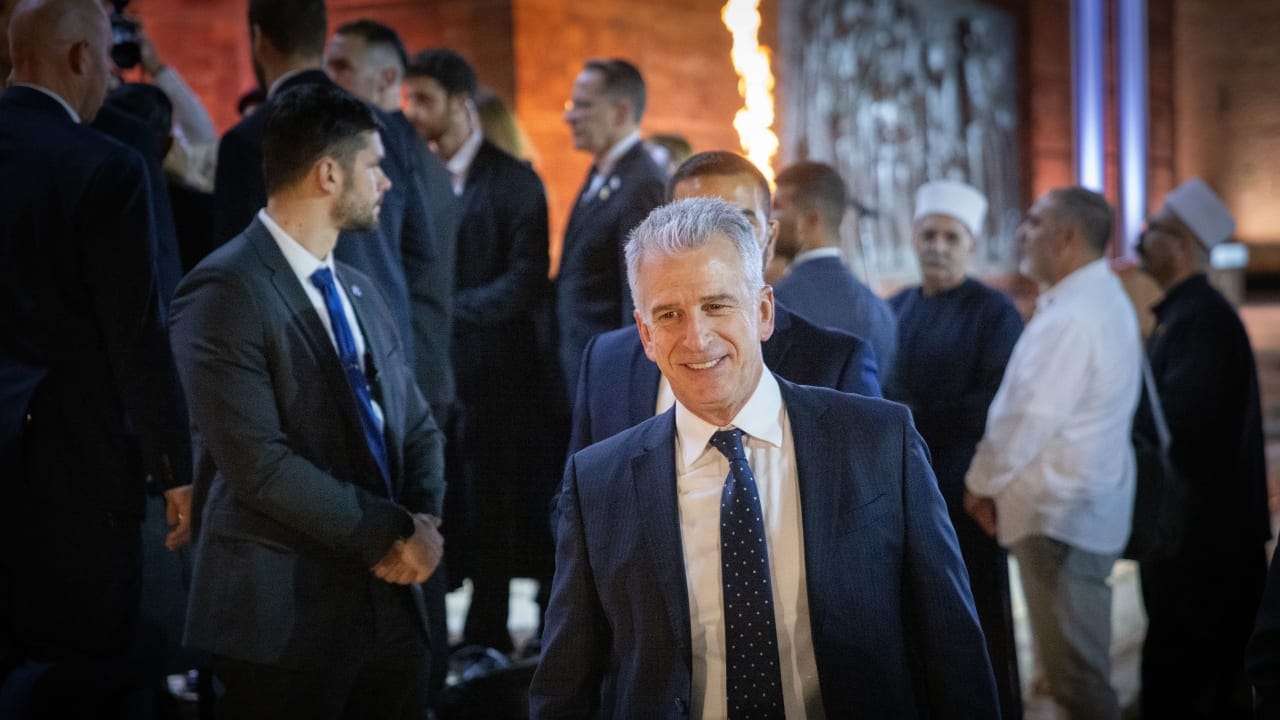
On Tuesday, David Barnea completed his astounding five-year term as Mossad chief. During that time, he transformed the spy agency from a unit that carried out one or two operations in the shadows at a time, to a juggernaut that could influence the course of war and peace on multiple Middle Eastern fronts – from Iran to Hezbollah in Lebanon, to protecting Jews from terrorism overseas.
He has spent decades in the agency, with five years at its helm, including some of the most crucial in Israel’s history. He helped hobble Iran with hundreds of agents, sabotaging the country in June 2025. There were the exploding beepers in September 2024, which killed Hezbollah operatives. That same month, he oversaw the assassination of Hezbollah chief Hassan Nasrallah in Lebanon.
Barnea also has some critical observations worth heeding about the region’s future.
New revelations regarding Lebanese Mossad agents walking through fire to plant critical devices to assassinate Nasrallah
Lebanese Mossad agents walked through fire to assassinate Nasrallah
On September 27, 2024, some 10 days after the exploding beepers operations, dozens of F-15I aircraft from the IDF’s 69th fighter squadron hammered Hezbollah’s underground headquarters in the Dahiya stronghold of Beirut. They dropped 85 bombs, assassinating Hassan Nasrallah.
Nasrallah, who headed Hezbollah for more than three decades, was killed alongside around 20 Hezbollah military commanders, including Ali Karaki, the commander of the southern front, who had been designated Hezbollah’s new military chief after Israel had killed his predecessor.
A decade of meticulous intelligence collected by the IDF and the Mossad, including from Iranians working with Hezbollah, led to this point.
Previously, The Jerusalem Post had reported that the IDF was aided by targeting systems that Mossad operatives had earlier planted in precise locations inside the building above Nasrallah’s bunker.
But now the Post can reveal, for the first time, that like in Iran, many of these operatives were local Lebanese Mossad agents – not “Blue and White” operatives, as they might have been in years past.
The Post can now also disclose that these agents frequently had to head directly into areas that the IDF had bombed only a minute before. This was sometimes necessary to carry out a battle damage assessment of IDF strikes; it was also necessary to get to the areas where the agents planted the devices that helped kill Nasrallah. As the agents moved forward, IDF bombs kept falling.
Back at Mossad and IDF headquarters, Barnea and air force officials were working hard to make sure the bombs didn’t fall on their Lebanese agents, who were creeping through these war zones to the designated spots to plant their devices. As they advanced, the Lebanese operatives walked through smoke, fire, and hellish scenes, praying that they would not get hit by the IDF or caught by Hezbollah counterintelligence.
Barnea needed to know exactly where the bunker was, where Nasrallah was at that moment within the bunker, and if the IDF bombing had changed the status of the situation on a minute-to-minute basis.
The outgoing Mossad chief views these agents as very special people who have unmatched hearts of lions.
In 2025, these agents, and the Mossad, received an Israel Prize for intelligence operations and accomplishments, though their identities remain classified.
What the Kurds could have done against the Islamic regime, and why Trump vetoed the operation
Why did Trump veto a Kurdish operation against the Islamic regime?
Sources close to Barnea say that in many ways, the US was the originator of the idea of toppling the Islamic regime by using the Kurds to initiate an internal ground thrust. In fact, in 2003, the Americans had already used the Kurds in joint operations to help bring down Saddam Hussein in Iraq.
These sources emphasized that many of the same Kurds involved in that historic ground operation and who entered Baghdad – including Massoud Barzani, the first man who entered Hussein’s palace – were the ones who Israel was hoping to activate against Iran’s Islamic regime.

Both the Iraqi and Iranian Kurds have significant fighting capabilities, without additional training beyond what they had already received, according to sources. Utilizing the Kurds in the 2026 war would have saved the US from deploying and endangering its own ground forces.
In that respect, Israeli sources viewed this concept as something that should be even easier to swallow for Washington.
Stunningly, Israel was prepared to provide the Kurds not only with a no-fly zone, but with continuous aerial firepower to help them advance against any Iranian force that would have tried to assemble to block their path forward.
Weapons that the Kurds received both from the US and the Mossad – many of which were “re-tasked” after the IDF captured the arms from Hamas in Gaza or from Hezbollah in Lebanon, and training the Kurds received from Israelis, enabled the fighters to be fully ready to go.
There is a debate regarding whether US President Donald Trump was convinced to veto the operation by some of his own top officials, or by Turkish President Recep Tayyip Erdogan.
Even within Israel, some officials doubted that such an operation would work. But Mossad officials and sources close to Barnea said that most of the agencies’ operations require faith, and that the spymasters have already pulled off a long list of operations that have boggled the imagination.
Although CIA director John Ratcliff has been reported as having taken a strong position against the Kurdish intervention, Mossad sources have said that he never told Israelis that he was against it. Furthermore, they note the public reports that the CIA provided the Kurds with weapons, meaning that the American clandestine agency acted in ways that could have helped the operation happen.
Israeli sources have accused American officials within the White House – many point to US Vice President JD Vance, who has voiced doubts about the 2026 war with Iran – of leaking the plan to Erdogan to help the Turkish president get to Trump in time to stop the operation before it could be rolled out.
Vance's Special assistant and Press Secretary, Luke Schroeder, responded to the report, saying, "This report is categorically false, and we would have told the outlet as much if they had bothered to reach out for comment."
Barnea’s views on regime change: from his meeting with Trump to the present
When Barnea spoke to Trump by video on February 12, he never promised that the Iranian regime would fall immediately. Rather, he estimated that toppling the regime could easily take a year or more from when the war would conclude, but that the war, which would include a Kurdish ground operation, would highly enhance conditions for regime change. In Prime Minister Benjamin Netanyahu’s speech at Barnea’s exit ceremony, the prime minister voiced similar claims. Barnea’s main push was that the regime would be shaken to its foundations.
In fact, the IDF started to bomb the Iranian regime and Basij forces in the Kurdish areas, as the IDF publicized. However, while the IDF later said that 100% of “critical” and “essential” targets had been struck, the Post has learned that possibly only around 10% of the targets to help the Kurds strike the Iranian regime forces were actually hit.
These targets were not included in the broader operation numbers, because they were considered part of a separate stage of the war that never fully kicked in. In this plan, about eight million Kurds, and many other minorities such as the Sunnis and the Baluchis, could have been brought into the regime toppling effort, like an avalanche.
According to Barnea’s view, if Trump holds tough – and he still believes the US president will – and keeps the financial, maritime, diplomatic, and military pressure on Iran, then the regime will fall within a year. However, in Barnea’s understanding, if Trump removes the economic sanctions or his counter-blockade against Iran in the Strait of Hormuz before a final deal is reached on all of the key issues, then the plans of Israel, the CIA, and the Mossad will become less relevant.
In that case, the Islamic regime will be flooded with new funds and will grow stronger again. This will also flow down to the greater civilian population within one to two years, which could reduce the internal pressure on Iranians to topple the regime.
In this scenario, while the Islamic regime could still be toppled, the Post understands that Barnea would view such an undertaking as much more complex, requiring a new and completely different set of plans.
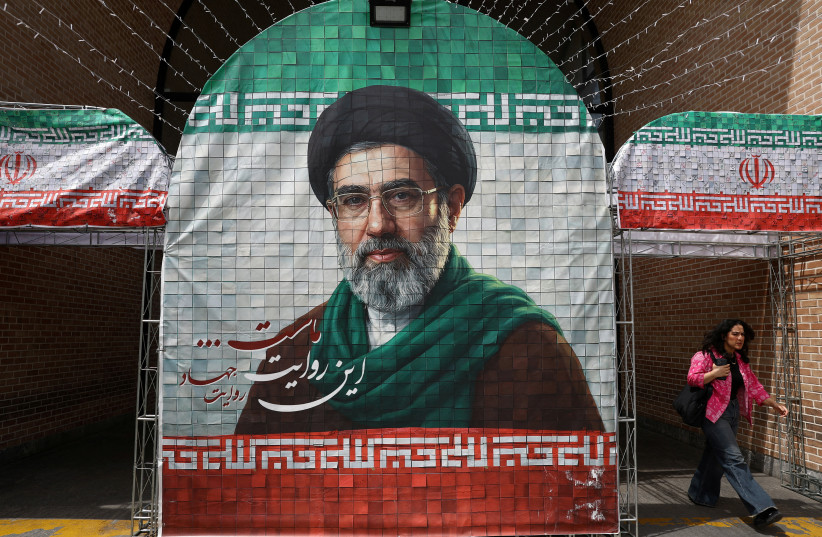
Who is running Iran? Mojtaba Khamenei, the IRGC leader Vahidi, or multiple civilian leaders?
Another key question that has been debated and revised constantly is who is deciding Iran’s fate after Ayatollah Ali Khamenei’s February 28 assassination?
Mossad sources would say that the ayatollah’s son, Mojtaba, is truly in control.
It is unclear the severity of Mojtaba’s wounds, which he sustained from the same attack that killed his father, and whether they have impaired his ability to speak.
But there is general agreement that Mojtaba has fully assumed the role of new supreme leader. The Post has also understood that at least since mid-April, this has been the view of Israeli military intelligence, despite periodic contrary reports from various media outlets.
Regarding the periodic statements trying to undermine whether Mojtaba is in charge, Israeli defense sources have seen this as more of attempts to flesh Mojtaba out with faster answers to American offers, when there has been frustration with his slow response time.
Why hasn’t the US or Israel attacked the Pickaxe Mountain nuclear facility?
Although the US’s June 2025 strikes on Iran succeeded in destroying the Fordow nuclear facility, which was under a mountain, the Iranians proved that they could dig deeper, to an extent that even the American rock-penetrating bunker busters, which Israel does not possess, would be ineffective.
The Post first reported in 2021 that Iran was building the Pickaxe Mountain nuclear facility even deeper than Fordow. Although the facility is still not considered operational, the Post has now received confirmation from both top US and Israeli sources about concerns of the viability of destroying it from the air.
Top American and Israeli officials view Pickaxe Mountain – along with the 60% uranium covered with rubble under Iran’s nuclear facilities – as one of the greatest remaining nuclear concerns, should it become operational and if Iran moves critical nuclear assets there, since this could give them a sort of “zone of immunity.”
Trump has made it clear publicly that he does not want to send the necessary large US ground forces into Iran to destroy Pickaxe Mountain or to seize the 60% uranium. Instead, he wants his current negotiations with Iran to lead to the removal or dilution of the uranium, as well as a promise from Iran to freeze uranium enrichment in all facilities (including Pickaxe Mountain, if the facility is not destroyed). These would be highly supervised.
Although the US pulled off a ground operation over multiple days to rescue two shot-down American pilots in Iran, the Post understands that top American generals have pressed Trump not to try a ground operation to seize the uranium. They believe this operation could take months and be far more dangerous, involving far more American soldiers who would be vulnerable to attack.
Why didn't the Mossad execute its own ground operation to sabotage Iran's nukes?
Why didn’t the Mossad execute its own giant operation on the ground to sabotage Iran’s nuclear facilities, including Fordow? What led the air force to take the lead in June 2025?
It has been previously reported that in meetings in late April and early May 2024 between Netanyahu, the Mossad, and top IDF officials, that a major event took place.
For years, Netanyahu had given the Mossad the lead on thwarting the Iranian nuclear threat.
There was also a potential plan for the Mossad to undertake an unprecedented, wider operation to simultaneously destroy most of Iran’s nuclear program, including Fordow.
While Iran had accused the Mossad of sabotaging individual facilities one at a time in the past, this would have been a much larger undertaking.
But in the late April and early May 2024 meetings, Netanyahu finally decided that this plan was too large, unrealistic, and unachievable.
Former IDF chief Shaul Mofaz, as well as former national security council chief Yaakov Nagel, each ruled that the operation was not feasible or was highly questionable; plans were then halted by former IDF chief of staff Herzi Halevi and former defense minister Yoav Gallant. Further, sources say that Barnea himself stopped the operation due to these findings.
In any event, once the Mossad operation was canceled, Halevi and Gallant moved forward with their plans to prepare for a potential aerial attack on Iran, plans that until then, Netanyahu had placed on the back burner, based on his hope that the Mossad could pull off a large-scale attack against Iran’s nuclear program.
These plans later developed significantly from November 2024 until they were hatched in June 2025.
But the Post can now reveal the full extent of the Mossad and Barnea’s counter-narrative to this story.
Sources close to Barnea would say that there were three main reasons this operation did not go forward. One was that no one in the IDF or outside of the Mossad believed that dozens of local Iranians could be used on a crucial operation without them leaking and undermining the operation. If its “Blue and White” agents weren’t doing it, the plan would not work.
Today, Barnea would chuckle about this argument, noting that the Mossad’s extensive and critical roles in the historic Operation Rising Lion were run entirely by local Iranian recruits, with not a single leak.
A second was that top IDF and other defense officials wanted to see the Mossad’s proof of concept and experience for pulling off such a massive operation.
Despite successful operations attributed to the Mossad against Iranian nuclear facilities from the 2000s through June 2021 at Natanz (many times), Karaj, and other places, the planned operation was so much larger, and involved so many more agents, and such a higher percentage of local Iranian agents, that it was not considered comparable even by the Mossad.
Mossad sources would reply that if that logic stopped the agency, then they would never have pulled off the exploding beepers, the exploding walkie-talkies, or many of the other previous operations against Iran.
This is because the Mossad’s operations are, by definition, almost always brand new and one-of-a-kind. They are almost always involved in heavy amounts of cunning, distractions, disinformation, and new technologies, because once an operation has been used, the assumption is the enemy that was hit will make sure to put in place procedures to cut off any chance of carrying out the same operation twice.
The third reason the operation was called off was that after October 7, 2023, the Mossad saw how deeply invested IDF forces (in the hundreds of thousands), resources, time, and attention were invested in Gaza. The agency believed there was no chance that the IDF could provide the needed protective military envelope to make such an operation feasible.
Mahmoud Ahmadinejad may be Israel's and the US's choice for Iranian leadership
Foreign reports said that former Iranian president Mahmoud Ahmadinejad might have been in the running as the US and Israel’s choice to lead a new regime in Iran.
Mossad sources would say that finding an alternative leadership is not set in stone for one leader or another. Israel and the US have had connections with many people, and it is better not to get into the details, they would add.
When might the Mossad be able to reveal who it was in touch with to promote a new leadership? Quite possibly after the current regime is toppled, but likely not before, at least not in the near future.
What is the best outcome of the war with Hezbollah?
Several top Israeli political and defense officials have carefully, but firmly, criticized Trump following his intervention on Monday to prevent the IDF from striking Hezbollah in Beirut.
These top officials describe two separate scenarios regarding the outcome with Hezbollah: before and after Trump’s intervention. They say that once Trump intervened with Netanyahu, Hezbollah now understands that Israel will not attack Dahiya, which strengthens them.
This will also impact, they noted, the internal processes and negotiations between Hezbollah and the Lebanese government, where Israel had hoped that the full range of pressures would give new advantages to the government in pressing Hezbollah toward disarmament.
In addition, they say that Hezbollah has been strengthened by Trump’s publicly saying he is negotiating directly with them, even if it is through a middleman.
According to top Israeli sources, it will be much harder to make new progress strategically against Hezbollah if they now feel a return of a sense of victory in some areas.
Various top Israeli officials felt that Israel, the US, and the Lebanese government were almost there in getting Hezbollah to make historic concessions, but that Trump stopped this at the last second.
The feeling is that when Netanyahu went public with the plan to attack Hezbollah in Beirut on Monday morning, he only did so because he felt confident that he had American backing, and that the loss of this backing later in the day was a big surprise.
Barnea would probably not disagree with this analysis by other Israeli officials regarding Hezbollah.
Regarding an overlapping issue, Barnea is less gung-ho. If some Israeli officials are talking about holding on to southern Lebanon indefinitely, he would ask what the purpose would be of such a position, given that such a tactic was tried and did not succeed long-term, from 1982-2000.
Rather, he would see holding southern Lebanon as a temporary bargaining chip to try to convince Hezbollah to disarm.
What does Barnea think of Roman Gofman’s chances of success running the Mossad?
It is well known that Barnea took the unprecedented step of publicly opposing Gofman to be the next Mossad chief. Barnea had worked with him in recent years when Gofman was Netanyahu’s military secretary.
He agreed with the Attorney-General’s Office and former chief justice and vetting committee chief Asher Grunis that Gofman’s actions in the Elkamayes Affair (where he allegedly mishandled the running of an undercover agent on behalf of the IDF) were disqualifying.
And Barnea understood what he was doing. In several conflicts with top Israeli defense officials over the years – whether involving the timing of the exploding beepers or the killing of Nasrallah – he has never thought about the political price of taking positions that could cost him with other officials in power.
However, following a 2-1 vote by the High Court of Justice on Monday giving Gofman final approval to take office, Barnea immediately turned the corner and both sent a letter and made a speech commanding the agency to back Gofman fully.
The Post’s impression is that, however awkward and odd the situation is for the two men, Barnea really is now pulling for Gofman, and his support is not just to be politically correct. Barnea would say that Gofman has lots of good people who know their roles in the Mossad, and that he can succeed if he uses them.
Contrary to many media reports, sources close to Barnea predict that Mossad officials will not resign en masse as Gofman takes over. Only the head of the Tevel division said he would leave, and there is an internal debate within the Mossad about whether he might have left in any event.
Barnea would add that three division chiefs quit when he entered office and tried to institute his reform of moving from smaller-scale operations by mostly Israeli agents, to dozens of operations simultaneously, carried out often by foreign local agents.
After all of the discussion about Gofman, those who might hope that Barnea would condemn Shin Bet Chief David Zini will be disappointed. Barnea’s view is that Zini is fully qualified and doing an excellent job since entering the role in the fall of 2025.
As Barnea “rides off into the sunset,” not yet sure what he wants for his next stage of life (he has discussed international travel with his wife, but she is concerned about remaining close to their children), there is no question that he has helped shape Israel’s future. Should he want additional roles, there will be many who will likely seek his talents.
Portions of this article are based on the author's upcoming book In the War Room: The Inside Story of Israel's Fight Against Hamas and the Iranian Axis. https://www.amazon.com/War-Room-Israels-Against-Iranian/dp/B0G2JWY3TG