If you look strictly at the ledgers of Iran’s export terminals, the Islamic Republic appears to be defying the odds. The International Monetary Fund projects that Iran will export approximately $114 billion in goods and services in 2025, maintaining a trade surplus with oil and non-oil exports hovering near pre-sanctions levels.
Yet the experiences of people in Tehran, Tabriz, Ahvaz, and Isfahan portray a starkly different reality. Despite the export windfall, the Iranian economy is not just stalling; it is entering a dangerous phase of stagflation and free fall. The regime has managed to secure its revenue streams, but it has utterly failed to secure the livelihoods of its people. This divergence, between a wealthy regime and an impoverished nation, exposes the fundamental rot at the heart of Iran's economic governance.
The macroeconomic indicators paint a grim picture that export data alone cannot hide. After a few years of positive growth, Iran’s GDP growth turned negative in the spring of this year, with expectations that it will remain flat or contract further. Investment has dried up, with gross fixed capital formation, a key indicator of future economic health, now in negative territory.
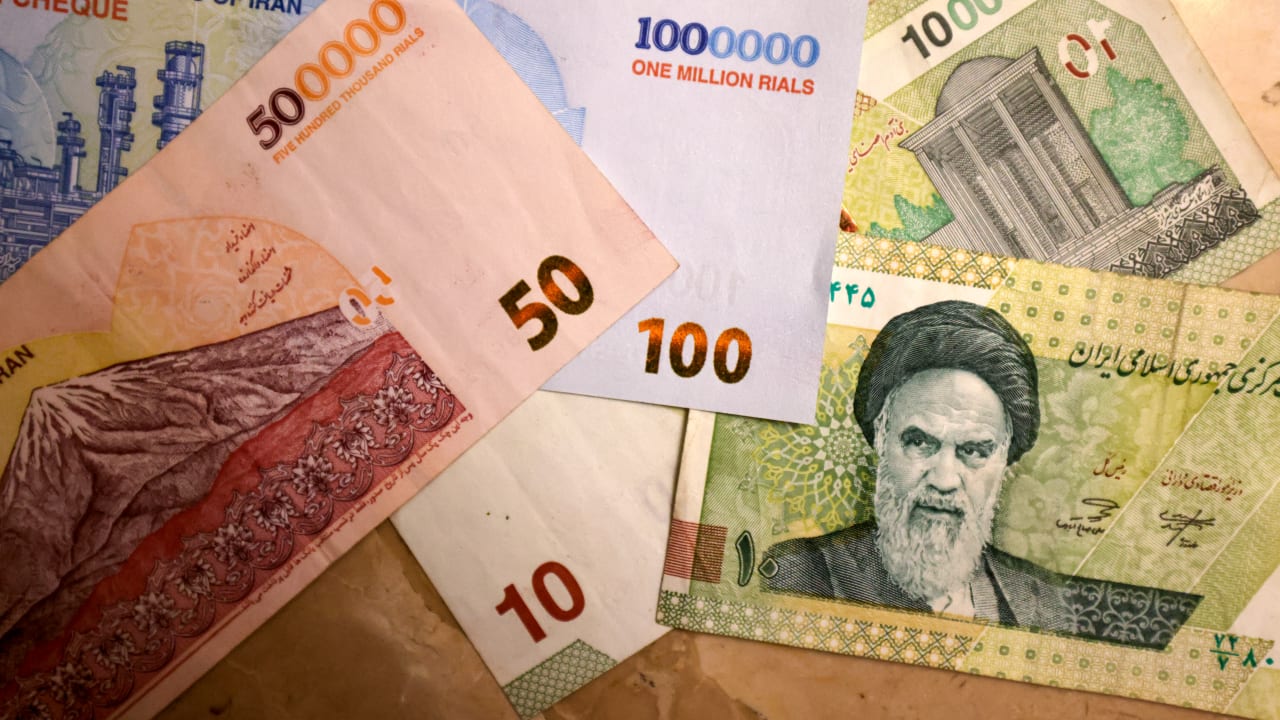
The most visceral indicator of this failure is the currency. When Ruhollah Khomeini swept to power in 1979, one US dollar traded for 70 rials. Today, that same dollar commands a staggering 1,130,000 rials, more than 16,000-fold its price in 1979. In the last year alone, the rial has lost 50 percent of its value. This isn't just a monetary statistic; it is the erasure of the Iranian middle class's savings and dignity.
In a country with abundant fossil fuel resources, Iranians face electricity and natural gas shortages, which make both hot and cold seasons unbearable. To add insult to injury, decades of mismanagement and corruption have eroded the country’s water supplies, and Iranians across the country are now struggling with drinking water shortages.

For the average Iranian, these macroeconomic failures translate into a daily struggle for survival. Official government figures peg annual inflation at around 40 percent, with point-to-point inflation nearing 50 percent. However, these sanitized numbers likely mask a far uglier reality.
The most crushing blow is the price of food. In October, the 12-month inflation rate for food items hit a crushing 64 percent. To put this in perspective, American consumers are frustrated by 3 percent inflation. This high-inflationary pressure on essentials is happening in a country that ranks among the top five oil-rich nations and holds the world's second-largest natural gas reserves.
How does a country so rich in resources, currently exporting at near-record levels, face shortages of water, electricity, and natural gas? The answer lies in the regime’s ideological asset allocation.
Tehran has made a deliberate choice to prioritize external militancy over internal stability. The billions of dollars flowing in from oil exports are not being reinvested into the crumbling power grid or water management systems. Instead, resources are siphoned off to fund the "Axis of Resistance." The regime continues to bankroll terrorist groups like Hamas and Hezbollah and sustain its missile program, even as its own citizens face blackouts and water scarcity.
Internal corruption and mismanagement further compound the crisis. The lack of legitimacy has created a brain drain and capital flight, leaving the economy managed by loyalists rather than technocrats.
Looking ahead, Iran’s economic future will likely follow one of three trajectories.
The Deal Scenario: A new diplomatic agreement could lift sanctions and boost the economy in the short term. However, the regime’s ideological preferences and decision-making and history suggest the regime would use this windfall not for domestic development, but to supercharge its regional aggression, domestic oppression, and military programs, much like the aftermath of the JCPOA.
Iran will fund its proxies and missile program, while its economy slowly rots
The Status Quo: If sanctions enforcement remains lax, Tehran will continue to muddle through. The economy will stagnate and slowly rot, but the regime will retain just enough resources to fund its proxies and missile program and inch closer to a nuclear weapon.
Real Enforcement of Maximum Pressure: A return to serious, rigorous sanctions enforcement would force the economy into deep stagflation. This would severely constrain the funds available for proxies and regional aggression and raise the probability of domestic uprising. If a military conflict takes place, Iran's economy is likely to deteriorate further. If, during a military conflict, the country’s key economic infrastructure—such as the Kharg Island oil terminal, the South Pars gas field, and major refineries—gets targeted, the economy could suffer a sudden, catastrophic shock.
The tragedy of Iran under the Islamic Republic is not a lack of wealth, but a surplus of ideology. As long as the Islamic regime exists and Tehran views its economy as a logistical engine for spreading terrorism and Islamist ideology rather than a mechanism for national prosperity, the suffering of the Iranian people will continue in an ancient land blessed by abundant natural resources.
Saeed Ghasseminejad is a senior adviser for Iran and financial economics at FDD, specializing in Iran’s economy, financial markets, sanctions, and illicit finance.