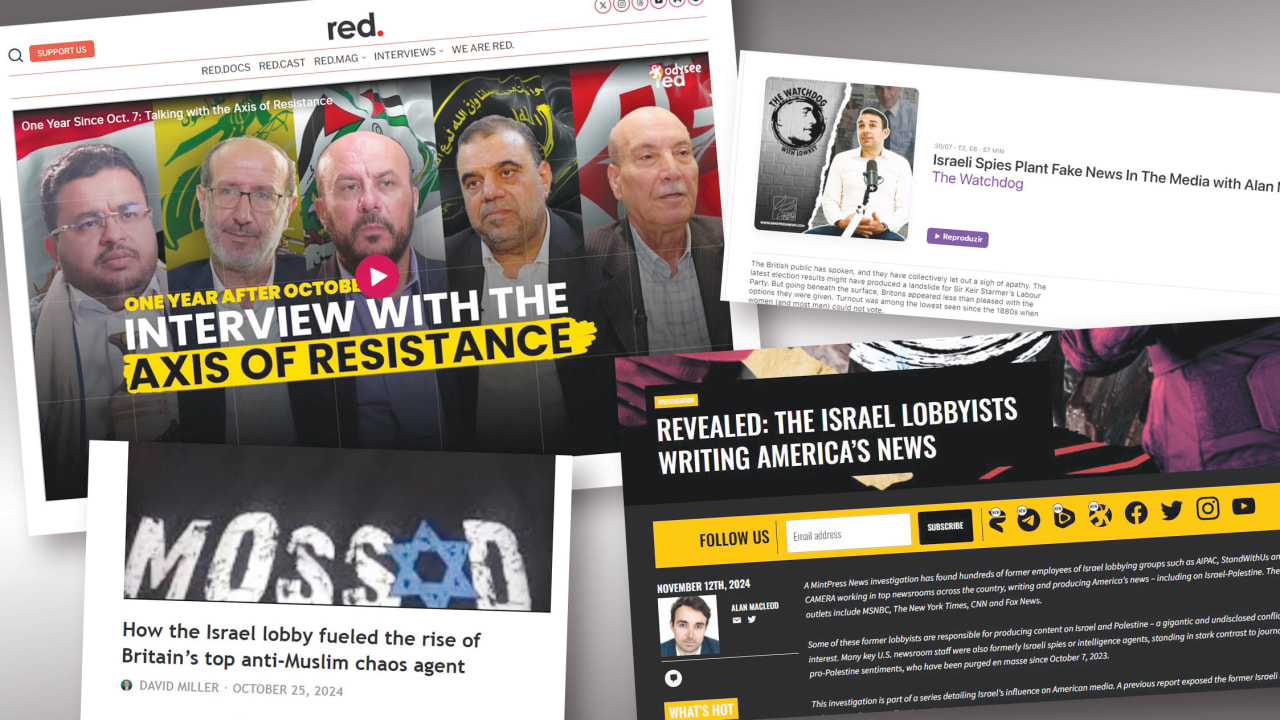
Israel is no longer a small country struggling for survival. It is a regional power in every sense of the word, militarily, technologically, economically, and in intelligence. Precision strike capabilities, intelligence superiority, cyber and artificial intelligence strength, scientific innovation, and impressive economic achievements place Israel among the world’s most advanced and influential nations.
Yet against this backdrop of strength, a serious weakness has been exposed – one no less dangerous than a military threat: failure in the arena of public diplomacy and perception.
Israel is winning on the battlefield but losing in the battle of consciousness. The result is a steady erosion of its international legitimacy, first and foremost in the United States, its most vital political and security ally.
This is not merely a public relations problem. It is a deep strategic failure.
The new war is not over borders but over narrative.

Twenty-first-century wars are no longer fought only with tanks, planes, and missiles. They are fought through screens, algorithms, social networks, campuses, education systems, and the media. The arena of perception has become a real battlefield. Those who win the narrative gain international legitimacy. Those who lose it are seen as aggressors, even when they are the victims.
Infomation war against Israel
Israel’s enemies understand this well. Hamas, Iran, Qatar, and Islamist elements around the world invest enormous efforts in information warfare. They produce staged videos, circulate graphic images stripped of context, and use social media in a sophisticated, systematic way that plays on emotion. These have become weapons no less effective than rockets and drones.
Israel, by contrast, often continues to operate according to an outdated model: official spokespeople, press releases, and rational explanations in a world that no longer functions on rationality alone. Young people do not consume long articles; they consume TikTok videos. They do not deeply examine facts; they react to viral content, much of it produced with artificial intelligence. Algorithms feed them what they already believe.
In this arena, Israel is almost invisible.
For decades, Israel enjoyed near-automatic support in American public opinion, especially among political, academic, and cultural elites. Over the past decade, and even more so since Hamas’s October 7 terror attack, a troubling shift has taken place.
Consistent polls show declining support for Israel among young Americans, particularly on the liberal side. On leading campuses, hostility toward Israel has become a cultural norm. Professors describe Israel as an apartheid state. Student unions adopt Hamas narratives with little criticism. The discourse has become one-sided, radical, and, at times, openly antisemitic, under the guise of “legitimate political criticism.”
This is not accidental. It is the result of organized, systematic efforts: foreign funding of academic institutions, intensive activity by so-called human rights organizations with clear political agendas, coordinated social media campaigns, and sophisticated influence operations with one goal: the delegitimization of Israel.
One of the most alarming aspects of this process is the role played by parts of the Western intellectual elite. Instead of offering balanced criticism, professors, journalists, writers, and public thinkers often adopt simplistic narratives, ignore terrorism, justify violence, and portray Israel as a perpetual aggressor.
Some are driven by distorted post-colonial ideology. Others are influenced by Islamist ideology promoted by Turkish and Qatari Muslim Brotherhood circles, which frame every conflict as a binary struggle between “oppressor” and “oppressed,” regardless of the complex reality on the ground.
Others act out of moral opportunism, a desire to belong to the camp perceived as “enlightened,” even at the cost of distorting the truth. As a result, elites meant to defend truth and integrity become force multipliers for enemy propaganda.
This failure is not only moral; it is strategic.
Israel does not have a truth problem. It has a strategy problem.
Israel is not losing the perception war because the facts are against it. On the contrary, reality, history, and evidence do not work against Israel. It is losing because it lacks a comprehensive strategy.
There is no coordinated global public diplomacy framework.
There is no systematic investment in campuses.
There is no meaningful presence on youth platforms.
There is no institutional understanding of perception warfare as a real battlefield.
Israel continues to act as if having the facts on its side is enough. In a world driven by emotion, imagery, and narrative, facts alone are not sufficient.
Israel is a strong country, perhaps the strongest in the Middle East. But power without legitimacy is fragile. A state that loses the perception battle risks isolation, moral assault, and, eventually, diplomatic and security constraints.
It is still possible to change course, but time is working against us.
It is important to note the government’s decision last September to establish a public diplomacy framework within the Foreign Ministry to coordinate Israel’s messaging efforts at home and abroad.
Upon taking office, Foreign Minister Gideon Sa’ar secured budgetary resources to allow the ministry to focus on public diplomacy. The new framework will employ bloggers, social media influencers, and external experts in digital strategy, advanced technologies, creative content, and communications.
At the same time, the decision allows for internal appointments from within the ministry, aiming to combine institutional knowledge with external expertise.
The new framework will centralize Israel’s public diplomacy efforts worldwide, coordinate the Foreign Ministry’s international activity, and work closely with other government bodies to combat fake news and hate speech against Israel on social media.
Public diplomacy is not a luxury; it is a first-rate security component. A modern approach to perception warfare is required.
In an era where the real battle is fought on social networks, Israel is far behind.
The author is CEO of Radios 100FM, an honorary consul and deputy dean of the Consular Diplomatic Corps, president of the Israeli Radio Communication Association, and a former IDF Radio correspondent and NBC reporter.