
In 1963, Hannah Arendt provided us with the term “the banality of evil.” Adolf Eichmann and other high-ranking Nazi officials had been bureaucrats thoughtlessly complying with mass extermination rather than doing so with malevolent intent. Observing him at his trial in Jerusalem, she found Eichmann ordinary, rather bland but “terrifyingly normal.”
She concluded that he had performed evil deeds without evil intent. He was disengaged from the reality of his evil acts.
She was, of course, wrong. As Bettina Stangneth has shown, the audio-recorded interviews with Eichmann by Nazi journalist William Sassen prove him, in his own words, to be a self-admitted antisemite who was at one with Nazi beliefs. He was unremorseful regarding his role in the Final Solution. He was very much aware of his deceptive posture as a banal bureaucrat possessing no real responsibility.
Arendt was herself a bit of a problem. Between 1924 and 1926, she carried on an intimate relationship with Martin Heidegger, a married philosopher at Marburg University. Heidegger later joined the NSDAP (Nazi Party), announcing in a May 27, 1933, address that he was a devoted supporter of the Fuhrer.
After the war, moreover, Arendt resumed mutual correspondence with him after meeting him in Germany in 1950, reaffirming their deep, enduring feelings for each other. Did she possess rational judgment?
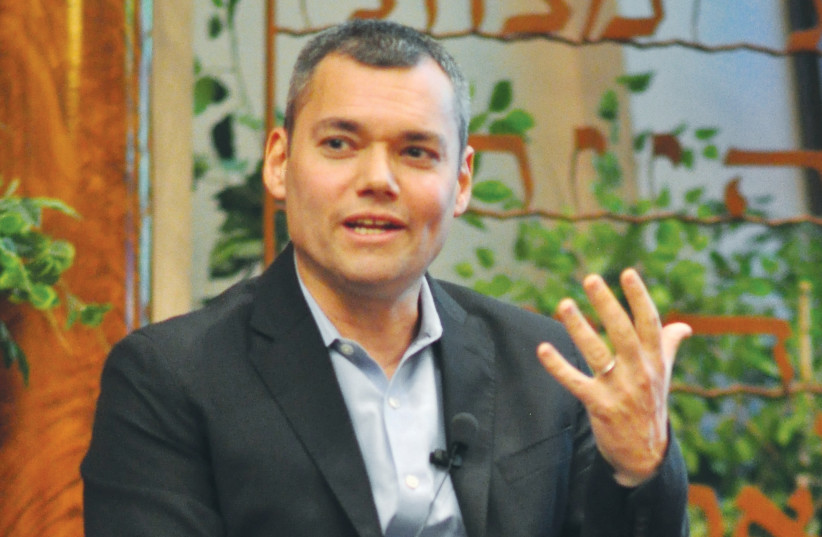
Reacting to Peter Beinart's column
That question could be directed at Peter Beinart following his column in Jewish Currents, published on March 6. Entitled “Iran Is Not an Existential Threat,” it is a prime example of typical Beinart banality. Its subtitle reads, “Iran poses no significant danger to Israel, let alone the US,” leaving Beinart an escape hatch of dilly-dallying over what is “significant.”
I am not at all sure that Steve Witkoff is a source Beinart would respect but, nevertheless, his testimony should be noted. On March 10, he told the media that the Islamic Republic had 460 kilograms of uranium enriched up to 60%, which it could have taken to make a “dirty bomb.” He added that, “There is no reason to be at 60%. None. Zero reason, unless you’re pursuing a weapon.”
Witkoff also informed us that to his knowledge, Iran had enough material to make 11 bombs and that it was a week to a week and a half away from military enrichment.
Sardonically, he clarified for all that “Israel is a one bomb country: One bomb takes them out.” Beinart may still not be convinced but he is driven by an ideology, not reason nor facts.
Beinart wrote, “Tehran has merely challenged Israel’s dominance of the Middle East, not its survival.” But as Farshad Roomi of the Shahid Chamran University of Ahvaz, Iran, published in 2023, “The Shi’ite roots of Iran’s theocracy turned the defense of Palestine and opposition to Israel into an unwavering doctrine.”
Beinart ignores last June’s 12-day conflict. His opinion is that Iran’s “regime… is responding to blow after blow from the US and Israel with what has widely been deemed restraint.” Iran’s Holocaust denial caricature contest is ignored. He avoids the “Death to Israel” chants at rallies across the country, as well as the many publications that make it clear, as Ehud Yaari published in 2015, that Israel must be eliminated as a condition of Iran’s adherence to Islam.
Growing issues with Iran
Another of Beinart’s tricks is to relate to events of the 1980s as supporting his outlook. For example, quotes from a book referenced by Iranian regime advocate Trita Parsi, who Beinart prefers to identify simply as a “foreign policy analyst.” The book asserts that, “Throughout the 1980s, no one in Israel said anything about an Iranian threat – the word wasn’t even uttered.”
Of course, it was only in 2007 that US intelligence assessed that Iran had been pursuing nuclear weapons under the AMAD Project between the late 1980s until 2003. Undeclared nuclear sites at Natanz and Arak were exposed in 2002, and Fordow in 2009. It was in 2005 that the IAEA Board of Governors found Iran in non-compliance with its nuclear non-proliferation treaty safeguards agreement.
It was only in the 1990s that Iran built its secret enrichment capability and explored nuclear weapons technologies hidden from atomic inspectors. Tehran was covertly procuring enrichment technology then, too. It was in that decade that thousands of centrifuge components, tools, and technical drawings were obtained.
All this investment, to the extent of economically depleting Iran and ignoring survival dangers such as Iran’s water losses, would seem to any objective observer as being a commitment to prefer Israel’s destruction over the regime’s own country. Beinart asserts that “the Iranian regime has shown no willingness to imperil itself by trying to destroy Israel? To the contrary, it has repeatedly sought to defuse conflict with both Jerusalem and Washington.” How can he make such an assertion?
There are more irrational argumentations as well as deceiving claims in his piece. It should be recalled that in July 2020, Beinart declared his lack of support for a Jewish state. In a New York Times column, he penned that a “Jewish state… is not the essence of Zionism. The essence of Zionism is a Jewish home in the land of Israel, a thriving Jewish society.” Refuge and rejuvenation would be provided to Jews.
If only the Arabs seeking a Palestinian state would adopt Beinart’s vision. If only Iran would cease regarding Israel as a Satan. If only Israel didn’t exist. If only Beinart would correct his banal thoughts.
The writer is a researcher, analyst, and commentator on political, cultural, and media issues.