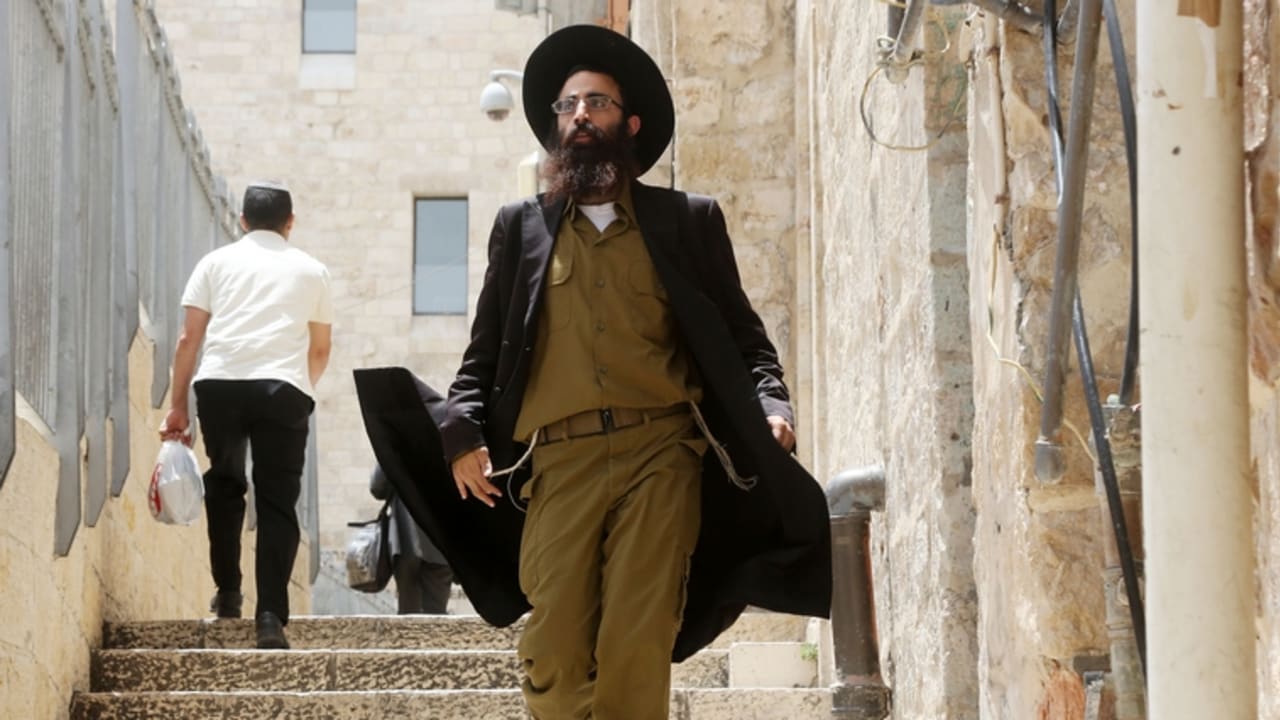
If Israel wants to bring more haredi (ultra-Orthodox) young men into military service, it must look first at those who have already chosen to serve.
During a visit to the IDF’s Hashmonaim Brigade, I noticed a young soldier who volunteered for every task. He had the quiet seriousness of a dedicated yeshiva student and a clear sense of mission.
I introduced myself and asked his name. H. smiled as we spoke about his training and service. He was proud of where he was and felt that he was doing something meaningful.
Then I asked how his family had responded to his enlistment.
His expression changed. He lowered his eyes and said, “I am the oldest of nine children. The last time I said goodbye to my mother, she told me: ‘H., I love you, but you cannot come home.’”

It is difficult to remain indifferent to such a sentence: love and rejection, family and loss, all contained in one line from a mother to her son.
Afterward, H.’s commander told me that roughly 40% of the soldiers under his command were lone soldiers. H. was not an isolated case. He was the face of a much broader challenge.
For many haredi young men, enlistment is not simply a transition from yeshiva to the army. It may also mean separation from home, community, and their only support network.
It would be easy to judge H.’s mother. It would be more honest to understand the fears, beliefs, and social reality in which she lives. To her, military service may have threatened not only to change her son, but also to destabilize her home and threaten her eight other children’s future.
But H. is the one left to bear the cost.
That day, I promised him that he would one day return home stronger than ever. I did not mean only physically but also as an independent and successful young man who would neither apologize for his path nor erase where he came from.
I wanted his family to see the same devoted son he had always been and understand that devotion to his country does not negate devotion to his faith, family, and tradition.
That promise taught me something Israel has yet to fully understand: Anyone who wants to increase haredi enlistment must also take responsibility for the future of those who have already enlisted.
Israel’s public debate focuses on legislation, enlistment targets, sanctions, incentives, and tailored service frameworks. All are important, but they address how to bring a haredi young man into the IDF. Far too little attention is given to what happens after he leaves it.
A haredi young man considering enlistment does not examine only the state’s promises. He examines the results. He will look at those who served before him and ask if service helped them find education, employment, independence, community, and belonging. Or were they left alone between two worlds?
In 2025, 1,830 soldiers from haredi backgrounds were discharged from the IDF, including 336 combat soldiers, according to data from the Defense Ministry’s Department for Discharged Soldiers and Reservists. They completed their service and then faced difficult questions: Where would they study? How would they find work? Where did they belong? Who would support them when family and community could not be taken for granted?
They leave the army with discipline, responsibility, leadership, teamwork, and the ability to perform under pressure. These are the very qualities employers and higher education institutions seek.
Yet many also face educational gaps, limited familiarity with academia, no professional network, and sometimes no family or financial safety net. They may know how to lead a team in a complex military environment, yet not know how to pursue further education, write a resume, or choose a career.
Preparing soldiers for civilian life after army service
Young men who assumed extraordinary responsibility in service of their country should not stand alone as they begin building their lives.
The transition to civilian life must begin before discharge. Every haredi soldier should leave the IDF with a personal plan, a single address for continued support, a mentor, guidance toward education or employment, and a community that allows him to preserve his identity without sacrificing his future.
No institution can carry this responsibility alone. The IDF must prepare soldiers for civilian life before discharge. The government must create clear transition pathways. Employers, universities, and civil society must open doors and help veterans translate their military experience into civilian success.
This is not merely social welfare policy. It is enlistment policy, employment policy, and national growth policy.
Every discharged haredi soldier who builds a career, earns a dignified living, raises a family, and remains connected to his community becomes a role model. His success changes how his brothers, friends, neighbors, and family view military service.
This may be Israel’s most powerful untapped recruitment tool: not another campaign, but a life others can look at and say, “I can do that too.”
One day, H. will finish his service, return his equipment, and take off his uniform. He will have to ask not only where to study or work but also something more fundamental: Where am I going back to, and who will be waiting for me there?
I hope his mother will open the door and discover that the army did not take her son away. He will still be the son she loves, only older, more independent, and ready to take responsibility for his future and for the society in which he lives.
The success of haredi enlistment will not be measured only by how many young men put on a uniform, but also by how many know that after taking it off, they still have a home, a community, and a future.
The writer is CEO of The Nachshonim, a nonprofit organization that supports soldiers and military veterans from haredi backgrounds in their transition from military service to civilian life.