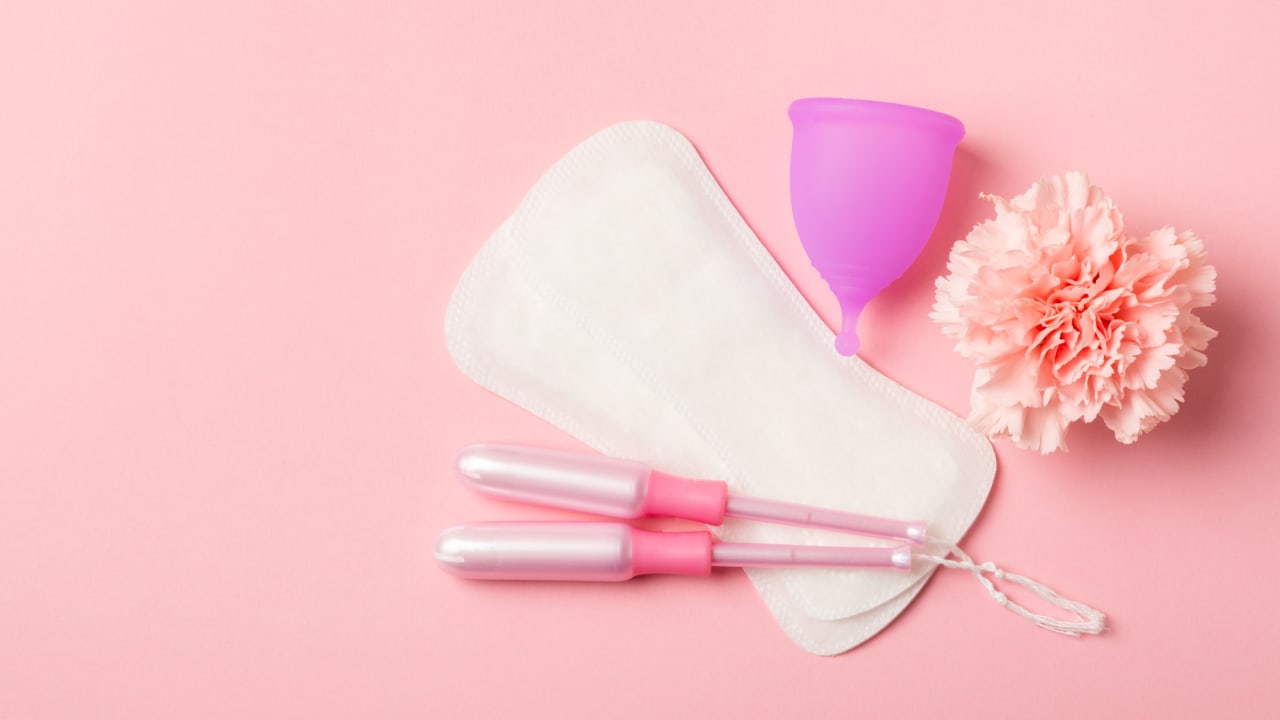
Why are women’s menstrual products not covered by insurance?
The first thing you probably think if you’re a woman is: Wait, why isn’t it? The first thing you might think if you’re a man is: Maybe this article isn’t for me. However, this is an important and worldwide issue.
Some countries are already tackling this idea, and it’s not always the ones you would expect. Kenya was the first country to abolish the VAT on all menstrual products. Other nations like the UK, Canada, Mexico, South Africa, and many more have followed suit. Removing value-added tax or sales tax from the equation seems like the least we can do.
Israel, however, despite having a semi-socialist medical system (officially it’s a market-structured universal health system driven by a socialist ethos of guaranteed public welfare), not only keeps the tax but, in a way, increases it.
Since the most widely sold brands in Israel, like Kotex and Always, are imported, the shelf prices are massively inflated compared to other countries.

In the UK, for example, a box of Kotex pads containing around 10 to 16 pads costs about $2.5. In Israel, that same box costs about $6.5. Both countries run on national healthcare systems.
Let’s take it a step further. My argument is that we need to introduce menstrual products directly under our national insurance brands. Let’s have pads, cups, and tampons under Maccabi, Meuhedet, Leumi, and Clalit.
Customers should be able to buy these “covered,” or at least heavily subsidized, house brands, while people who prefer or can afford to can still buy the more expensive imported labels. While private store brands like Super-Pharm’s “Life” have made products slightly cheaper by cutting out some import costs, it doesn’t erase the serious problem of period poverty.
The term “period poverty” was originally coined in the UK to describe the shocking reality of students and workers in developing countries skipping school or work to stay home because they simply cannot afford basic menstruation products. Israel is not officially a developing country, but that doesn’t change the struggle for the individual.
Israel has a poverty rate of 21%. That’s over two million people who have to make hard choices every day. Let’s assume half of them are women. That means one million women are forced to choose between buying menstrual products or putting food on the table.
Scotland was the first country to fully rectify this issue by making menstrual products completely free and covered by healthcare. As Israel is a country with a national healthcare network divided into four branches, we can do even better than the UK’s NHS. We can create brands under our own healthcare systems that are free or heavily subsidized, eliminating the problem.
So why hasn’t this been done already?
Calling on the Knesset for change
Since menstruation is officially categorized as a healthy biological function rather than an illness, pads and tampons are structurally categorized as consumer hygiene products rather than clinical necessities.
Consequently, health funds are legally barred from using public healthcare budgets under the National Health Insurance Law to subsidize these retail commodities.
This needs to change! While change begins with us, it ends in the Knesset.
In the past, we had amazing female leaders, like Yael Dayan, who paved the way for legislative changes against sexual harassment. And we had Marcia Freedman of Ratz, who opened the first battered women’s shelter in Haifa. These are giant changes in favor of women’s rights. So who will stand up for women today?
In the current wave of women paving the way for change, Meirav Cohen (Yesh Atid) serves as the chair of the Knesset Committee on the Status of Women and Gender Equality, pushing legislative updates to halt domestic violence, stop economic abuse, and prevent the exclusion of women from public spaces.
Her colleague Merav Ben-Ari (Yesh Atid) centers her work on funding shelters and strengthening police response times for women facing domestic threats. On the Center-Right, Pnina Tamano-Shata (National Unity) targets family law discrepancies and financial support for single mothers, actively working to protect women from systemic discrimination.
On the left, Naama Lazimi (The Democrats) fiercely opposes bills promoting gender segregation in academic and public spheres while fighting for harsher criminal sentences for femicide. Representing the Arab-Israeli sector, Aida Touma-Sliman (Hadash-Ta’al) leads cross-party efforts to combat gun violence and honor killings affecting vulnerable Arab women.
Looking ahead to the upcoming October 27, 2026, legislative election, all of these politicians are running with their respective parties: Yesh Atid, National Unity, Hadash-Ta’al, and The Democrats. And they are all still firmly standing behind these issues.
Therefore, I call on Meirav Cohen, Merav Ben-Ari, Pnina Tamano-Shata, Naama Lazimi, Aida Touma-Slima, every man and woman running for office, and the entire government to step up. It starts with ending period poverty, and it ends with true dignity, prosperity, and equality for all.
The writer is a Modi’in resident advocating for equitable public healthcare coverage across Israel.