For generations, the Jewish community has assumed that stronger Jewish day schools require greater investment in Jewish day schools.
That belief has driven important investments in scholarships, teacher development, leadership, facilities, curriculum, and recruitment. Those investments matter, and we should continue making them. But they don’t begin early enough.
If we want stronger Jewish day schools a decade from now, we need to invest much further upstream, years before a child ever sets foot in a classroom.
When parents welcome a new child, they soon begin searching for community, trusted guidance, friendships, and opportunities to build a meaningful family life. If Jewish institutions are present during this opening, they become woven into a family’s story. But if they are absent, another community often fills that role.

By the time families begin touring day schools, many of the relationships, routines, and loyalties that shape where their children ultimately enroll are already in place.
Parents have found trusted educators, built friendships, and become part of a community that feels like home. In addition to shaping educational decisions, those experiences also shape a family’s connection to Jewish life itself.
This reality is becoming even more urgent as states expand publicly funded preschools.
Families who once might have considered Jewish early childhood education increasingly have free alternatives during the years when lifelong relationships, routines, and a sense of belonging form.
By the time day schools enter the conversation, many families have already built deep roots elsewhere.
Research reinforces what many educators have long observed. A national study by Child Trends and Brandeis University, commissioned by CASJE, found that Jewish early childhood education serves as a gateway to deeper, longer-term Jewish engagement, particularly for families with weaker Jewish connections.
Parents who develop meaningful friendships through their child’s preschool are significantly more likely to remain engaged in Jewish communal life over time. Families aren’t simply choosing a preschool; they’re choosing where they belong.
Philanthropy often treats Jewish early childhood education and Jewish day schools as separate investments.
Yet families experience them as one continuous journey. Every positive Jewish experience makes the next one more likely; every missed opportunity makes the next less likely.
That’s why investing in Jewish early childhood education is about far more than strengthening preschools. These investments strengthen the entire Jewish educational ecosystem.
Organizations like EarlyJ are putting this philosophy into practice by investing further upstream, through parenting centers, expanded preschool capacity, and stronger partnerships between Jewish early childhood programs and day schools.
Building a community for belonging
At the EarlyJ-funded JCC San Francisco Parenting Center, nearly 280 families participated during its first year, roughly half of them entirely new to the organization.
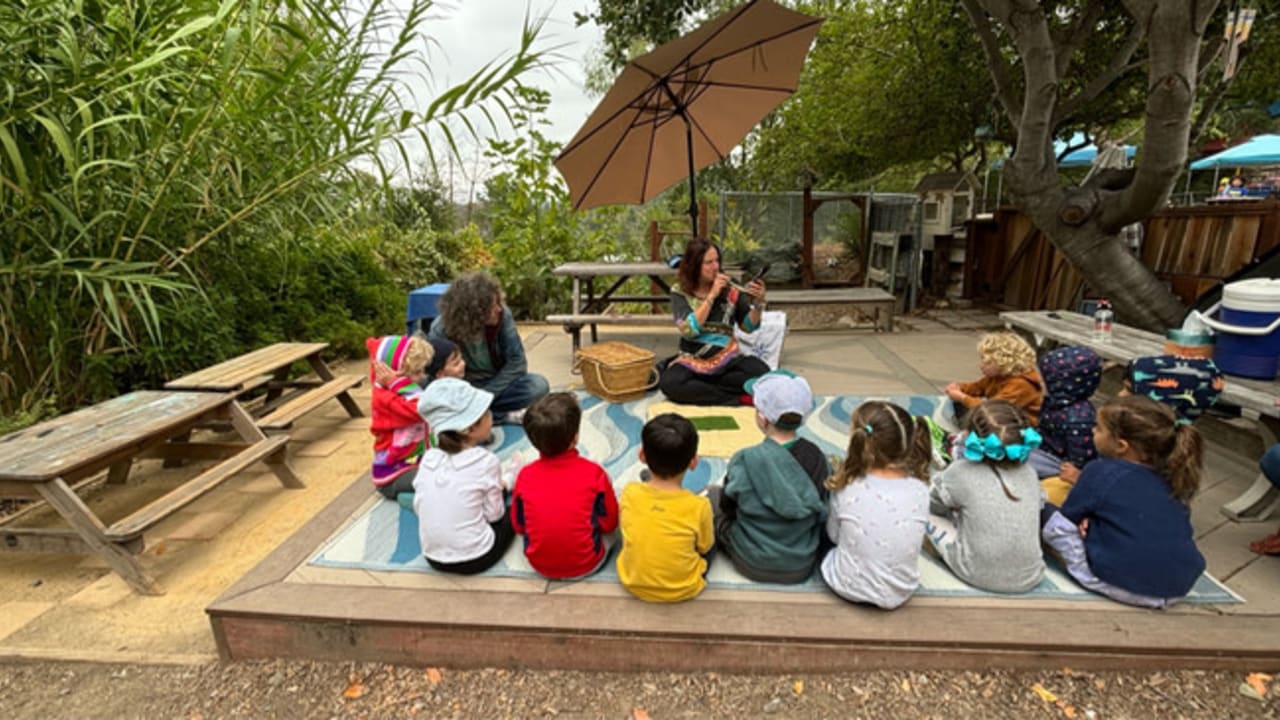
Families came for infant classes, Jewish holiday celebrations, and opportunities to connect with other young parents. Many have remained engaged, and a growing number have since enrolled their children in Jewish preschool.
One parent who enrolled their child reflected, “It gave us a community when we were new parents and looking for connection.” This family, like so many others, was looking for more than just a school. They were seeking a community.
Building on this principle, investments that expand infant classrooms, increase capacity, improve affordability, or better support working parents create new entry points into Jewish communal life.
Over the past three years, EarlyJ’s grants in both the San Francisco Bay Area and Los Angeles have helped create more than 1,000 new preschool enrollment spaces. This will lead to future synagogue members, camp families, day school students, volunteers, donors, and community leaders.
Jewish ECE investments can also help cement stronger connections across the educational journey.
In the Bay Area, EarlyJ has supported partnerships between Jewish preschools and nearby day schools through shared Hebrew instruction, joint Shabbat celebrations, and coordinated kindergarten transition programs.
These pilot efforts increased matriculation to participating day schools by as much as 300% to 350% while reducing the share of children leaving for public school from 20% to just 4%.
As one head of school observed, “When we center the child, the boundaries between institutions disappear.”
Families don’t experience Jewish life in organizational silos. They experience relationships, moments, and communities that reinforce one another.
When institutions work together, families are more likely to continue deeper into Jewish life. When they don’t, each organization is left trying to rebuild trust and belonging on its own.
None of this is an argument for investing less in Jewish day schools. Rather, it’s an argument that some of the highest-return investments in Jewish day schools happen years before a child ever enrolls.
Families who build friendships in a parenting center, develop trust in a preschool, and find belonging in Jewish community are far more likely to choose Jewish day school when the time comes.
This isn’t a choice between investing in preschools or investing in day schools. The fact is that investing in one makes the other far more likely to succeed.
We’ve spent decades investing when families choose a school. The next generation of strong Jewish day schools will be built by investing much earlier, at that critical moment when families are choosing a community.
The writer is the president and CEO of the Rodan Family Foundation.