
I know when I am being influenced.
I’ve spent a good portion of my career involved in marketing. I am familiar with the mechanics behind influencer marketing, the commercial relationships, and the carefully constructed campaigns. Despite this knowledge, when I trust the person speaking, something changes. I become curious about the product and, despite knowing exactly what is happening, I find myself paying closer attention.
The world’s largest brands have been paying close attention to this phenomenon. Earlier this year, Unilever CEO Fernando Fernandez announced plans to significantly increase the company’s investment in influencers and creators, identifying social media as a primary driver of consumer engagement and brand growth.
This decision reflects a broader evolution in marketing strategy, in which companies increasingly recognize that individuals can carry a brand’s message into networks of existing relationships, where trust has already been established.
Where influence becomes education
Influence itself is hardly a new phenomenon. Long before social media made it possible to accumulate millions of followers, people learned from one another. Parents shape the way children see the world; teachers offer guidance to their students; friends introduce one another to ideas, products, and experiences; and religious and communal leaders shape the values and behaviors of the people around them.
While technology evolves, human nature doesn’t. People connect with people. Consumers respond to individuals they find credible, which is why brands now route their messages through them. Students behave the same way. A message lands differently when it comes from someone in their own orbit who speaks with conviction.
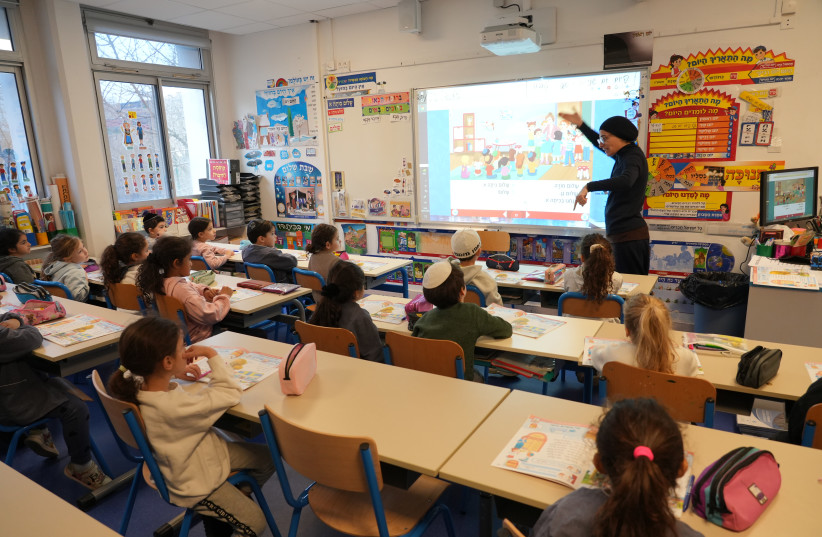
Education sits squarely within this dynamic. Schools are environments of influence, where ideas, values, and ways of understanding the world move continually between teachers, students, and peers.
Over the past two years, I have personally visited more than 50 schools in 15 countries. Through the Yael Foundation, we have a bird’s-eye view of 150 schools across 49 countries. Seeing such a wide range of educational environments has made me increasingly attentive to what happens when students themselves become part of that process of influence.
Some schools are creating deliberate opportunities for students to explain, represent, teach, advocate, and lead. In doing so, they give young people the experience of owning an idea and carrying it to someone else.
That raises a question for Jewish education: how deliberately are we preparing students to carry forward to their peers what they have learned?
Influencer marketing works on the creator, too. To speak convincingly about a topic, a creator has to study it, internalize it, and make it their own. Over time, an idea presented again and again becomes part of the person presenting it. When students hear about Jewish culture and identity from a peer, the message arrives with that peer’s conviction attached. They see an identity someone their own age has chosen to adopt.
Jewish continuity depends upon the transmission of knowledge, values, and traditions. A teacher who has earned the respect of his or her students will be far more successful at teaching them about the power of prayer. A parent who understands what excites their child will do a better job of making Jewish holidays positive experiences. A camp counselor to whom campers relate can model joyful and proud Jewish identity so that young people can picture it for themselves.
If influence is one of the primary ways human beings learn from one another, then learning how to influence responsibly is itself an educational opportunity.
We were all influencers once
Show-and-tell is a child’s first masterclass in influencer marketing. The child has to decide what matters, figure out how to advocate for its value, and make their peers care about it. The exercise teaches ownership and communication, beginning with the child’s own judgment about what is worth sharing.
This is where the concept of “influencer education” becomes useful.
The phrase “influencer education” may raise eyebrows in a Jewish school. However, it is a principle the practice of show-and-tell already offers: choosing an idea, understanding it well enough to advocate for it, and bringing others along. Schools can build that practice into students’ experience purposefully and intentionally.
What influence looks like in a school
I have seen this happen in schools in ways that are easy to overlook because they often sit outside the formal curriculum. At one school, high school students conduct campus tours for visitors without the head of school or principal accompanying them. They explain the school’s ethos and traditions, answer questions, and describe their experience of the community in their own words. The adults have entrusted the students with the institution’s story, giving them an opportunity to discover what it means to represent something larger than themselves.
The educational value extends well past public speaking. A student responsible for explaining a community to an outsider must understand that community well enough to articulate its character, make judgments about what matters, and respond thoughtfully to a question they did not anticipate.
Another school has entrusted nine-year-olds with responsibility for a tzedakah (charity) committee. The students research local charities and present their recommendations to their peers, while photographs of the committee members are displayed prominently on the school wall. The visual reminder reinforces the seriousness of their role, and the process itself requires them to move from learning about a Jewish value to deciding how to express it.
The same principle appears in school-wide events and assemblies, where students take responsibility for the content and execution, with adults deliberately stepping out of the visible role. It appears when older students mentor younger children and introduce them to traditions, ideas, and practices that would otherwise reach them only through adults.
Each experience gives students something to carry and someone to carry it to. That is the essence of influencer education.
Cultivating influence intentionally
Influence is often treated as a personality trait. We describe certain children as natural leaders or gifted communicators, as though their ability to bring others along were something they simply possessed.
Psychologist Albert Bandura’s work on self-efficacy identified “mastery experiences” as the most reliable source of confidence-building. Confidence develops when individuals take action, assume responsibility, and experience the results of their efforts firsthand. The experience of leading a discussion, mentoring a younger student, organizing an event, or representing a community shapes how young people understand their own capabilities.
If influence develops through practice, schools can offer these opportunities to every child, including students who would never volunteer. Each child who leads a discussion or explains a tradition to a younger student gains evidence that their perspective has value.
From traditional instruction to influencer education
Conventional pedagogy is built to deliver knowledge. Educators present material, and students learn it, demonstrate mastery, and move forward. Jewish learning has an added responsibility, because every child receives a heritage that existed before they were born and must last beyond them.
Pirkei Avot opens with that heritage passing from person to person: Moshe received the Torah at Sinai and passed it to Joshua, Joshua to the elders, the elders to the prophets, and the prophets to the men of the Great Assembly. It has moved the same way ever since, through stories told at Shabbat tables and through teachers, parents, and counselors we trusted, respected, and loved. We remember what they taught us and how they made us feel.
The world’s largest brands have spent billions arriving at the same insight: people follow the example of those they trust and feel connected to.
A student who explains a holiday to a younger sibling, rallies classmates around a tzedakah cause, or welcomes a new family into the community has joined that chain. They have become the trusted person in someone else’s Jewish life.
Educators have already asked, “What does a student need to learn at this stage?” Influencer education adds a second question: “Where will they practice passing it on?” A campus tour, a tzedakah committee, or a younger student to mentor gives them somewhere to teach, something to represent, and a chance to speak in their own words. At the end of each school day, that leaves one final question: “Who did our students inspire today?”
The writer is the COO of the Yael Foundation, which nurtures and expands accessible, high-quality educational opportunities for Jewish children globally.