
Belgian political scientist Yves Tiberghien invoked the Greek goddess of wisdom when he coined the term “Minervian power” to describe how the European Union might present its values to the world.
Now in its sixth annual edition, the 2021 Night of Philosophy – an online celebration of discourse championed by the European Union National Institutes for Culture (EUNIC) – is an example of this concept. “Democracy’s Future” is the focus of this year’s event.
The opening panel includes a presentation by former French Justice Minister Robert Badinter and members of the EU diplomatic community serving here. Badinter, a close friend of the late French leader François Mitterrand, fought tirelessly to remove the death penalty from French law. He succeeded in doing so in 1981, thereby dispensing with the famed guillotine still used at the time.
A child survivor of the Holocaust, Badinter is one of the last giants of the post-war French-Jewish intellectual figures who shaped Europe. Alongside another great French-Jewish figure, the late Simone Veil who legalized abortions as health minister in 1975, Badinter represents the values of the old-school French Left.
Rocked by a series of recent violent events and disasters – from the 2015 Hypercacher kosher supermarket siege to the 2018 murder of Mireille Knoll and the 2019 Notre-Dame de Paris fire – French speakers everywhere turn their eyes to thinkers like Badinter to learn what went wrong with the republic and how things may be set right again.
HAIFA-BORN curator of the nightly discussions since 2015, Prof. Raphael Zagury-Orly will discuss (in English) “Justice for History” with Joseph Cohen at 11:15 p.m. Zagury-Orly is the author of the 2021 French book Last of the Zionists. The two men together wrote a work devoted to Heidegger’s attitude to the Jews, the 2021 French book Heidegger: The Privileged Enemy.
In a 2015 video interview at the European Graduate School, Cohen explained their interest in the famous thinker.
“Our question was,” Cohen argued, “In which manner is the Jewish figure isolated from his history of Being, which is the history of philosophy?”
The two argue that the German philosopher did not begin to resent Jews with the rise of the Nazi party to power, but that his animosity can be traced to the 1920s when he first set out to become a philosopher, or a lover of wisdom.
“It was painful for us to see that such an important philosopher,” Zagury-Orly added, “has such a stand in regard to the Jewish question.”
Cohen stressed that it would be a mistake to outcast Heidegger and that it is important to go on reading him to understand why there is this “almost compulsive need to produce exclusion, to name it as the Other, and to mark it here as Judaism.”
Another great Other that will be discussed during the night is that half of humanity which is female. Women intellectuals had contributed greatly to Western culture, and indeed to other civilizations too. It was Diotima of Mantinea, for example, who taught Socrates what love is. Yet women had to face various cultural biases against them when they sought education and emancipation.
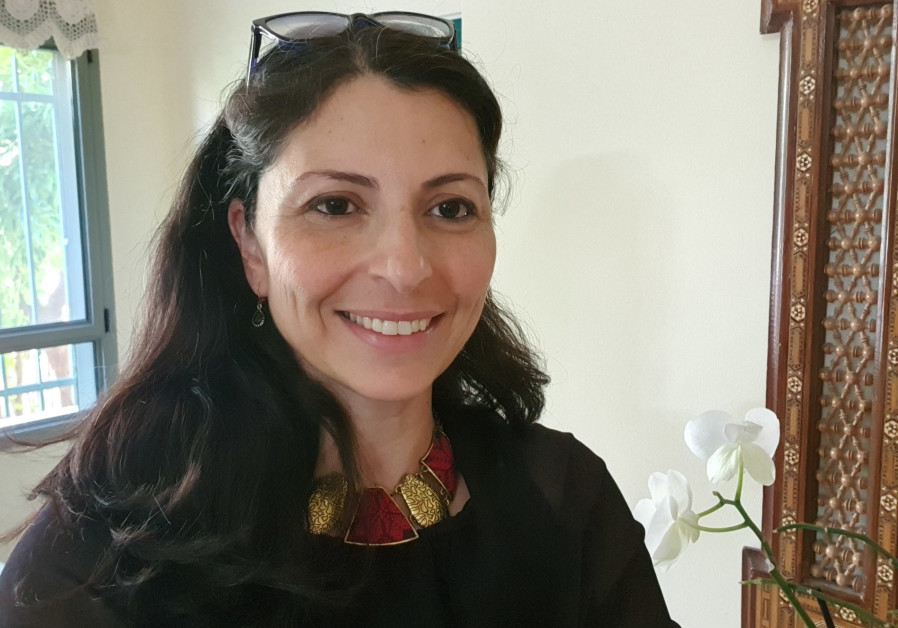
A very different panel will be devoted to the moral aspects of popular television shows such as Homeland and Tehran. Prof. Sandra Laugier and Dr. Anat Sella Inbar will begin their panel at 10:05 p.m. Laugier is known for being an excellent translator and teacher of American philosophers. Her 2013 book Why We Need Ordinary Language Philosophy might indicate that this panel would be a good starting point to those new to the discourse.
For those able to cross beyond midnight, a lecture by Saf [Threshold] digital platform creators Yoel Botvinik and Ari Ben Arie (11:50 p.m.) will discuss “Nostalgia as Hope for the Future.” This lecture is likely to touch on the works of the late Mark Fisher, who introduced the concept of hauntology into a wider English-speaking audience. First coined by Jacques Derrida, the idea is that our current culture is haunted by “lost futures” that never happened. We all live in 2021, the argument goes, so where is our flying car? In what real ways are our lives today different than the ones we had 10 years ago? Botvinik and Ben Arie promise a lively talk which, judged by their video lectures at Saf, will be highly enjoyable.
The 10-hour sixth annual Night of Philosophy will kick off on Thursday evening, June 10 at 4 p.m. The entire panel is online and for free. The full program can be seen at www.the-night-of-philosophy-in-israel.com.