When something happens that defies the normally accepted thought of how that something should happen, it is called counterintuitive.
Two groups are taking up the cause and fighting the fight. The first group consists of lovers of Israel. Intuitive, no surprise there. The second group consists of non-Jews and the lawyers, comptrollers and heads of state pension funds from many US states. Certainly, a counter-intuitive – and very welcome – group.
Lovers of Israel have come out loud and strong and are unabashedly telling the world just how much they value the State of Israel, the Jewish state. And they are not – as one might expect – all Jews. They are, however, people with heart and with conscience and with a strong set of principles and values.
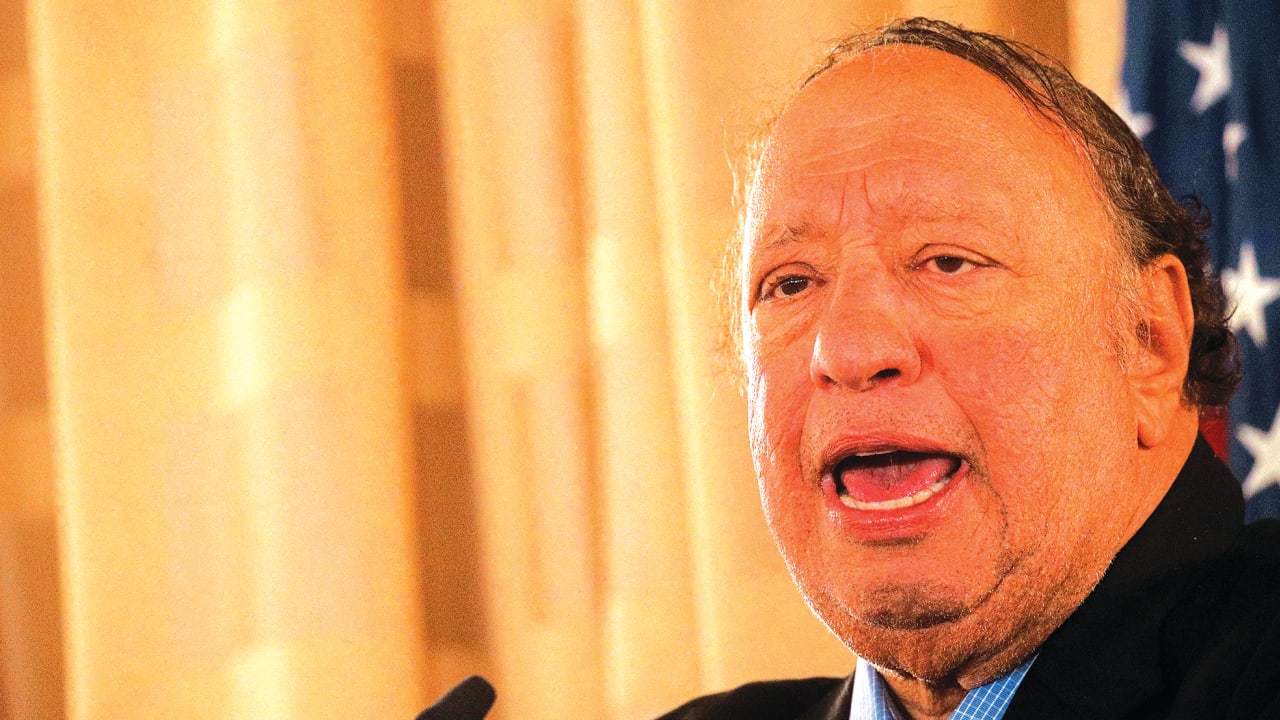
People like John Catsimatidis. Cats – as he is often called – is owner, president, chairman, and CEO of Gristedes Foods, a grocery chain in New York City, and the Red Apple Group. The company announced that, because of the boycott, they were cutting back on Ben & Jerry’s. And they are not going to advertise it anymore. And on their Twitter page, Catsimatidis wrote that he prefers Haagen-Dazs because it’s pro-Israel. Then he signed the tweet:
“I authorized our stores to cut Ben & Jerry’s space by 30% & not advertise until further notice. It’s a tragedy that Ben & Jerry’s has politicized ice cream. I like Haagen Dazs better created by a South Bronx family who is pro-Israel. John Catsimatidis CEO”
Catsimatidis’ Gristedes is a big gun in this game. So is Morton Williams, another high-end New York City supermarket. With its name and its look, Morton Williams appears to be a very non-Jewish grocery, but co-owner Avi Kanner is indeed a very proud Jew. He was dumbfounded that Ben & Jerry’s would stick their nose into Israeli-Palestinian issues. And in an interview on CBS2 News he said, “Even the most liberal minded person who believes in a two-state solution knows ultimately there will be territorial exchanges and swaps… It’s not up to Ben & Jerry’s as an ice cream company to dictate what the borders should be.”
Between Gristedes’ 31 stores and Morton Williams’ 16 stores, momentum is growing in the fight against Ben & Jerry’s. Their parent company, the huge British conglomerate named Unilever, will start to feel the pressure to do the right thing and pull back from the boycott.
The biggest powerhouse in terms of pull and influence, bigger than the supermarket chains, are the various states and their money-laden pension fund investments. They are now demanding answers from Unilever. Ben & Jerry’s is small fry in this game.
The State of New York has over a quarter of a trillion dollars invested in its pension fund. Of that, $73 million is invested in Unilever. Liz Gordan, executive director of corporate governance for the NY State Common Retirement Fund, wrote to Unilever CEO Alan Jope demanding an answer within 90 days.
In the letter she wrote, “Ben & Jerry’s, a Unilever wholly owned subsidiary, is involved in BDS activities.
“The Fund views BDS activities as a potential threat to Israel, its economy, and, as a result, the Fund’s relevant investments… Further, a number of US states have acted or are considering actions to penalize companies that engage in such behavior.
“As a result, companies that engage in BDS activities may face legal, reputational and financial risks.”
$73 million – and that’s from New York State alone – is a gargantuan investment to lose.
Florida turned up the heat on Unilever as well. State CFO Jimmy Patronis controls Florida public pension funds. He sent his letter to Ben & Jerry’s CEO Matthew McCarthy.
This letter explained that the Ben & Jerry’s decision to boycott “may result in your business being placed on Florida’s Scrutinized Companies that Boycott Israel List pursuant to Florida Statutes.
“As you may know, Florida law prohibits the state from investing in companies that discriminate against Israel by refusing to deal with or terminate business activities in a discriminatory matter.”
Patronis explained that if Ben & Jerry’s is added to the state’s list, both Ben & Jerry’s and Unilever would be barred from entering into or renewing contracts with the state.
This is just the beginning.
Pressure is being brought to play on Unilever. More and more US states are joining in. Unilever needs to rethink their contract with Ben & Jerry’s and their independent board. Ultimately, Unilever is responsible for Ben & Jerry’s. CEOs are fired for losing much less money than the sums at risk here and for the bad publicity that has been generated by this independent decision made by this independent board.
So far, Unilever’s CEO has not distinguished himself in this frontal attack against Israel.