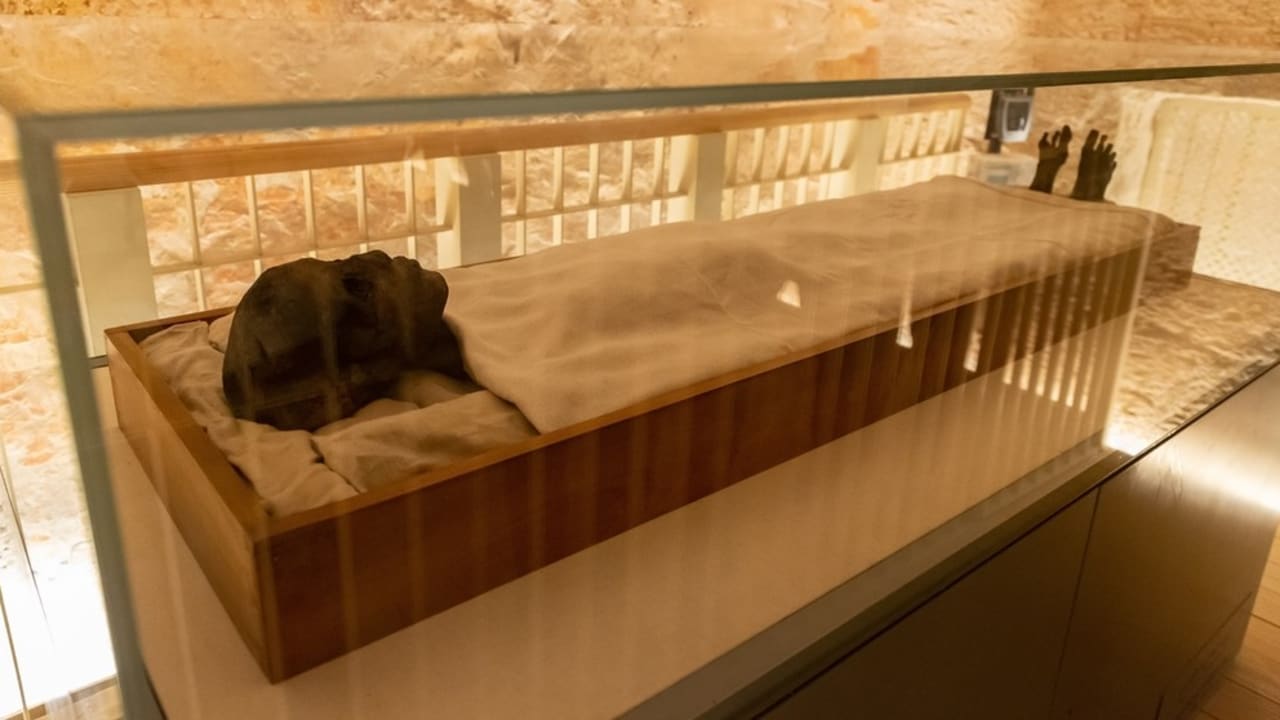
Tutankhamun’s burial chamber in Luxor’s Valley of the Kings is edging toward severe damage and possible collapse, according to a peer-reviewed study released this month in Nature’s npj Heritage Science. Researchers reported widening fissures that compromise the structure, noting a crack that cuts through both the entrance corridor and the burial chamber, allowing rainwater to penetrate the moisture-sensitive Esna shale. The study warned that accumulated tension could trigger a “rock explosion” and partial cave-ins during heavy rains.
Egyptian conservators tied the deterioration to the flash flood of October 1994, which inundated most royal tombs, forced open hairline cracks, and left walls damp and vulnerable to fungal growth. “The developments in the Valley of the Kings are concerning; these tombs need to be urgently rescued through scientific studies,” said Professor Sayed Hemada, a specialist in architectural heritage conservation at Cairo University, according to RBC.
The Independent quoted scientists who said the stone blocks now carry more stress than at any time since Howard Carter opened KV62 in 1922, with humidity peeling frescoes and encouraging mold. Cairo University researchers tracking the fault line found that the fracture is lengthening quickly as the shale expands and contracts with moisture swings, a weakness that also threatens neighboring monuments such as the Temple of Hatshepsut at Deir el-Bahari.
Tutankhamun’s 3,300-year-old tomb, carved hurriedly after the young pharaoh’s death, is smaller than other 18th-Dynasty burials. Flash floods on Luxor’s western bank routinely funnel water and debris through the entrance corridor, undermining stone and pigments. Scientists observed a large ceiling crack that now presses on the chamber roof and cautioned that it could release stone fragments without warning.
“This tomb is a stark warning that must be heeded,” said Professor Mohamed Atia Hawash of Cairo University, speaking to Independent Arabia. He urged officials to reduce the load of overlying rock and install removable supports, criticizing what he called Egypt’s reactive approach to conservation.
Emad Mahdi of the Egyptian Archaeologists’ Union pressed for a high-level committee to draft an urgent risk profile. “This crisis requires practical solutions, such as establishing a specialised risk-monitoring body composed of academics who issue reliable reports and continuously oversee the safety of archaeological sites,” he said.
The study’s authors listed immediate tasks: stabilize humidity, seal the expanding fissures, and reinforce the walls and ceiling. Tourists can still view Tutankhamun’s quartzite sarcophagus for an extra fee, but the window is narrowing. “The cemetery may not last a thousand years as intended; if urgent measures are not taken, the effects that will cause the tomb to collapse will spread rapidly,” said Hemada, according to Daily Mail.
Written with the help of a news-analysis system.