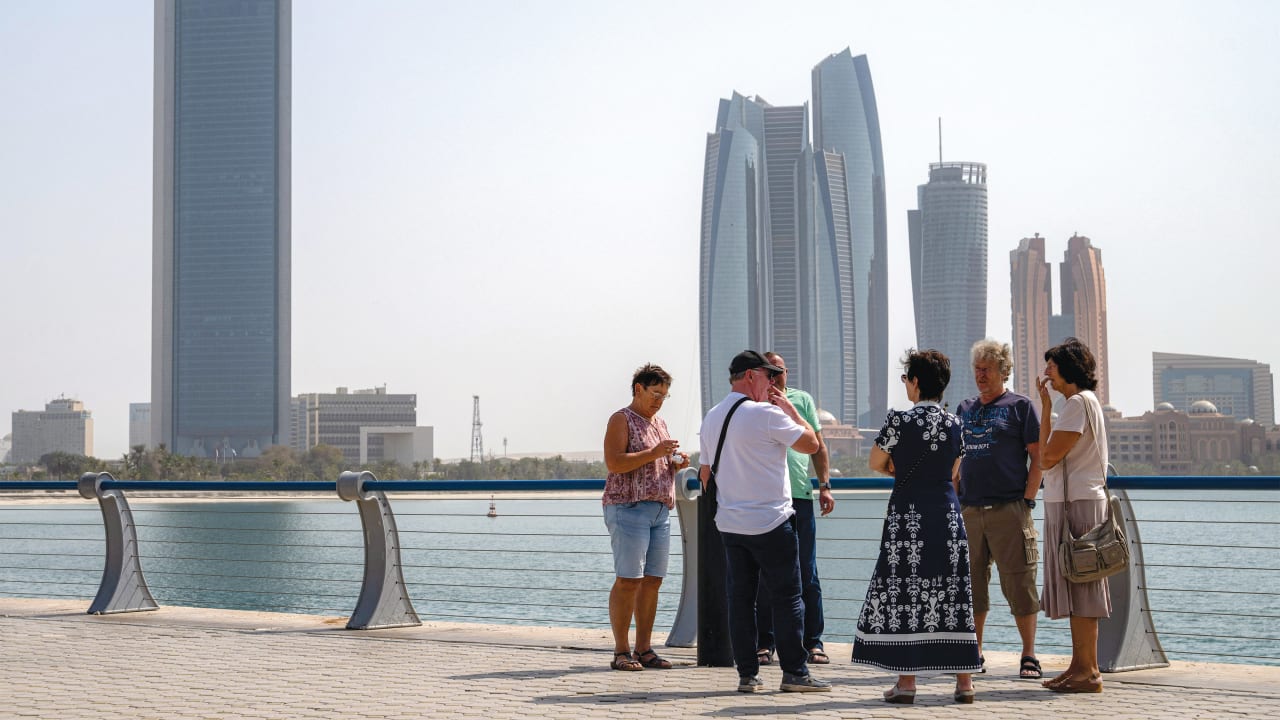
Dubai has always sold more than luxury; it has sold certainty. It is a city of glass towers and man-made islands, built on a promise: even in a volatile region, it remains controlled, stable, and safe.
Since last week, when the war with Iran erupted, that promise has been unmistakably tested.
The fire near the Fairmont The Palm hotel on Dubai’s iconic artificial Palm Jumeirah island at the onset of the regional escalation last Saturday was contained quickly. According to initial reports, four people were lightly wounded. The incident itself was limited: the fire was extinguished, guests evacuated, and operations stabilized.
But almost immediately, the story moved beyond the building. Within minutes, headlines and social media posts declared, “Direct Iranian missile strike” and “Luxury hotel attacked in Dubai.” The narrative escalated rapidly, long before facts were established. Official sources, by contrast, confirmed only an “incident” and a fire in the Palm Jumeirah area.
Then came the image. Smoke rising above one of the world’s most recognizable leisure destinations. A short video, circulated globally, transforming uncertainty into perceived fact and, with it, a narrative.

Iconic Dubai structures hit by Iran
The symbolism became even more striking when the iconic Burj Al Arab, arguably the most recognizable hotel in the region, was also affected – not by a direct strike but by debris from intercepted aerial threats, which caused a small localized fire on its facade.
The physical damage was minor. The symbolic impact was not.
In Dubai, stability is not just a condition; it is a product. The city’s tourism model is built on the belief that it remains insulated from regional instability. Once that belief is questioned, even subtly, the implications extend far beyond any single incident.
For Israeli travelers, this moment carries particular weight. Since the Abraham Accords, Dubai has become one of the most accessible and attractive destinations for Israelis. Direct flights, high-end hospitality, and a sense of regional breakthrough turned it into more than a destination. It became a symbol of a new Middle Eastern reality.
But that reality is now under pressure.
Even before the current escalation, Israeli travel to parts of the Gulf had begun to slow when 2026 began, shaped by security concerns and shifting accessibility. Now, images of smoke above luxury hotels, even when the damage is limited, carry disproportionate psychological weight.
In practical terms, this translates into hesitation: shorter booking windows, a preference for flexible cancellations, and, in some cases, a shift toward destinations perceived as more distant from regional tensions.
Across the Gulf, early signs point to increased caution among travelers, with thousands suffering from the cancellation of their flights.
Markets like Bahrain, already more fragile in their positioning, may feel the impact more acutely. In this kingdom, the shift from perception to reality was even more tangible. The Crowne Plaza hotel in the capital, Manama, was reportedly hit, sustaining damage and leaving several people wounded, though details remain limited and the exact circumstances are still unclear.
It is marked as one of the clearest instances of a hospitality asset being directly affected. In response, the US embassy issued an unusually stark warning, advising American citizens to avoid hotels in the capital altogether, cautioning that they could become targets in further attacks. The message was unambiguous: Hotels, once considered neutral and secure spaces, had entered the risk landscape.
The challenge of confidence
But even in Dubai, arguably the region’s most resilient tourism hub, the challenge is no longer just demand; it is confidence.
Preliminary industry assessments, based on past geopolitical disruptions and a regional tourism market estimated at $150-$180 billion annually, suggest that even a modest decline in confidence could translate into billions in lost revenue in 2026.
These remain early projections, but the direction is clear.
“The developing regional conflict presents a complex challenge for global tourism,” says Dr. Eran Ketter, head of
Tourism and Hospitality Management at Kinneret Academic College. “Dubai International Airport, with over 95 million passengers annually, is a critical global hub connecting Europe and Asia. Any disruption here affects not only regional travel but global mobility.
“Airlines such as Emirates and Qatar Airways, cornerstones of global connectivity, are already facing operational pressures, forcing travelers into longer, more complex, and more expensive routes,” he says.
“The Gulf has been one of the fastest-growing tourism regions in the world,” Ketter notes. “The UAE alone welcomed around 20 million visitors in 2025. The region’s image of stability has been central to that success. Any erosion of that perception poses a real challenge, not just for tourism operators but for investors and governments alike.”
For Israeli travelers, the conclusion is nuanced. Dubai remains open. It remains operational. It remains, for now, a global hub. But the psychological distance has grown. In tourism, perception often travels faster than reality.
In the end, the question is not only what happened at the Fairmont or even at the Burj Al Arab. The real question is who defines the story. In an era where a 20-second video can shape global perception, response time is no longer just communication. It is brand protection.
In the financial arena, the impact is already beginning to show. Analysts at JPMorgan are warning of a slowdown in non-oil growth across the Gulf. This is a sector in which tourism plays a central role, reinforcing the assessment that, even in the absence of official data at this stage, the damage to the industry in 2026 could be significant.
Dubai has built one of the strongest tourism brands in the world. Now, it faces a different kind of test: not how it manages the incident, but how it will restore confidence among those watching from afar, including, very much, Israel.
The writer is the Travel Flash Tips publisher.