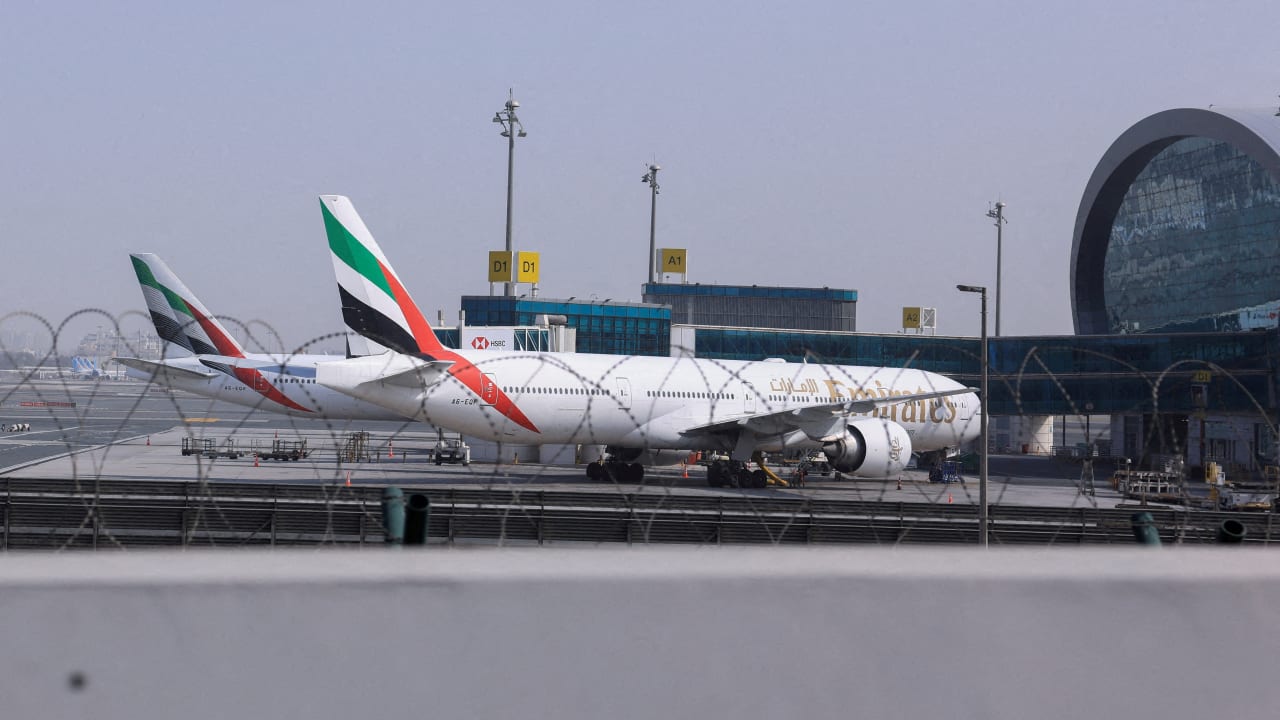
Australia has issued a “do not travel” alert that includes transit through Dubai International Airport in its latest update. “Do not travel advice applies to transit and layover,” according to the statement.
The US advised citizens to reconsider travel to the United Arab Emirates, and the UK has urged people to avoid all but essential trips.
Iran has launched approximately 1,700 to more than 1,800 missiles and drones at targets around the Gulf. The UAE faced a heavier barrage than any other country in this round, with Emirati air defenses intercepting roughly 90% of incoming projectiles at a cost that officials estimate at up to $100 million. The attacks have damaged infrastructure, including luxury hotels and DXB, killing six people and injuring 141 across the Emirates. Iran’s targets have included airports, military bases, energy facilities, and residential areas.
High stakes
The shock of repeated strikes is rippling through the business and financial sectors. The stakes for Dubai are especially high. Over five decades the emirate has become a magnet for wealth and talent—roughly 90% of residents are foreign nationals. In late 2025 it surpassed New York as the top city for wealthy expatriates in a Savills ranking.
Early in March, UAE President Sheikh Mohamed bin Zayed reassured people that “Everything is good here in the United Arab Emirates,” as he strolled through Dubai Mall greeting shoppers. The country’s National Orchestra also released a musical piece honoring those protecting the nation, shared on Dubai’s Instagram account, according to The Wall Street Journal.
The Public Prosecution in Dubai has ordered arrests of residents sharing footage of missile interceptions or other misleading content. The city’s official social media accounts have echoed the same message, posting “Dubai is safe, will always be safe,” according to France 24.
A surge of calls
Despite reassurances, the war’s economic toll is mounting, and confidence has become a contested commodity.
Asset managers and lawyers report a surge of calls from clients asking how quickly they can move capital to safer jurisdictions. In Singapore, law firms fielded inquiries from 20 ultra-wealthy clients immediately after the war began. Some expatriates are rethinking long-term plans as real estate transactions are put on hold.
Dubai’s real estate index has dropped more than 18% since February 27.
Tourism, a pillar of Dubai’s diversification, has taken a direct hit. The World Travel and Tourism Council estimates that the Middle East’s sector is losing around $600 million per day, with Dubai alone shedding about $300 million daily. Industry experts forecast an 11–27% drop in tourist arrivals across the region.
On Dubai’s beaches and promenades, activity has ebbed. Businesses report fewer customers, and some districts have been observed nearly empty.
Travel companies say cancellations are necessary to preserve planning certainty for clients and agents. They note that the situation remains unpredictable and, even after hostilities subside, the region could be an unsuitable destination for years.
This article was produced with the assistance of a news discovery technology.