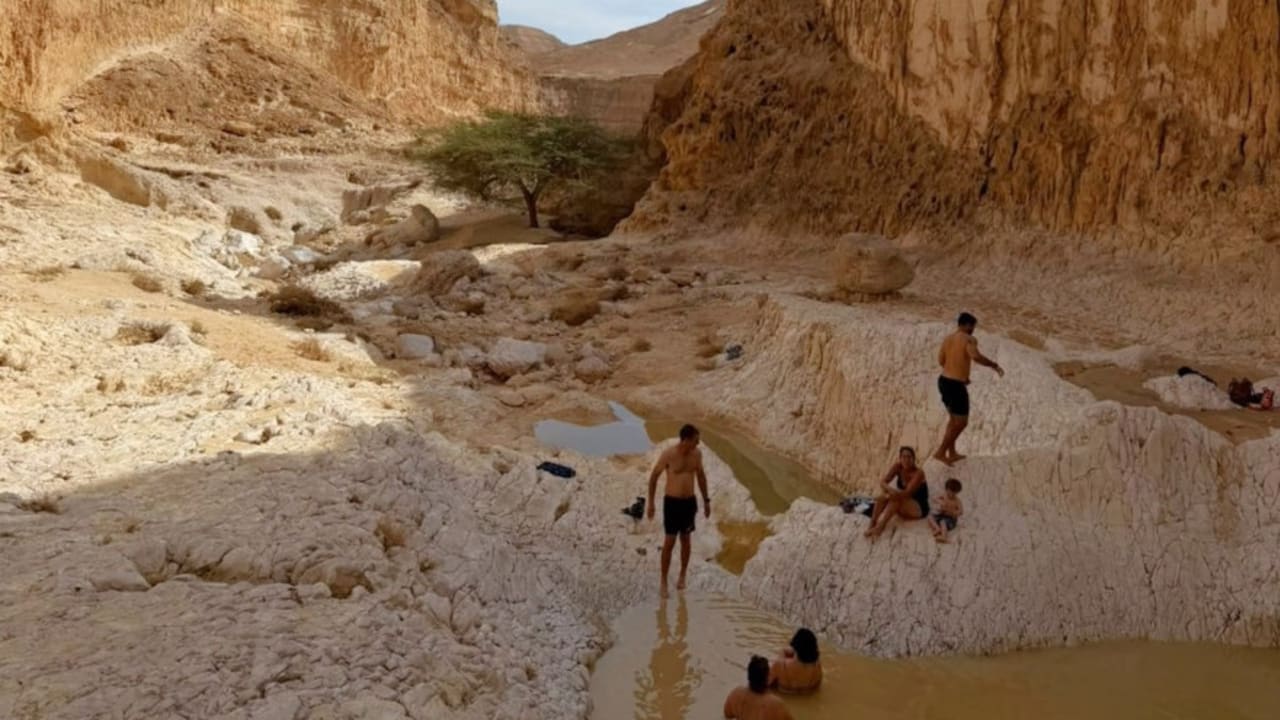
For most of the year, the stream channels (wadis) of the Arava remain dry beds of gravel and rock. Yet following a major flash flood, the landscape undergoes a dramatic transformation: Torrents of water surging down the dry beds settle into natural rock hollows, forming pools known as gevim. Because these pools sit atop solid bedrock, the water cannot easily seep into the ground, allowing it to remain for weeks or even months depending on the pool's size and the volume of floodwaters collected.
Recent heavy floods have filled many of the rock pools across the Arava and the Negev, prompting Central Arava Tourism to recommend taking advantage of the pleasant autumn weather to visit them. The biggest surprise of the season is Gev Holit, which had remained bone-dry for several years.
Gev Holit: This year's surprise
Nestled in a secluded spot between Sapir and Mitzpe Ramon along the Israel National Trail, Gev Holit spans approximately ten meters in diameter at the base of a rocky waterfall. Framed by pale limestone cliffs, narrow canyons, and acacia trees, this pool fills only rarely - offering visitors over the coming weeks a chance to witness it in a rare state.
Hikers seeking a challenge can reach the pool on foot via an ambitious 20.5-kilometer route (each direction) starting from Sapir. The path follows the Israel National Trail through Nahal Tzvira, Mount Yahav, and Nahal Nekarot. Such a trek requires advance planning for a return ride or overnight camping in the field.
Off-road vehicle owners can get much closer: From the Ein Yahav Junction on Route 90, drive west along the red-marked dirt road running parallel to Nahal Nekarot until reaching the Gev Holit parking area. From there, it is an easy walk of about half a kilometer along the blue-marked trail. Note that the driving route is suitable strictly for 4x4 vehicles.
Nahal Masor: Ladders, rungs, and a viewpoint
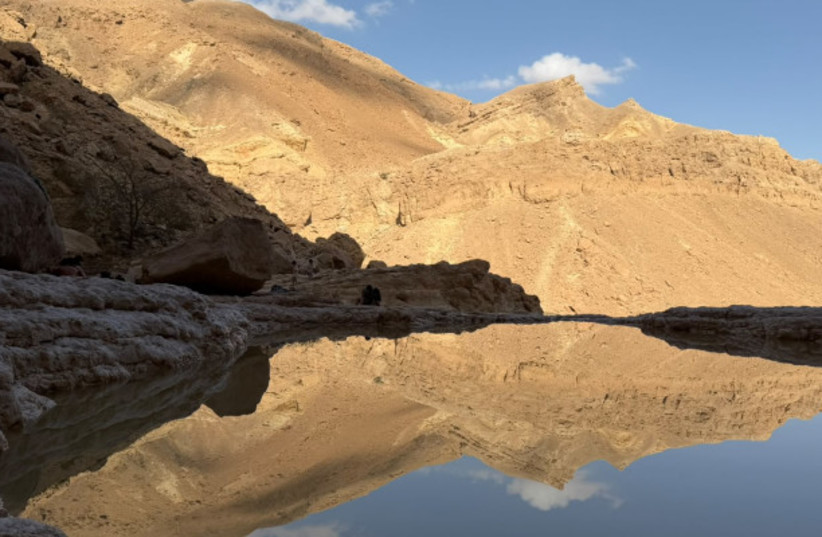
Located near Moshav Hatzeva, Nahal Masor boasts one of the most challenging routes in the area. Set within a narrow canyon surrounded by towering vertical walls lies a cluster of rock pools shaded from the sun. Reaching them requires scrambling over massive boulders blocking the channel, utilizing fixed ladders and steel rungs installed along the steeper sections. Those who push onward to the summit of Mount Masor will be rewarded with sweeping vistas across the Arava and the Edom Mountains in Jordan.
Getting there: At the Hatzeva Junction on Route 90, turn west onto the green-marked dirt road and drive for roughly 12 kilometers (about a 45-minute drive) to the parking area at the foot of the mountain. A high-clearance vehicle is recommended. Because the stream lies within an IDF firing zone, hiking is permitted only on weekends and holidays.
Easier routes: Nahal Hatzera and Nahal Gov
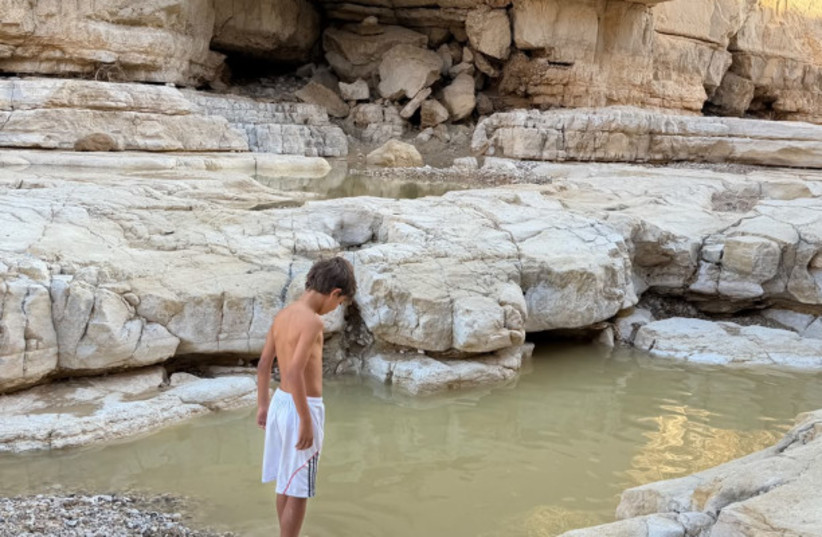
Families looking for a gentler trek can opt for shorter trails. In Nahal Hatzera, located in the northern Arava, there are two rock pools, of which the lower pool is currently full. The trail to reach it covers roughly 3.7 kilometers in each direction over easy-to-moderate terrain, winding through a shaded rocky gorge. Accessing the upper pool requires ascending natural rock steps assisted by iron rungs.
Getting there: Approximately ten kilometers south of the Arava Junction, turn right following the brown sign for "Nahal Hatzera," and park near the Mekorot pumping station.
In Nahal Gov, near Ma'ale Akrabim, a circular route of up to four kilometers features ladders and ropes within a narrow canyon - an ideal choice for families seeking a manageable adventure. The pool here is currently full as well.
Meanwhile, in Nahal Saraf near the Zin Valley, a short out-and-back trail of roughly eight kilometers leads to a pool freshly filled by the recent storms. This trail also sits within a military training area and is open exclusively on weekends and holidays.
Sunset over Nekarot Reservoir
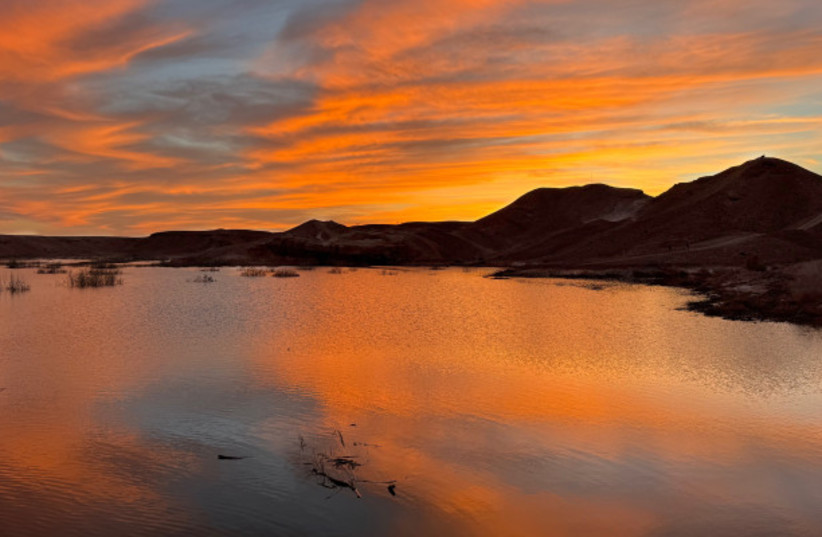
Those who prefer panoramic scenery without heavy physical exertion can visit the Nekarot Reservoir near Moshav Ein Yahav. The reservoir collects runoff from Nahal Nekarot, allowing floodwaters to gradually recharge the underground aquifer - the primary source of water for the Arava. The recent deluge filled the reservoir well beyond its typical capacity. Central Arava Tourism suggests arriving around sunset with a picnic mat to enjoy the view.
Before you head out: Visitors should note that entering the water in the pools and reservoirs is strictly prohibited, and no lifeguard services are provided. Stick strictly to marked trails, and ensure you pack out all your trash.