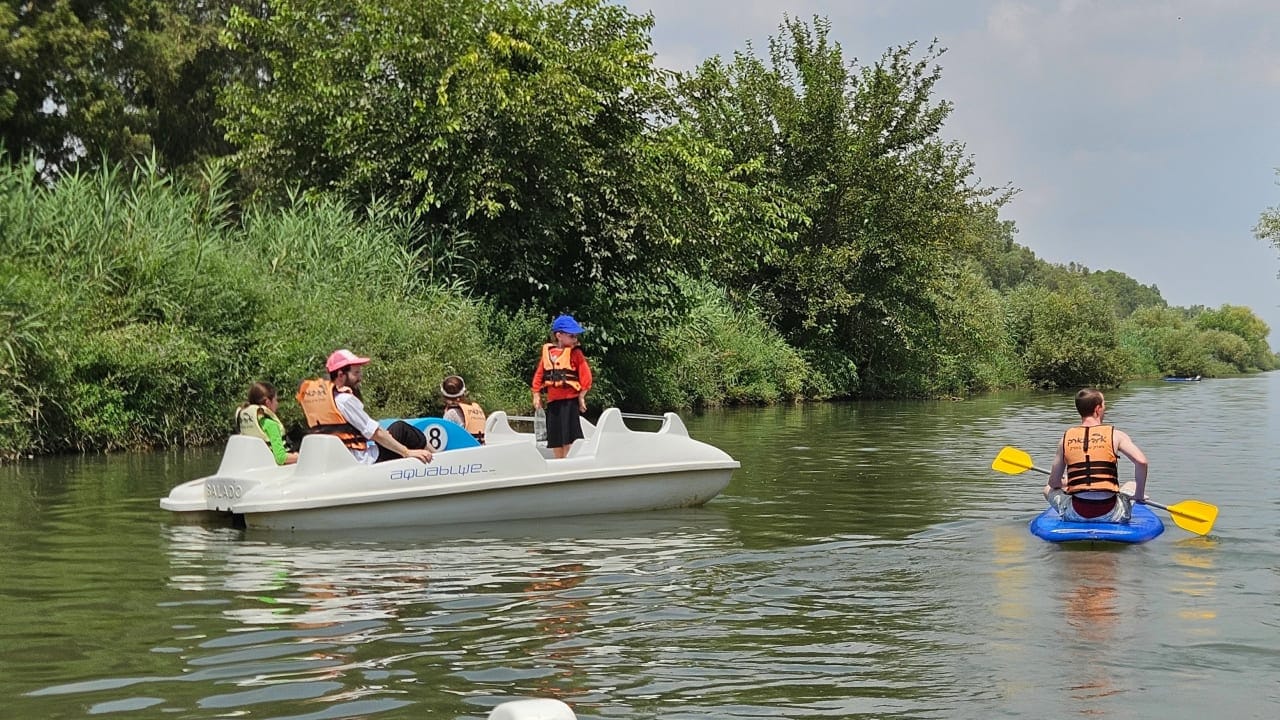
This coming weekend is shaping up to be particularly pleasant, with temperatures expected to climb to 24 degrees Celsius in the Galilee and weather that is warm for the season, the kind that makes half the country load a cooler into the car and head north. Anyone planning to end a hike with their feet in the water should know that in some well-known streams in the Galilee and on the Golan Heights, something less refreshing awaits: Fecal coliform bacteria, in concentrations far above the permitted level.
The Health Ministry and the Environmental Protection Ministry published the results of sampling taken on November 17 (Tuesday). The threshold set by the Health Ministry stands at 400 fecal coliform bacteria per 100 milliliters of water. At the Meshushim Pool on the Golan Heights, 1,120 were measured, nearly three times the permitted level.
The Jordan does not look much better. Exceedances were found at all seven sampling points along it: 800 at Lehavot Habashan Bridge, 780 at Yosef Bridge and Metzad Ateret, 670 at Hamisha Bridge, 630 at Hapkak (Huri) Bridge, 530 at Arik Bridge, and 460 at Hadodot Bridge. At Yehudiya, 470 were measured, and at the Haruv Pool in Nahal Tzalmon, 460.
And what about Nahal Zavitan? There is no information on it, simply because samplers were unable to reach it. Not exactly a certificate of kosher approval.
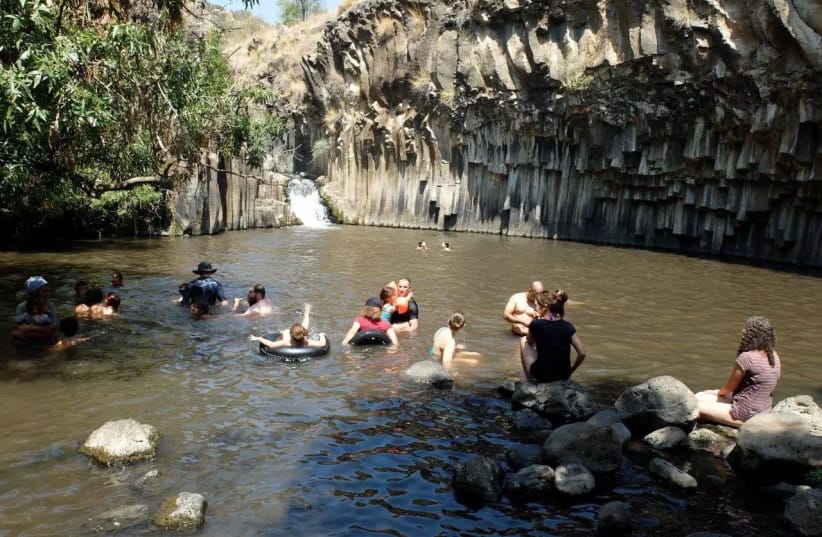
Fecal bacteria levels exceed permitted limits in popular streams
Fecal coliform bacteria are a common indicator of water pollution from human or animal waste. The bacteria themselves are not necessarily dangerous, but their presence indicates that other disease-causing agents may also be in the water, which can mainly cause gastrointestinal illness.
Therefore, the official recommendation is relatively clear: Entering the Jordan along the stretch between Yosef Bridge and Arik Bridge, the Meshushim Pool, Yehudiya, and the Haruv Pool in Tzalmon "may be dangerous," until sampling results are "normal and stable." The important word here is "stability." This means that a single normal sample probably will not be enough to reopen the streams.
And the obvious question, where all of this came from, remains open for now. The Environmental Protection Ministry admits that no known source of pollution has been found. In other words, feces are reaching the streams from somewhere, and no one yet knows where.
The pace of testing does not add confidence either. Routine sampling by Israel Nature and Parks Authority inspectors takes place only once every two weeks, at fixed points in the Upper Galilee, on the Golan Heights, and in the Western Galilee. Each point represents a waterfall, pool, or stretch of a stream. During the two weeks between samplings, hikers mostly hope for the best.
The ministries announce that they are continuing to sample and monitor and will update as needed. Until then, anyone insisting on a stream this weekend can check the sampling results and the map of sampled streams on the Health Ministry website, and choose a destination where the water was found to be normal. Or simply settle for the view, from the bank.