US high court should hear Rubashkin case to consider overzealous DOJ and judge who was essentially on prosecution team.
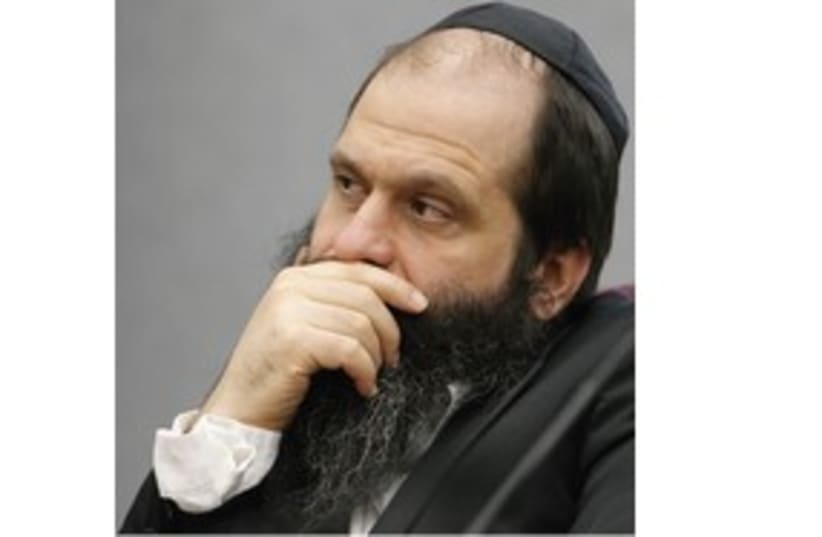
By ALAN DERSHOWITZ, RONALD ROTUNDASholom Rubashkin 311(photo credit: Associated Press)
Lawyers for Sholom Rubashkin – Paul Clement and Nathan Lewin – two months ago filed a petition for writ of certiorari with the US Supreme Court. Rubashkin is seeking relief from the Supreme Court because the US Court of Appeals for the Eighth Circuit refused to consider evidence that Rubashkin first discovered after the trial that made the trial fundamentally unfair.Indeed, during the past few years, a series of federal judges have criticized the US Department of Justice for prosecutorial misconduct. Judge Emmet Sullivan of D.C. District Court, who ordered a criminal investigation into the actions of prosecutors in the trial of former Alaska senator Ted Stevens, suggested that the case reflected deeper problems at the Justice Department. Chief Judge Mark Wolf of the District of Massachusetts found that he regularly presided over cases where federal prosecutors withheld important evidence, about every other year for the past two decades.It’s happened again, but this time the judge herself is part of the problem rather than part of the solution. When Agriprocessors, an Iowa kosher processing plant, learned that the Immigration and Customs Enforcement Agency (ICE) was concerned about its hiring practices and planned a raid, it hired a law firm to contact ICE and offered to cooperate with the authorities in terminating undocumented workers. ICE did not reply. Instead, on May 12, 2008, it launched a highly publicized raid, with about 600 agents in riot gear, accompanied by a Blackhawk helicopter. Agents arrested 389 workers.Five months later, the government arrested the plant’s manager, Sholom Rubashkin, on charges of harboring illegal immigrants, but ICE’s case had problems. For example, it turned out that an undercover ICE agent had twice tried to secure employment at this plant, but he was turned away because he did not have the proper papers.It would not do to have such a dramatic raid and nothing to show for it. The Justice Department filed seven superseding indictments charging bank fraud. The indictments included a creative theory – that Rubashkin falsely certified to the bank that Agriprocessors was complying with all the laws even though it was employing undocumented aliens. The federal jury did convict on the bank fraud charges, and the federal government dropped all immigration charges. In the meantime, Iowa indicted Rubashkin for employing child labor. The state initially alleged 9,311 offenses and went to trial on only 83; the trial judge limited that number to 67, and the jury acquitted on everything.Federal prosecutors recommended life imprisonment. After widespread criticism of such a harsh sentence by many people (including six former US attorneys general), the government asked for a 25-year sentence. Judge Linda Reade, the trial judge, imposed 27 years instead.But Reade did more than impose a disproportionate sentence. After Rubashkin’s conviction and sentence, defense lawyers learned that Reade, over a six-month period, had been actively engaged in planning the Agriprocessors raid. Emails and affidavits showed that, long before the raid occurred, Reade met with ICE agents to discuss “charging strategies, numbers of anticipated arrests and prosecutions, logistics, the movement of detainees, and other issues related” to the investigation and operation. At one meeting, which law-enforcement personnel attended at the judge’s request, the judge stated that she was “willing to support the operation in any way possible, to include staffing and scheduling.” She was essentially part of the prosecution team.A March 20, 2008, email states: “The Chief Judge has indicated she wants a final game plan in two weeks (April 4).” Eleven days later, another email discloses that the assistant US attorney (AUSA) would meet with Reade on April 4, and the judge wanted “a briefing on how the operation will be conducted.”The AUSA wanted a document “for his presentation to the judge,” because of the “requirement to brief the judge.” The actual raid was planned “[i]n coordination” with “the United States District Court in the Northern District of Iowa.” The trial judge, ICE and the AUSA had “a weekly operations/planning meeting” about this upcoming case.The judge and the prosecutors should have notified Rubashkin’s lawyers that she had participated in planning the raid so that they could move to recuse her. Failure to do so was prosecutorial and judicial misconduct.The judge made herself a witness involving the events of the disqualification issue and then said – unsurprisingly – that she would rule in favor of her version of events, rather than the version suggested by the documents and the affidavits. She judged her own credibility even though the federal statute provides that, when a litigant alleges prejudice by a judge, “another judge shall be assigned to hear such proceeding.” Case law provides that “the court must accept all facts included in the affidavit as true.” But she did not do that, either.On appeal, the Eighth Circuit affirmed the conviction and refused to disqualify the judge because it said (applying a rule unique to the Eighth Circuit) the defendant should have filed his motion earlier, and it was not convinced that the newly discovered evidence “probably will result in an acquittal upon retrial.”The Supreme Court should decide to hear this case and use it as a vehicle to examine cozy relations between a prosecution that was too zealous and a judge who was too involved in pretrial prosecution strategies. The Iowa legal director of the American Civil Liberties Union, one of the groups that filed an amicus brief on behalf of Rubashkin, warned that the judge’s involvement with the prosecution “immediately gave the appearance of unfairness.” It was more than appearance. It was actual unfairness. Alan Dershowitz is a professor of law at Harvard University. Ronald Rotunda is a professor of law at Chapman University. Rotunda filed an amicus brief in the US Court of Appeals for the Eighth Circuit on behalf of the National Association of Criminal Defense Lawyers, which various professors and practitioners, including Dershowitz, joined.Reprinted with permission from the April 30th edition of National Law Journal (c)2012 ALM Properties, Inc. All rights reserved. Further duplication without permission is prohibited.
if(catID != 151){
var cont = `Take Israel home with the new Jerusalem Post Store