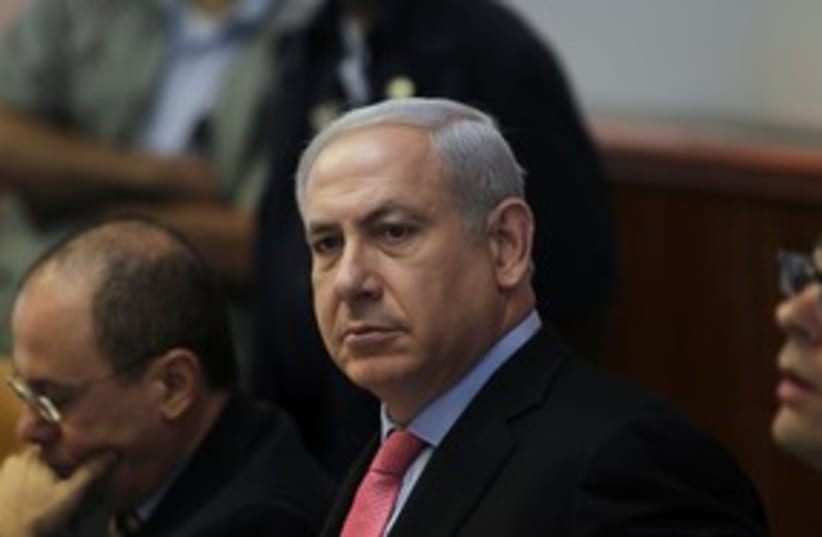
Netanyahu promises Israeli response to Eilat attacks
PM tells Eilat mayor that terrorist acts harmed the country's sovereignty; Defense Minister Barak says terror attacks originated in Gaza.
By TOVAH LAZAROFF, YAAKOV KATZ , JPOST.COMPrime Minister Binyamin Netanyahu 311 (R)(photo credit: REUTERS/Ronen Zvulun)
Prime Minister Binyamin Netanyahu spoke to Eilat Mayor Meir Yitzhak-Halevy on Thursday following three separate terror attacks in the area, telling him, "We're talking about a serious incident in which Israeli citizens were hurt and the country's sovereignty was harmed."He promised the mayor that Israel would respond to the attacks which killed at least seven Israelis on Thursday.RELATED:Police beef up forces, call on public to be vigilant after Eilat attacksSeparately, the prime minister's office reminded Israelis that a travel warning against Sinai exists and it urged all Israelis vacationing there to leave.Earlier on Thursday, Defense Minister Ehud Barak said that the IDF will hunt down the perpetrators of the three-stage terrorist attack along Israel's border with Egypt.Barak said that Israel will strike back at the terrorist infrastructure in Gaza in response to the attacks.Click for full Jpost coverageSpeaking from his office at the Defense Ministry headquarters in Tel Aviv, the defense minister added that the IDF was assessing the security situation along the border with Egypt."The attacks demonstrate the weakening of Egypt's control over the Sinai peninsula and the expansion of terrorist activity there," Barak said, adding "These attacks originate in Gaza and we will act against them with full force and resolve."Commander of the IDF's Edom Division, which is responsible for the border with Egypt, Brig.-Gen. Tamir Yidayi said that he had set up a command post at the scene of the attack to coordinate inter agency efforts to locate the perpetrators.
if(catID != 151){
var cont = `Take Israel home with the new Jerusalem Post Store