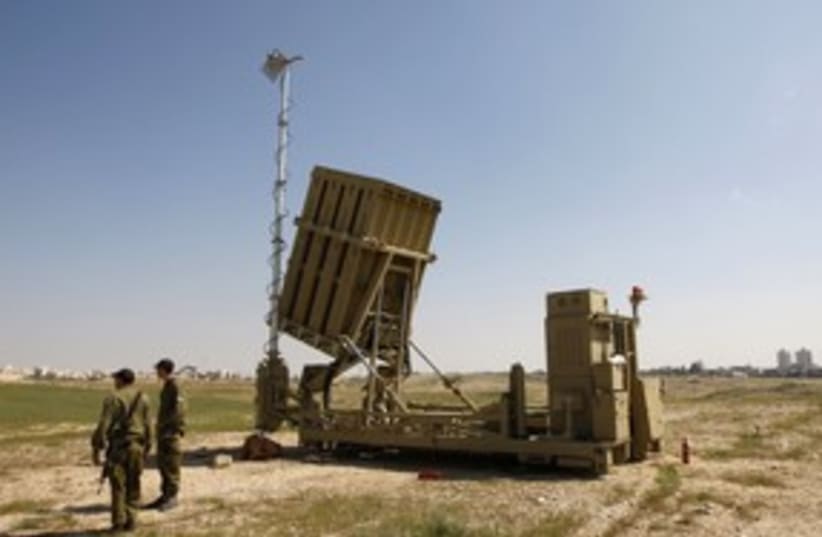
Iron Dome works in combat, intercepts Katyusha rocket
Rocket defense system sees first operational success south of Ashkelon; Follows heavy barrage of rockets, mortars from Gaza Strip.
By YAAKOV KATZIron Dome 311(photo credit: REUTERS)
The Iron Dome counter-rocket defense system intercepted a Grad-model Katyusha rocket fired from the Gaza Strip on Thursday, proving its capabilities in combat for the first time.IDF sources said the rocket was detected shortly after it was launched in the direction of Ashkelon, south of which a battery was deployed on Monday.RELATED:IDF to move Iron Dome to Gush Dan region in weeksIDF deploys Iron Dome battery outside BeershebaTwo Tamir interceptors were fired at the Katyusha and the first intercepted it, a senior Israel Air Force officer said.“This is a historic achievement and the first time in the world that a short-range rocket was shot down in this way,” one defense official said.The first Iron Dome battery was deployed outside Beersheba late last month after Hamas and Islamic Jihad fired more than 100 rockets and mortar shells into Israel in less than a week. The IAF said it planned to keep the Iron Dome in its current positions but would move the batteries to other cities within range of Palestinian rocket fire over the coming weeks.Israel plans to increase the number of operational batteries to six in the coming years; the Obama administration has pledged $205 million to cover the purchase of more rocket defense systems. The Defense Ministry recently completed negotiations with Iron Dome manufacturer Rafael Advanced Defense Systems about the upcoming deal.Sources in the air force said the Iron Dome was still undergoing an operational evaluation but would continue to be activated in the event of attacks from the Gaza Strip.Former defense minister and Labor Party MK Amir Peretz, who made the decision to develop the Iron Dome, hailed the success and said that it was the result of “well-trained young soldiers who were prepared for their mission.”
if(catID != 151){
var cont = `Take Israel home with the new Jerusalem Post Store