Defense establishment urges southern residents near Gaza to stay indoors, near a bomb shelter fearing retribution by Palestinian groups for assassination of Al Aksa commander.
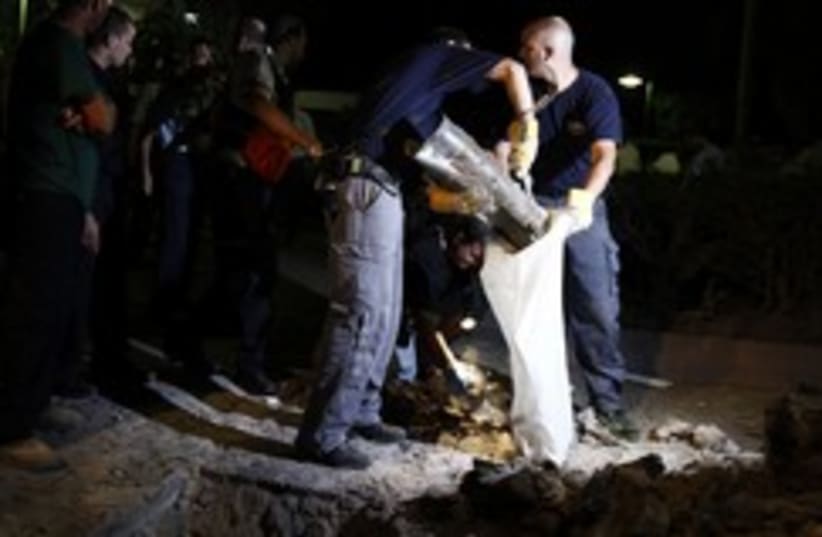
By JPOST.COM STAFF, YAAKOV LAPPINPolice pick up rocket 260(photo credit: REUTERS/Amir Cohen)Palestinian terrorists responded to the IDF assassination of an Al Aksa Martyrs Brigade senior commander on Thursday, as a number of rockets exploded in the Negev desert and sirens sounded in southern communities.No casualties or damages were reported in any of the blasts, which occurred mostly in open fields and one in the city of Netivot.RELATED:Hamas to Egypt: Pressure Israel over Gaza strikes IAF strikes tunnel used to infiltrate into IsraelThe first rocket exploded in the Sedot Hanegev Regional Council at 7:05 p.m. There were no casualties or damage in the attack, the IDF Spokesperson said via its Twitter account, adding that over one million civilians live in rocket fire range.A little over an hour later, at 8:10 p.m., three rockets landed in the western Negev. No casualties or damage were reported in the attacks. At 8:10 p.m. police said two rockets were fired at the western Negev and landed in open territory. Bomb squad units were surveying the scene to locate the rockets.A third rocket exploded around the same time in the Eshkol Regional Council in an open area.Sirensrang in southern communities minutes before an additional rocket exploded in Netivot, a city near Sderot, according to the IDF Spokesperson's Office.No damages or casualties were reported in that blast.Two additional rockets landed south of Ashkelon around 11:30 p.m. No injuries or damage were reported in the attacks.The defense establishment has told southern residents to stay indoors and near a bomb shelter fearing retribution by Gazan terrorists over the killing of Sobhi Ismail Batash, a resident of Gaza City.Earlier Thursday, a Hamas spokesperson blamed Israel for escalating violence between the Jewish state and Gaza, and urged Egypt and the United Nations and to pressure Jerusalem against strikes in the Strip.
if(catID != 151){
var cont = `Take Israel home with the new Jerusalem Post Store