Agreement signed aimed at improving coordination in times of emergency; Vilna’i: Homeland Security Ministry being denied funds.
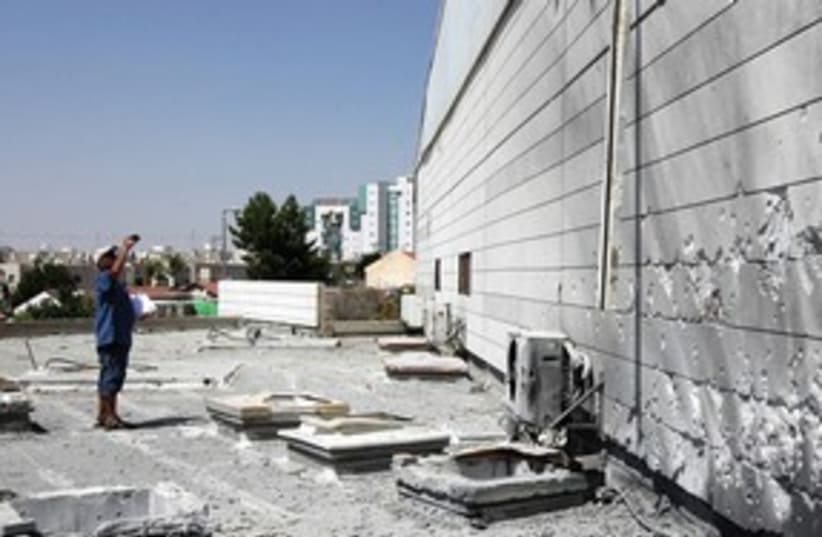
By YAAKOV LAPPINRocket-damaged school in Beersheba 311(photo credit: REUTERS)
Israel’s emergency services and the IDF signed a document Monday that sets out new regulations aimed at improving coordination in times of emergency.Included in the agreement are the Israel Police, the Prisons Service, the Israel Fire and Rescue Service, Magen David Adom, the National Emergency Authority and other official bodies.RELATED:'Rocket fire won't force residents to evacuate homes'Rocket explodes next to kindergarten in southPolice described the new guidelines as the outcome of lessons learned from the 2010 Carmel forest fire disaster, during which emergency services suffered from a lack of coordination. They “spell out the role of each body and its jurisdiction,” a police spokesman said.Insp.-Gen. Yohanan Danino, head of the police, described the agreement “a historic event.”
Meanwhile, Homeland Security Minister Matan Vilna’i said bureaucratic problems were hindering his office. Vilna’i told members of the Knesset Subcommittee to Examine the Home Front’s Preparedness for Emergency that his ministry has lacked a director-general for three months and government funds have not arrived.The minister echoed comments made on Sunday by IDF Chief of Staff Lt.-Gen. Benny Gantz, who said “the day will come that will we have to take care of Gaza again.” Vilna’i said Israel would not accept a situation in which Hamas fires on Israeli civilians in the south whenever it chooses to do so.During the meeting, Beersheba Mayor Rubik Danilovitch said he would cancel school in his city in the event of any future rocket fire.Danilovitch, together with other southern mayors, ignored orders issued by the IDF Home Front Command in October to reopen schools during an upsurge in rocket fire.
if(catID != 151){
var cont = `Take Israel home with the new Jerusalem Post Store