Nigeria nabs terrorists planning attacks on Israelis
Security forces arrest three members of an Iranian-linked terror cell allegedly planning to launch attack against Israelis.
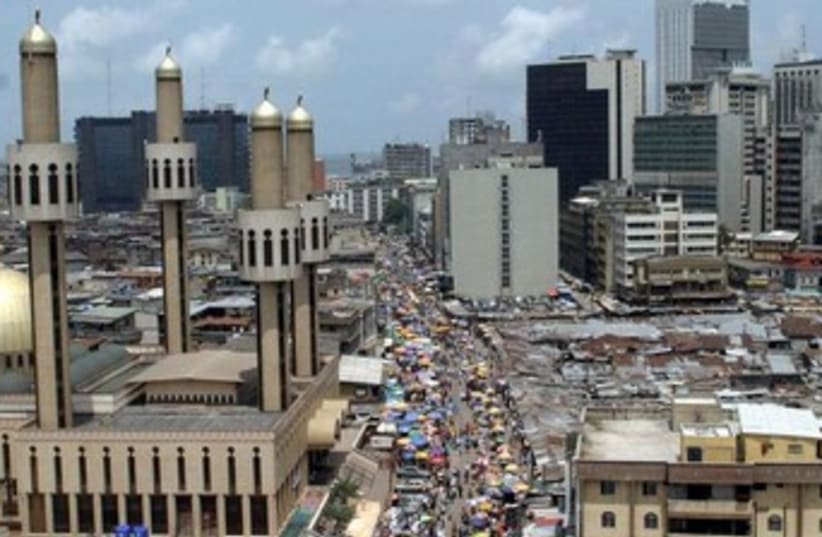
By REUTERSNigeria, Lagos(photo credit: REUTERS)
ABUJA - Nigeria's secret service say they have arrested a "terrorist cell" trained in Iran who planned to attack US and Israeli targets in Africa's most populous nation.The State Security Service (SSS) said they arrested Abdullahi Mustapha Berende and two other Nigerians in December after Berende made several suspicious trips to Iran where he interacted with Iranians in a "high profile terrorist network"."His Iranian sponsors requested that he identifies and gathers intelligence on public places and prominent hotels frequented by Americans and Israelis to facilitate attacks," SSS spokeswoman Marilyn Ogar said in a statement."There is conclusive evidence that Berende in collaboration with his Iranian handlers were involved in grievous crimes against the national security of this country."Iran has yet to respond to the allegations.Berende, who will now be charged in court, admitted spying for Iranian counterparts to reporters on Wednesday."As for surveillance, that one is true ... It is a regrettable phenomenon I shouldn't be proud of it," he said as he was paraded by the SSS in their Abuja offices.He received $30,000 to carry out operations, the SSS said.This is not the first diplomatic incident between Nigeria and Iran. An Iranian diplomat was arrested in 2004 on suspicion of spying on the Israeli embassy in Nigeria's capital Abuja, Israeli sources said. Iran denied any arrest.In 2010, authorities at a Lagos port found a hidden shipment of artillery rockets, rifle rounds and other weapons from Iran. The shipment was supposedly bound for Gambia. A Nigerian and an Iranian face criminal charges over the shipment.Tehran has previously denied any involvement in bomb attacks against Israeli embassy targets in India and Thailand in February last year and dismissed accusations it was involved in a bombing in Bulgaria that killed seven Israeli tourists last July.Iran has accused Israeli and Western agents of sabotaging its disputed nuclear program, including the assassination of several of its scientists. The Iranians deny that the sabotage has significantly set back their nuclear program.Berende first traveled to Iran in 2006 where he studied at an Islamic university, before returning in 2011 for weapons and explosives training, the SSS said.Ogar said Berende sent his Iranian partners photos of the Israeli cultural center in Lagos and told them that they should attack former military ruler Ibrahim Babangida and Islamic spiritual leader the Sultan of Sokoto to "unsettle the West".Nigeria's population of 160 million is split roughly equally between a mostly Muslim north and a largely Christian south.Islamist groups in the north have become the biggest threat to stability in Africa's top oil producer. Western governments are increasingly concerned they are linking up with extremists outside Nigeria, including al-Qaida's north African wing.
Related TagsNigeriaLagos
if(catID != 151){
var cont = `Take Israel home with the new Jerusalem Post Store