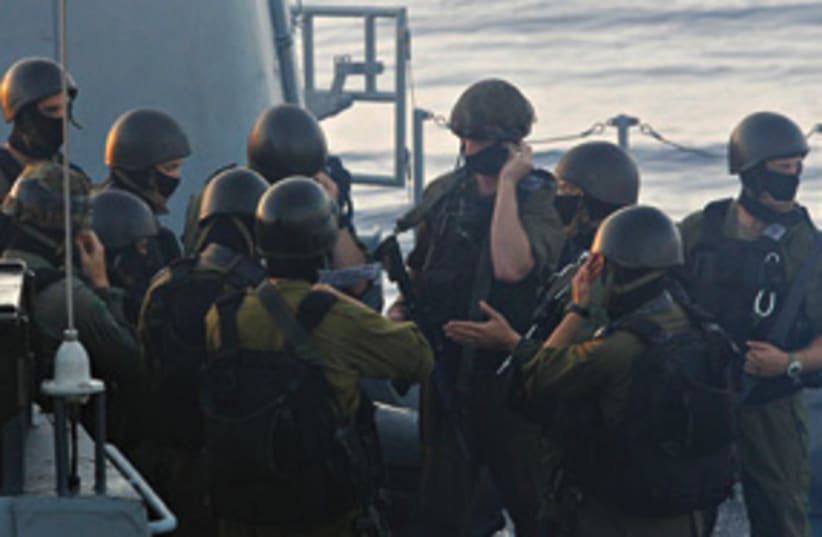
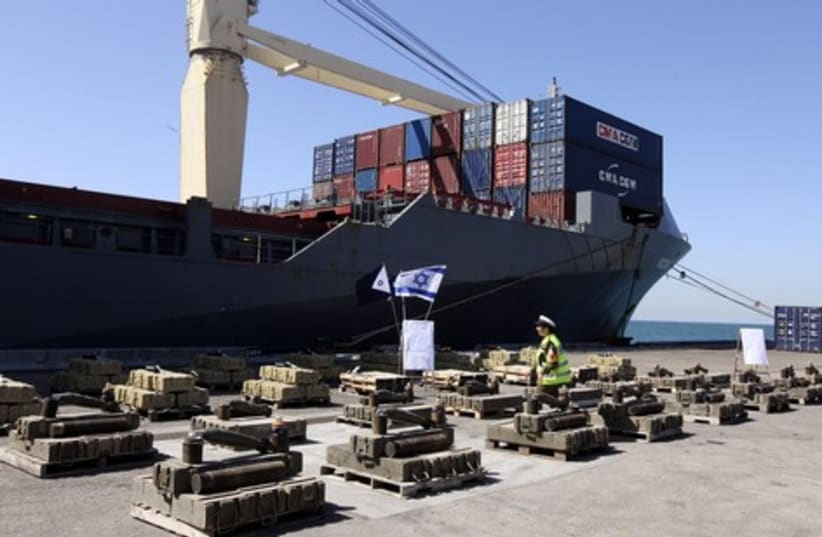
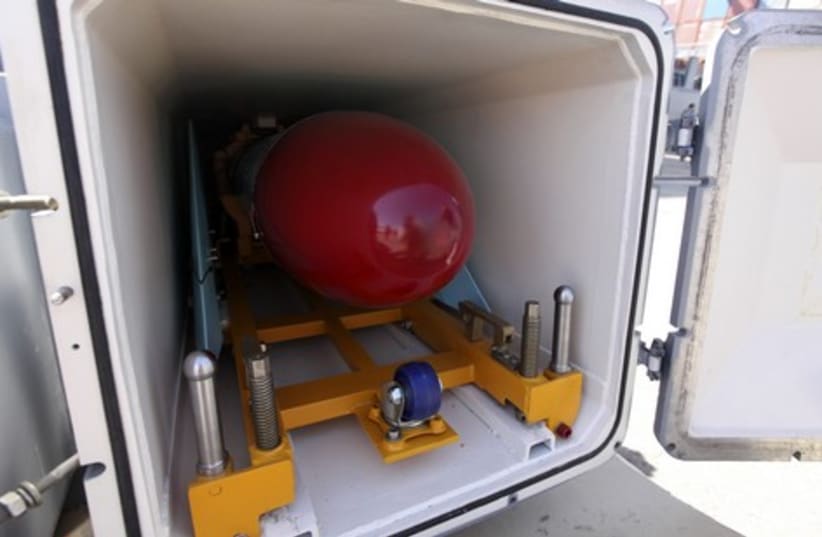
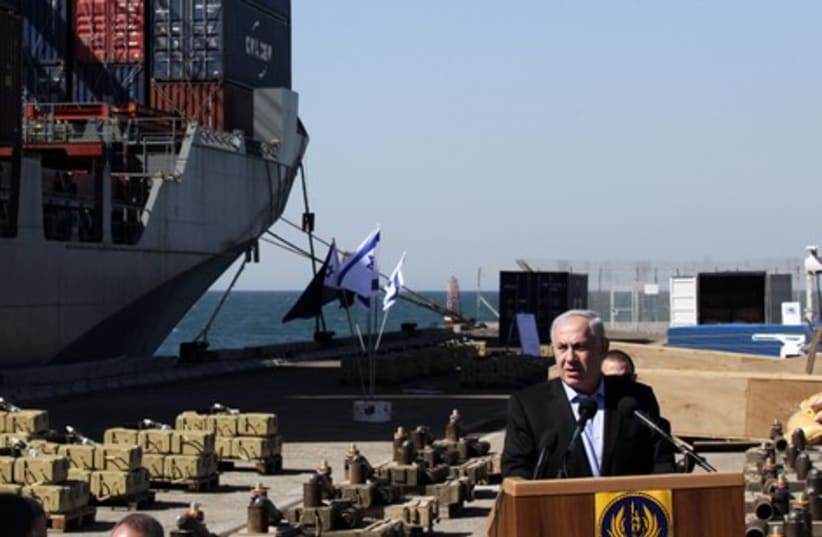
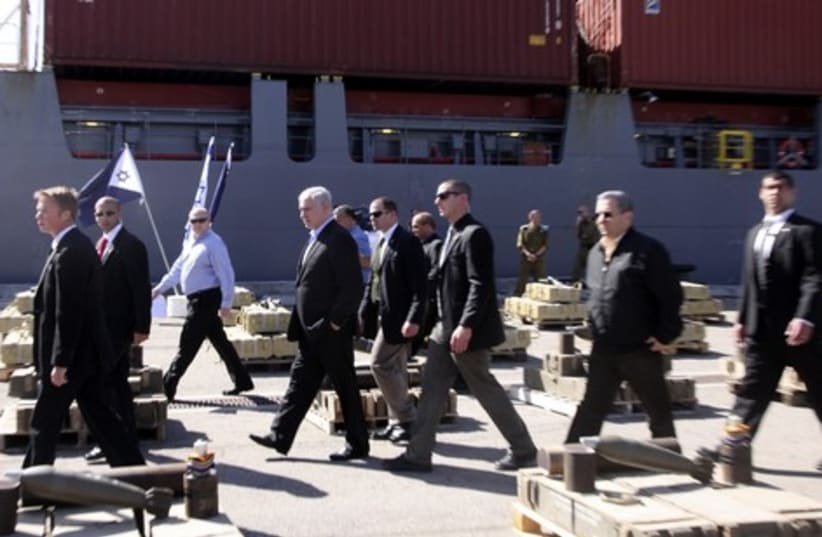
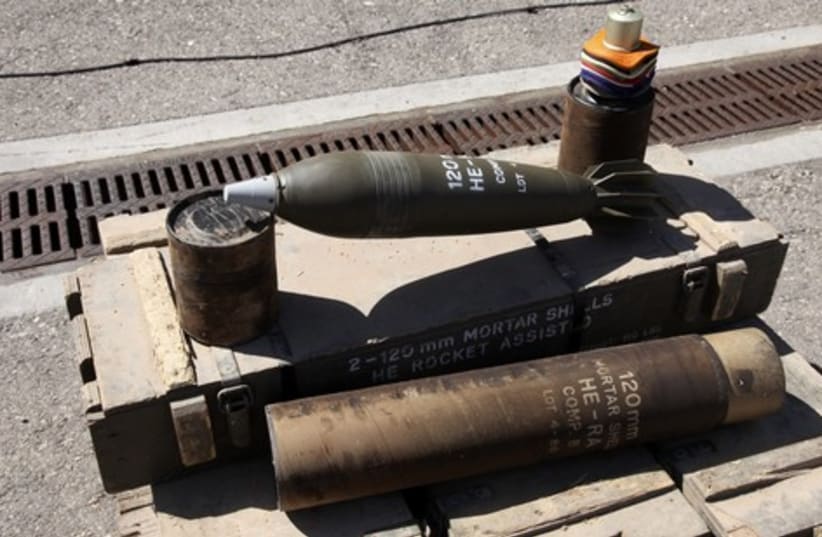
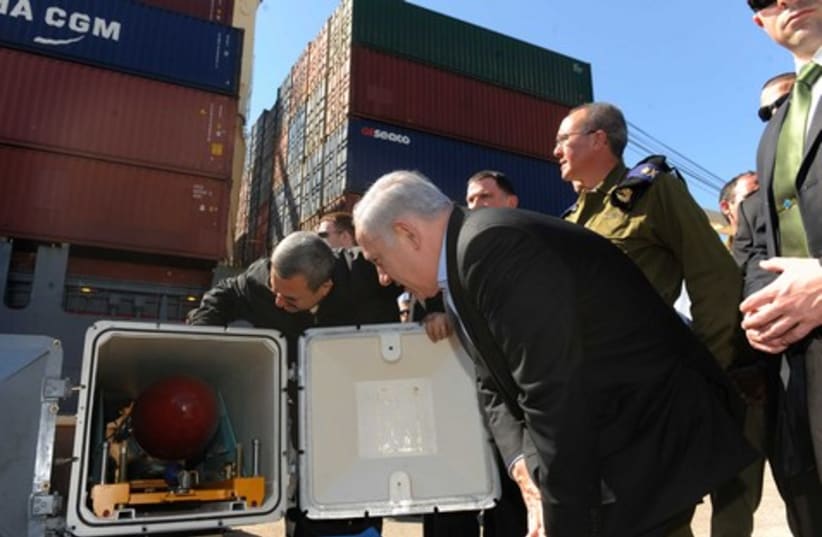
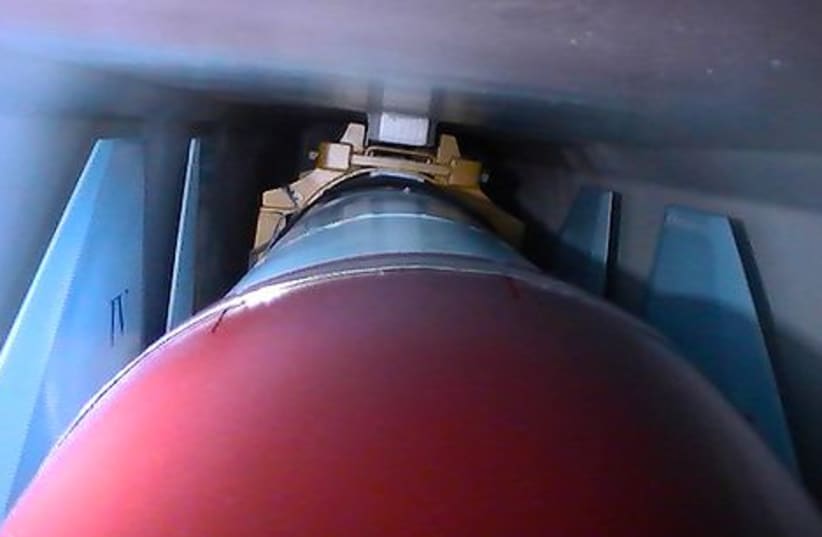
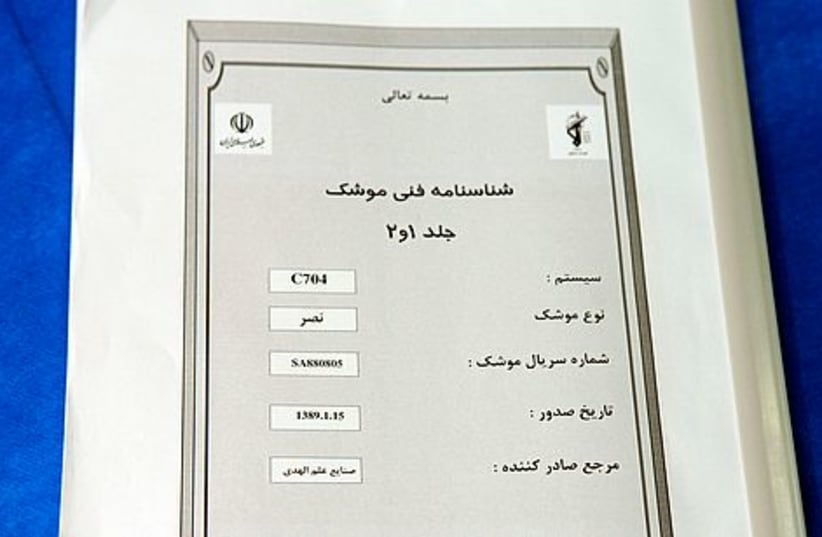
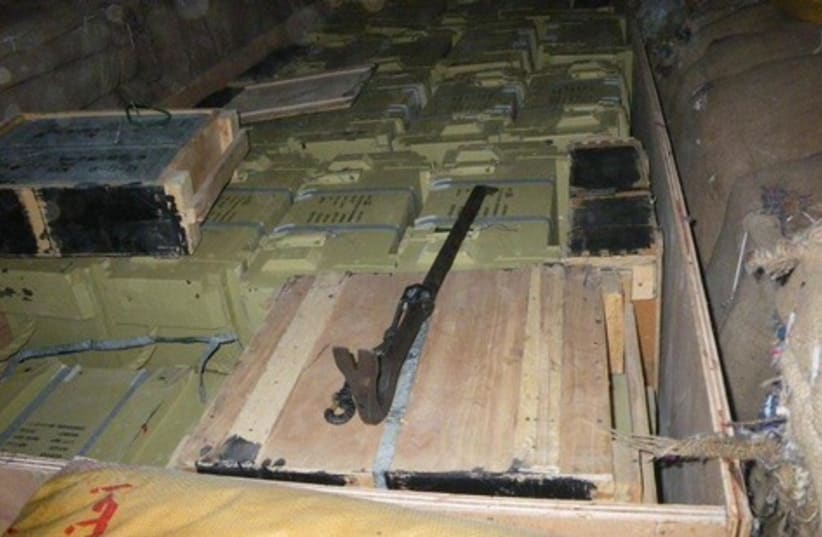
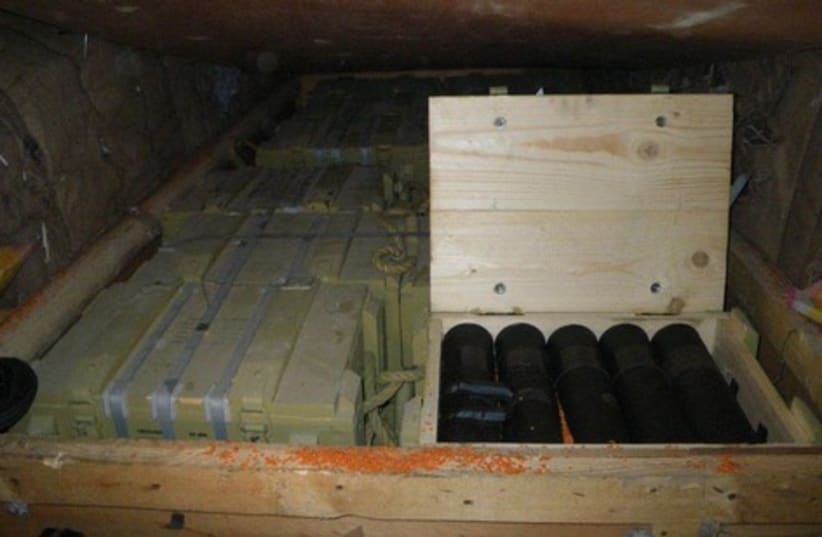
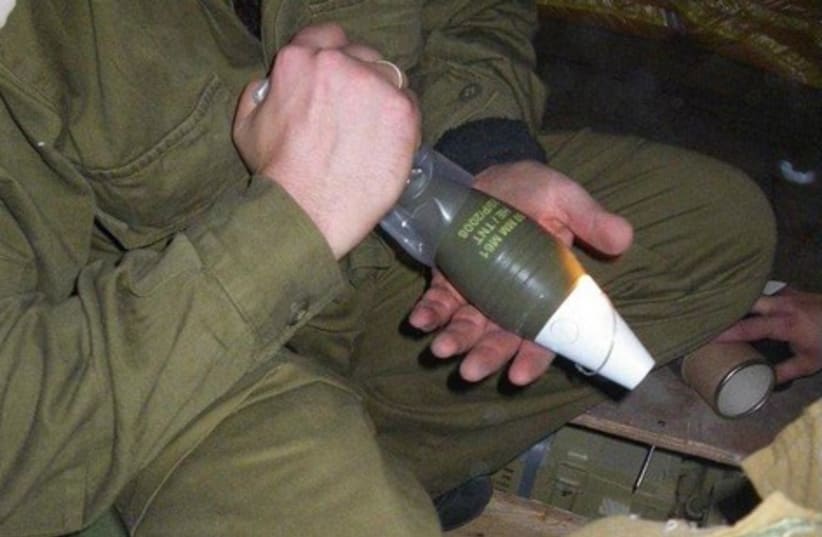
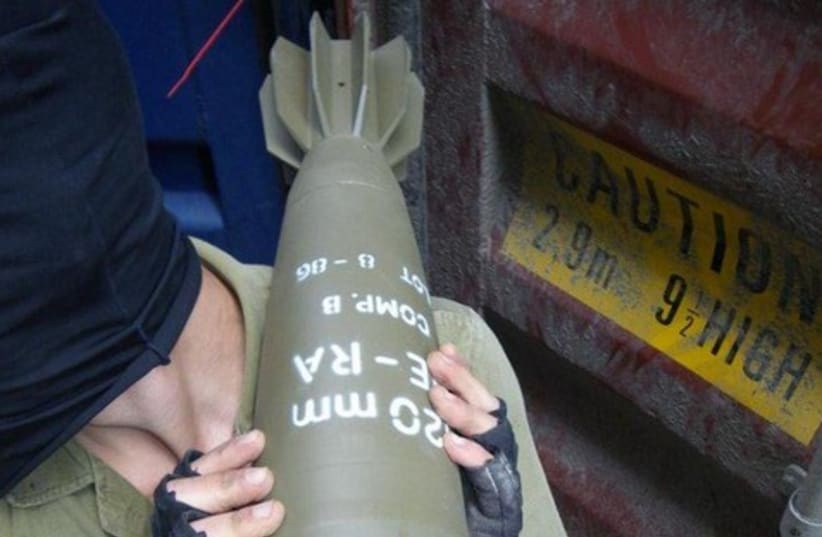
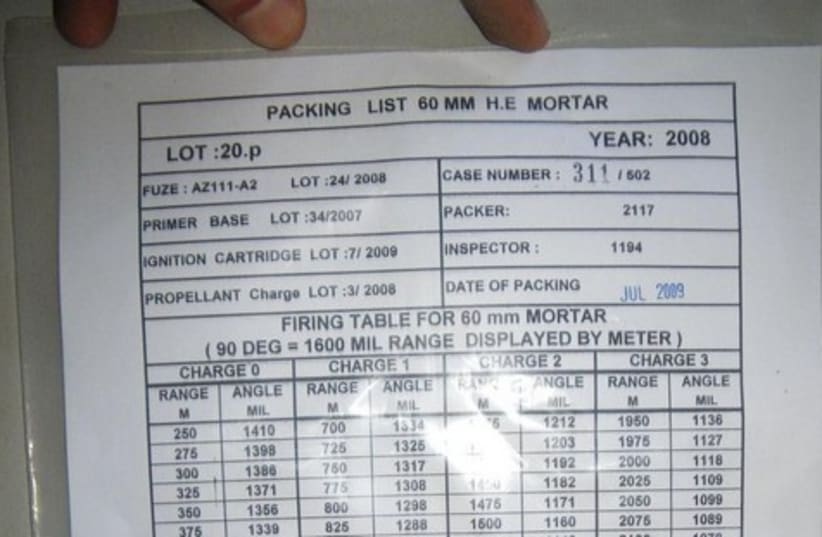

Israel believes the weaponry originated in Iran and was destined for Hamas and other terrorist groups in the Gaza Strip.RELATED:How Flotilla 13 seized the 'Francop'Edelstein: Seized Iranian arms proves Goldstone Report encourages terrorIn an operation called “Iron Law,” Israeli navy missile boats approached the Victoria cargo ship late Monday night as it passed some 320 km. off Israel’s coast. One of the vessels reached the captain on the radio and asked for permission to board.Once he gave permission and began lowering a ladder, a number of speedboats carrying several teams of commandos from Flotilla 13 – known as the Shayetet – closed in.The commandos did not encounter resistance when boarding the ship and were given the cargo certificates indicating that 39 containers had been loaded in the Syrian port of Latakia.Two weeks earlier, a pair of Iranian warships had docked at the same port – possibly carrying weapons. Four of the containers, found with heavy locks, were slated to be unloaded in the port of Alexandria in Egypt.The ship left Latakia and sailed to the port of Mersin in Turkey – likely a ploy meant to deflect attention from the ship and its cargo. The IDF stressed that it believed that neither Egypt nor Turkey was involved in the arms shipment.According to the certificates, the containers were supposed to be carrying cotton and lentils, but when the commandos pulled out the first row of sacks they found crates of mortar shells and advanced anti-ship missiles.The total shipment was estimated to weigh about 50 tons – similar to the cache discovered aboard the Karine A arms ship stopped by the navy in 2002.The deputy commander of the navy, V.- Adm. Rani Ben-Yehuda, said the commandos had found two C-704 anti-ship missiles inside one of the containers they inspected aboard the Victoria, which was flying a Liberian flag.The ship is owned by a German company, but was being operated by a French company.The Foreign Ministry notified all three countries of the seizure.The ship’s crew was unaware of the weapons on board. The vessel was expected to arrive at Ashdod Port early Wednesday morning.Working on intelligence, the navy had started monitoring the ship several days ago and immediately began planning an operation.Prime Minister Binyamin Netanyahu and Defense Minister Ehud Barak approved the operation.According to Ben-Yehuda, the Chinesemade anti-ship missiles could have threatened Israeli sea-based strategic installations “like gas drilling stations” as well as naval vessels, and even the Ashdod Port.“This shipment was of strategic importance,” he said.Ben-Yehuda added he did not know if the Iranian ships brought the weaponry that was loaded onto the Victoria, but that the timing raised serious questions. “This needs to be considered,” he said.The C-704 has a range of 35 km. and carries a warhead with 130 kg. of explosives.The commandos found booklets explaining how to use the missile in Farsi – further proof that the missiles originated in Iran.In addition to the anti-ship missiles, the commandos also discovered 60-mm. and 120-mm. mortar shells.The missiles use advanced radar to acquire their targets. In 2006, a Chinese-made C- 802 missile struck the INS Hanit off the coast of Beirut, killing four Israeli sailors.“The missile is made in China and it is in the possession of the Iranians, and this adds to suspicions that it came from Iran,” Ben- Yehuda said. “This missile can threaten strategic installations near the coast and navy vessels that operate at sea.”The IDF released pictures showing mortar shells inside crates, as well as the C-704 missiles with the word “Nasr” written on them.Nasr is what Iran calls the missile.In November 2009, the Israel Navy seized the Francop cargo ship, which was carrying 500 tons of weaponry from Iran to Hezbollah in Lebanon – including Katyusha rockets and grenades.At the time, IDF officers said the amount was enough to sustain Hezbollah for several weeks of war.