'Most Latin American nations rethinking PA's UN bid'
Deputy FM Ayalon returns from Organization of American States meeting, tells 'Post' "we stopped the [Palestinian] momentum in Latin America."
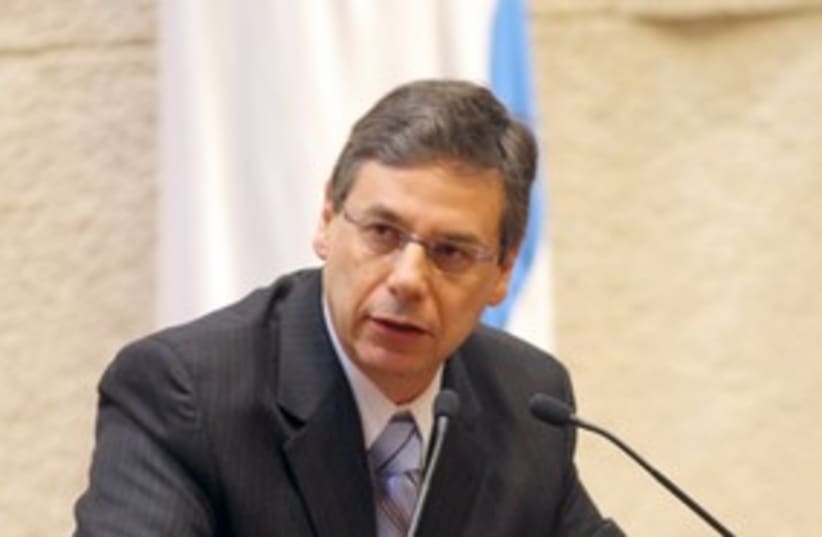
By HERB KEINONDanny Ayalon 311(photo credit: Courtesy)
A majority of the 35 countries in Latin America are either against recognition of a Palestinian state at the UN in September, or are having second thoughts, Deputy Foreign Minister Danny Ayalon said Sunday.Ayalon, who returned over the weekend from attending an Organization of American States (OAS) meeting in El Salvador, told The Jerusalem Post “we certainly stopped the [Palestinian] momentum in Latin America.”RELATED:Israeli official says talks could resume if PA unity failsPM to lobby Eastern Europe against Palestinian stateAmong the countries which are not expected to support the PA move at the UN in September are Jamaica, Belize, Guyana, Suriname, Panama, Costa Rica, El Salvador and Colombia.Ayalon began his trip in Mexico, which is among the most influential countries in Latin America, along with Brazil and Argentina, and which has been the focus of intensive Palestinian efforts to get them to recognize a Palestinian state even before the UN vote – as all of South America – with the exception of Colombia, has done.Ayalon left Mexico City believing that the Mexicans were “for negotiations.”Ayalon met the foreign ministers of 17 countries at the OAS, and repeated what he said in his speech to the organization: that a negotiated agreement is the only way to find a solution. Ayalon said this argument resonated in a number of countries in the region which have had their own border disputes – such as El Salvador and Honduras, Belize and Guatemala, Ecuador and Peru – and are concerned about the precedent that a Palestinian bid at the UN would have on settling other border controversies around the world.Ayalon said that he was told by some of the South American countries which in recent months had recognized a Palestinian state that this did not necessarily mean they would vote with the PA in the UN General Assembly in September.Continuing the diplomatic push on this issue, Ayalon met on Sunday in Jerusalem with ambassadors and senior diplomats from some 10 African countries stationed in Israel, including Nigeria and South Africa, which both currently sit on the UN Security Council Ayalon told the ambassadors that every country needed to vote responsibly at the UN, and that “a vote for the Palestinian step would be like voting for confrontation.“Today it is clear that the PA is the peace rejectionist,” he said. “The PA’s preference for Hamas instead of direct ties with Israel is a mortal blow to the chances of furthering the diplomatic process with the Palestinians.”Asked about the Palestinian threat to demand from the UN the implementation of the 1947 partition plan, Ayalon said that threat was “not serious,” and that if the PA demanded those lines, Israel would demand the 1922 lines that included all of the West Bank.Ayalon also brought up the issue of the PA’s UN bid in a meeting with Japanese Deputy Foreign Minister Yutaka Banno, and said that his Japanese counterpart stressed that the Japanese, too, were in favor of dialogue.Ayalon said that Israel hoped to get between 60 and 70 countries in the General Assembly to either vote against, abstain or absent themselves for the vote on the matter in the General Assembly, something he said would deprive the PA’s move of moral significance.In a related development, a number of foreign statesmen are scheduled to travel this week to both Israel and the PA, where the statehood recognition question will be high on the agenda.German Foreign Minister Guido Westerwelle and the country’s minister for economic cooperation and development Dirk Niebel are scheduled to arrive Tuesday for a two-day trip that will also take Niebel to Gaza.Another high-level visitor, European Parliament president Jerzy Buzek, will also be going to Gaza as part of his four-day regional visit which began Sunday.Also scheduled in Israel this week to try and find a way to restart the negotiations are senior White House adviser Dennis Ross and acting US Mideast envoy David Hale. The EU’s foreign policy chief Catherine Ashton is also scheduled to hold meetings here later this week, as will the Netherlands’ deputy prime minister Maxime Verhagen.Foreign Minister Avigdor Lieberman, meanwhile, is scheduled to go to Croatia and the former Yugoslav republic of Macedonia toward the end of the month to lobby them regarding the UN vote, followed a week later by Prime Minister Binyamin Netanyahu who is scheduled on July 6 to go to Romania and Bulgaria.While both Romania and Bulgaria recognized a Palestinian state when they were Iron Curtain countries in the 1980s, Israel is trying to convince them – and other former Warsaw Pact countries considered close friends of Israel in Europe – to vote against Palestinian recognition at the UN.
if(catID != 151){
var cont = `Take Israel home with the new Jerusalem Post Store