Lawyers take politicians’ place in negotiations, try to work out differences on draft targets, quotas.
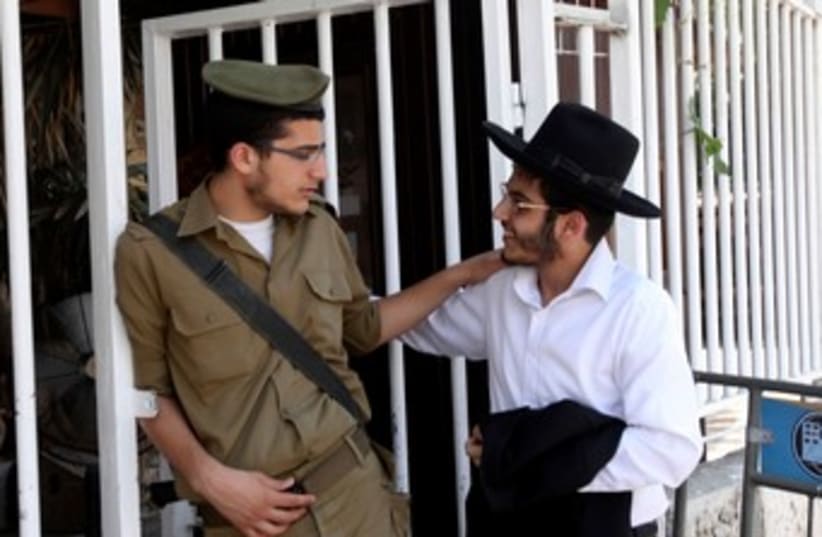
By GIL STERN STERN HOFFMANHaredi, soldier at IDF recruitment office 370(photo credit: Marc Israel Sellem)
Prime Minister Binyamin Netanyahu has postponed a vote on a new universal service bill from Sunday to next week, to give himself more time to broker a compromise in his coalition between Kadima and the haredi parties, Likud sources said Saturday night.Netanyahu and Kadima chairman Shaul Mofaz decided in a meeting late Thursday night to shift negotiations over a new bill from their respective political representatives, Vice Premier Moshe Ya’alon and MK Yohanan Plesner, to lawyers representing the two parties.Kadima lawyer Alon Gellert and Netanyahu confidant David Shimron held two meetings over the weekend in which they tried to work out differences between the parties on issues such as draft targets and quotas and the maximum age until which haredim can avoid serving.Gellert and Shimron drafted the coalition agreement between Kadima and the Likud.Netanyahu’s goal is to complete a deal by Wednesday, pass it in the cabinet next Sunday and legislate it quickly by July 25, when the Knesset’s summer recess begins.To that end, a special Knesset committee will be formed to bypass the Knesset Law and Constitution Committee that is led by Yisrael Beytenu MK David Rotem, whom the Likud considers problematic.Yisrael Beytenu is expected to give Netanyahu headaches this week when it brings to a vote its universal service bill, which would require all 18-year-olds to serve. Netanyahu is expected to plead with Yisrael Beytenu chairman Avigdor Liberman to delay the vote on the measure, which could attract the support of most of the 28 Kadima MKs.“It is better to pass a law that can be implemented rather than a law that will cause a rift in the nation,” the prime minister said on Saturday.Plesner said at a cultural event in Givatayim on Saturday that he had not given up on the possibility that Netanyahu would adopt the recommendations of the Keshev Committee he headed on equalizing the burden of IDF service.“It’s up to the prime minister to make a decision that will have significant ramifications on Israeli society and on the future of the IDF and the economy,” Plesner said.“If the prime minister continues the Likud-Shas path, which maintains the status quo in which haredi men don’t have an obligation to serve in the IDF, it will be hard to prevent the model of the people’s army from crashing. On the other hand, he has an opportunity to adapt the plan I presented that would require every citizen to serve.”Ya’alon, meanwhile, continued his effort to slam Plesner, telling Channel 2’s Meet the Press program on Saturday that his Kadima counterpart put political considerations ahead of reaching an agreement that could gradually increase haredi enlistment.“Plesner acted against the members of his committee and declared war on the haredim,” Ya’alon said.“I got the impression that he is playing politics. The prime minister decided to form a unity government because he saw a historic opportunity, and the haredim understand that. I don’t know how it will end, but this national mission is within arm’s reach and we shouldn’t drop the ball.”
if(catID != 151){
var cont = `Take Israel home with the new Jerusalem Post Store