Association connects religion journalists worldwide
Group’s chairwoman Maria-Paz López says reporters should promote journalism, not their own faiths.
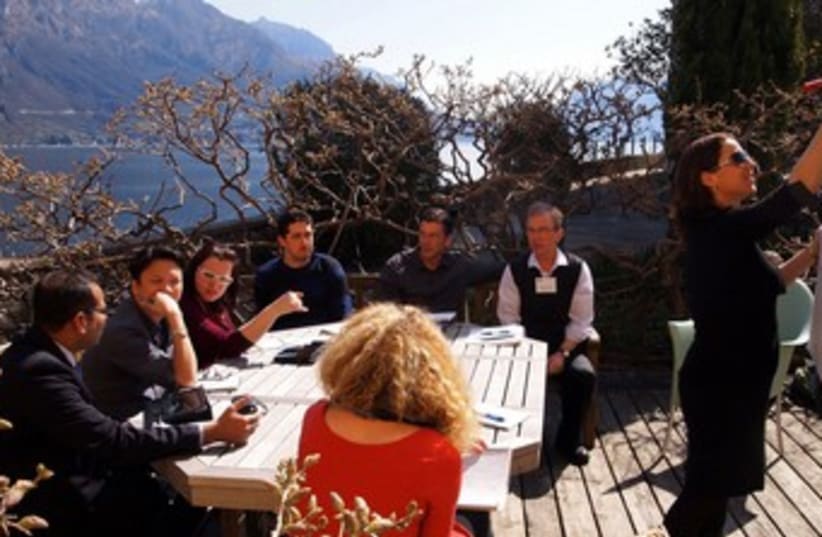
By RUTH EGLASHInternational Association of Religion Journalists meeting 37(photo credit: Courtesy of ICFJ)
It should have been a simple task: Establish a worldwide association to connect journalists who cover religious issues, boost their resources and encourage professionalism in reporting on this most sensitive of topics.However, as with most things connected to religion, the path to the successful creation of the International Association of Religion Journalists (IARJ) was fraught with barriers. The idea to form such an association was voiced more than 10 years ago by long-time US journalist David Briggs, a Pulitzer Prize nominee who has been published in thousands of media outlets across the globe. Yet the IARJ was finally created on March 23 in Italy, as journalists spanning seven continents and 23 countries – including Israel – came together to launch the association.“We are living in a global society and our understanding internationally of religion is weak,” said Briggs, who was elected to serve as the IARJ’s executive director alongside a multinational eight-member steering committee of journalists. “With the association, journalists now have contacts in various countries and can work together.”Last month’s meeting, held in Bellagio, Italy, saw a wide range of nationalistic, religious and personal views pushed to the side as attendees held intense debates to decide on the look and feel of the organization, which ultimately hopes to offer members international access to online resources, training programs and, most importantly, professional contacts.Despite obvious differences, the association found its footing, and appointed Spanish journalist Maria-Paz López IARJ chairwoman.López, who has been reporting on religion for 12 years for La Vanguardia newspaper and spent six years reporting from the Vatican, said that the goal of IARJ is not to promote religions but to instead foster better journalism about religion.“I have seen many alleged religion reporters who do not respect the journalism profession,” she said. “There are journalists who advocate for religion and not journalism. This association needs to change this and give credibility to religion reporting.”Journalists from countries with conflicts shared their experiences at the meeting.Among them was Sri Lankan TV anchor and journalist Indeewari Dona, who echoed López, saying the reporting slant some journalists take was one of the biggest challenges they faced.“There are certain journalists who promote their own religion and discriminate against others,” she said. “Journalists need to understand that promoting their religion is not professional journalism. It means that you are a religious reporter.”The association has already drawn support from British author Karen Armstrong, who is one of the world’s most popular writers on religious issues. “One of the problems we have is the media, which only presents very one-sided views of certain religious activities,” said Armstrong.“Islam is the obvious example,” she said. “We hear all about the negative that people are saying. But we don’t have a balance of the positive. All too many platitudes that people assume about Islam – that it’s basically opposed to modernity, that it’s inherently violent – are all not true.”“It’s terrific to have journalists meet together to start to develop an ethic about how religion is reported. It’s absolutely terrific,” Armstrong added.When he first came up with the idea, Briggs contacted the US-based Religion Newswriters Association about adding an international element. However, despite Brigg’s ties with the organization, his request was turned down.Undaunted, Briggs – who continues to write about issues of religion in the US and worldwide – approached the Washington-based International Center for Journalists (ICFJ) and the Association of Religion Data Archives for support.With their help, his dream of a global network dedicated to religion and media came true last month.“I have been working on this for 10 years. It’s a dream to see it come to fruition,” said Briggs, following the inaugural meeting of the newly-elected IARJ steering committee.Patrick Butler, vice-president of programs at the ICFJ, said his organization would support the IARJ for at least a year.“We want to help journalists around the world better cover a topic that is essential to the lives of billions of people but is also fraught with controversy and conflict,” he said at the IARJ meeting.“In many countries there are violent clashes between people of different religions and faiths. The media has played a role in this with bad reporting. Some media have been affiliated with one side of the conflict,” said Butler.“Religion is difficult to cover because it’s controversial and sensitive,” he said.“In some parts of the world journalists don’t want to cover it because it can cause tension. But we believe that it can also relieve tension. It can help people understand different faiths.”The author was invited to participate in the creation of the association by the IFCJ and was a guest of the Rockerfeller Foundation’s Bellagio Center.She was subsequently elected to the IARJ steering committee.
if(catID != 151){
var cont = `Take Israel home with the new Jerusalem Post Store